Business Email Address UK: Setup Guide for 2026
March 1, 2026
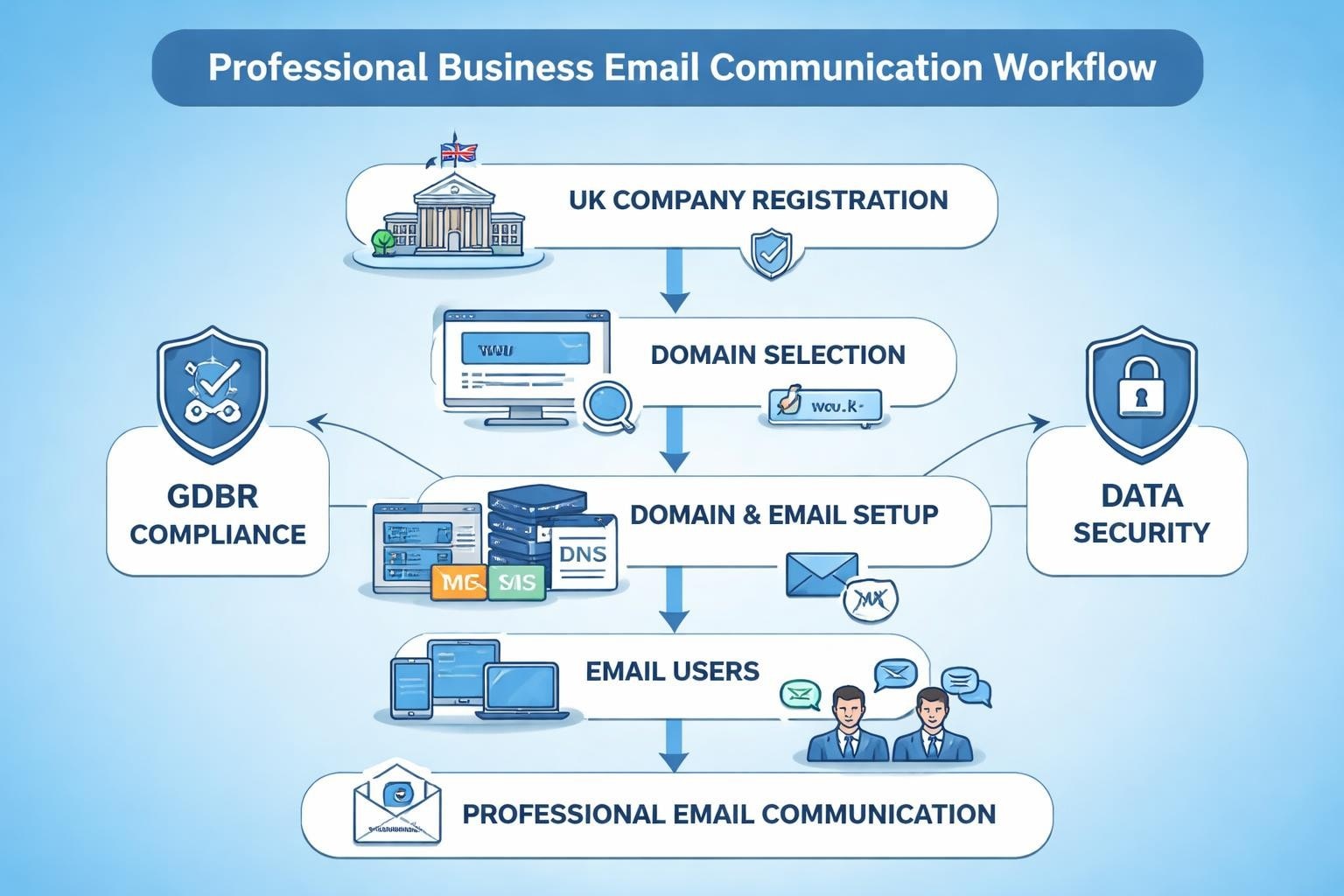
Establishing a professional business email address UK is no longer optional for companies operating in today's digital economy. Whether you're a sole trader launching your first venture or a limited company expanding your operations, your email address serves as a critical touchpoint for customers, suppliers, and regulatory authorities. The right business email address UK setup not only enhances your credibility but also ensures compliance with legal requirements that govern commercial communications. This comprehensive guide explores everything from domain selection to legal obligations, helping you make informed decisions that strengthen your brand identity whilst meeting regulatory standards.
Why Your Business Email Address UK Matters
Your email address communicates professionalism before you type a single word. Generic addresses from free providers like Gmail or Hotmail suggest amateur operations, whilst a custom domain signals established business credentials.
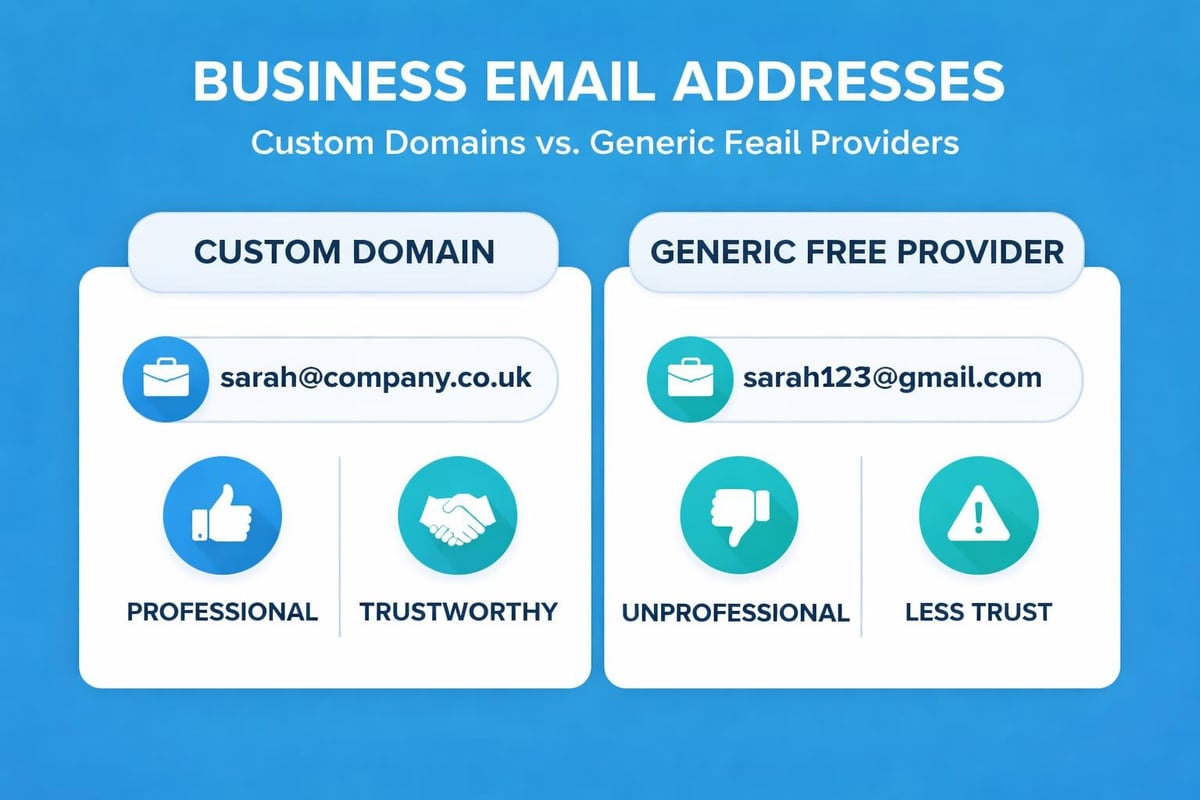
Brand consistency forms the foundation of professional communication. When your email domain matches your website, business cards, and marketing materials, you create a cohesive identity that customers recognise and trust. This alignment becomes particularly important when you're building email marketing campaigns for small businesses that require consistent sender authentication.
Security considerations extend beyond mere appearance. Business-grade email services offer enhanced protection against phishing attempts, malware, and data breaches. These features become essential when handling customer information subject to UK GDPR regulations.
Legal Requirements for UK Companies
Operating a business email address UK involves specific legal obligations that vary depending on your company structure. The Companies Act 2006 mandates that limited companies must include certain information in all business correspondence, including emails.
According to UK government guidelines on company formation, companies must maintain an appropriate email address that's regularly monitored. This registered email address serves as an official communication channel for Companies House and other regulatory bodies.
Your business email footer must contain:
- Company registration number
- Registered office address
- Place of registration (England and Wales, Scotland, or Northern Ireland)
- Company name exactly as registered
Failure to comply with these requirements can result in fines up to £1,000 per email. Understanding business emails and the law helps you avoid costly penalties whilst maintaining professional standards.
Choosing Your Business Email Domain
Selecting the right domain for your business email address UK requires strategic thinking beyond simple availability checks. Your domain becomes your digital identity, influencing customer perception and search engine visibility.
.co.uk domains remain the gold standard for UK businesses. They immediately signal local presence and understanding of the British market. Whilst .com domains offer global recognition, .co.uk provides geographic authenticity that resonates with UK customers.
| Domain Extension | Best For | Trust Factor | SEO Impact |
|---|---|---|---|
| .co.uk | UK-focused businesses | High (UK audience) | Strong local signals |
| .com | International reach | High (global) | Broad appeal |
| .uk | Modern UK alternative | Growing | Emerging signals |
| .net / .org | Specific sectors | Moderate | Neutral |
Consider these domain selection principles:
- Keep it concise: Shorter domains reduce typing errors and improve recall
- Avoid hyphens and numbers: These create confusion in verbal communication
- Match your trading name: Consistency reinforces brand recognition
- Check social media availability: Unified presence across platforms strengthens identity
The importance of a professional email address extends to domain credibility. Investing in the right domain pays dividends through improved deliverability and customer confidence.
Setting Up Your Business Email Address UK
Technical setup varies depending on your chosen email provider, but fundamental principles remain consistent. Understanding how to set up a business email streamlines the process and prevents common configuration errors.
Selecting an Email Hosting Provider
Your hosting choice impacts reliability, security, and functionality. Small businesses typically choose between three main options:
Dedicated email hosting services provide robust infrastructure specifically designed for business communications. These platforms offer superior deliverability, advanced security features, and professional support.
Website hosting bundles often include email accounts as part of broader packages. Whilst convenient, these solutions may lack advanced features required for growing businesses.
Cloud-based productivity suites combine email with collaboration tools, storage, and productivity applications. Microsoft 365 and Google Workspace dominate this category, offering comprehensive solutions for teams.
Configuration Essentials
Proper configuration ensures your business email address UK functions reliably and securely. Critical technical settings include:
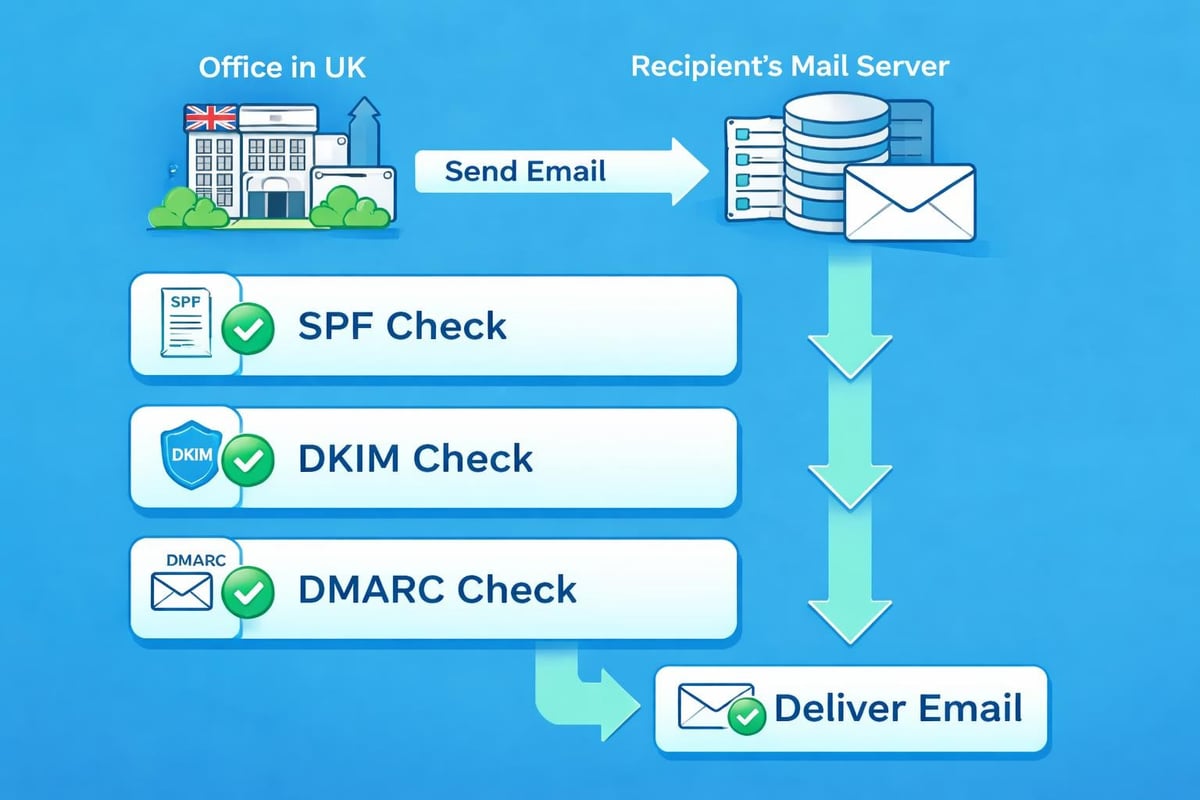
- SPF records (Sender Policy Framework) authenticate your domain as legitimate
- DKIM signatures (DomainKeys Identified Mail) verify message integrity
- DMARC policies (Domain-based Message Authentication) protect against spoofing
- SSL/TLS encryption secures data transmission between servers
These authentication protocols significantly improve deliverability rates and protect your domain reputation. When you're setting up email systems for marketing purposes, proper configuration prevents your messages landing in spam folders.
Email Naming Conventions and Structure
Systematic naming conventions create professional impressions whilst supporting organisational efficiency. Your business email address UK structure should scale with company growth.
Individual Email Addresses
Personal email addresses typically follow these formats:
- [email protected]
- [email protected]
- [email protected] (smaller businesses)
Consistency matters. Choose one format and apply it universally across your organisation. This uniformity simplifies directory management and helps customers predict email addresses.
Departmental and Functional Addresses
Role-based addresses serve specific business functions:
- [email protected] (general enquiries)
- [email protected] (commercial team)
- [email protected] (customer service)
- [email protected] (finance department)
- [email protected] (friendly alternative to info)
These addresses enable workflow distribution without exposing individual staff details. When team members change roles, continuity remains unaffected.
For email marketing activities, consider dedicated addresses like [email protected] or [email protected]. This separation helps track campaign performance and manage unsubscribe requests efficiently.
Data Protection and Privacy Compliance
Managing business email address UK systems requires strict adherence to data protection regulations. Work email addresses often contain personal data, triggering GDPR obligations.
The question of whether work email addresses are personal data depends on context. When emails include employee names, they qualify as personal information requiring protection.
Your responsibilities include:
- Implementing appropriate security measures to prevent unauthorised access
- Establishing retention policies that define storage periods
- Providing transparency about email monitoring practices
- Securing employee consent for processing their data
- Enabling data subject rights including access and deletion requests
Email archiving presents particular challenges. Whilst legal requirements may mandate retention for certain communications, GDPR's data minimisation principle discourages indefinite storage. Balance these competing demands through clear policies documented in your data retention framework.
Email Marketing Compliance for UK Businesses
Using your business email address UK for marketing requires additional regulatory compliance. The Privacy and Electronic Communications Regulations (PECR) work alongside GDPR to govern commercial emails.
Consent Requirements
B2C marketing requires explicit opt-in consent before sending promotional emails. Pre-ticked boxes, assumed consent, and purchased lists violate regulations.
B2B marketing operates under soft opt-in rules. You may email business contacts about similar products or services if they previously purchased from you, provided they can easily opt out.
Understanding UK email marketing laws prevents costly enforcement actions. The Information Commissioner's Office (ICO) issues substantial fines for non-compliance, with penalties reaching millions for serious breaches.
Mandatory Email Content
Every marketing email from your business email address UK must include:
| Required Element | Purpose | Non-Compliance Risk |
|---|---|---|
| Sender identity | Transparency | ICO penalties |
| Valid physical address | Accountability | Legal action |
| Clear unsubscribe mechanism | Consumer rights | Fines up to £500,000 |
| Accurate subject lines | Anti-deception | Reputation damage |
Your antispam policy should document procedures for managing subscriber lists, processing unsubscribe requests, and maintaining consent records.
Professional Email Etiquette for UK Business
Beyond legal compliance, effective use of your business email address UK requires mastering professional communication standards. Following email etiquette rules for UK workplaces enhances relationships and prevents misunderstandings.
Subject Line Excellence
Subject lines determine whether recipients open your messages. Apply these principles:
- Be specific: "March invoice query" beats "Question"
- Front-load keywords: Important information appears first
- Avoid spam triggers: Excessive capitals and exclamation marks harm deliverability
- Update on replies: Change subjects when conversation topics shift
Professional subject lines respect recipient time whilst improving email organisation.
Signature Standards
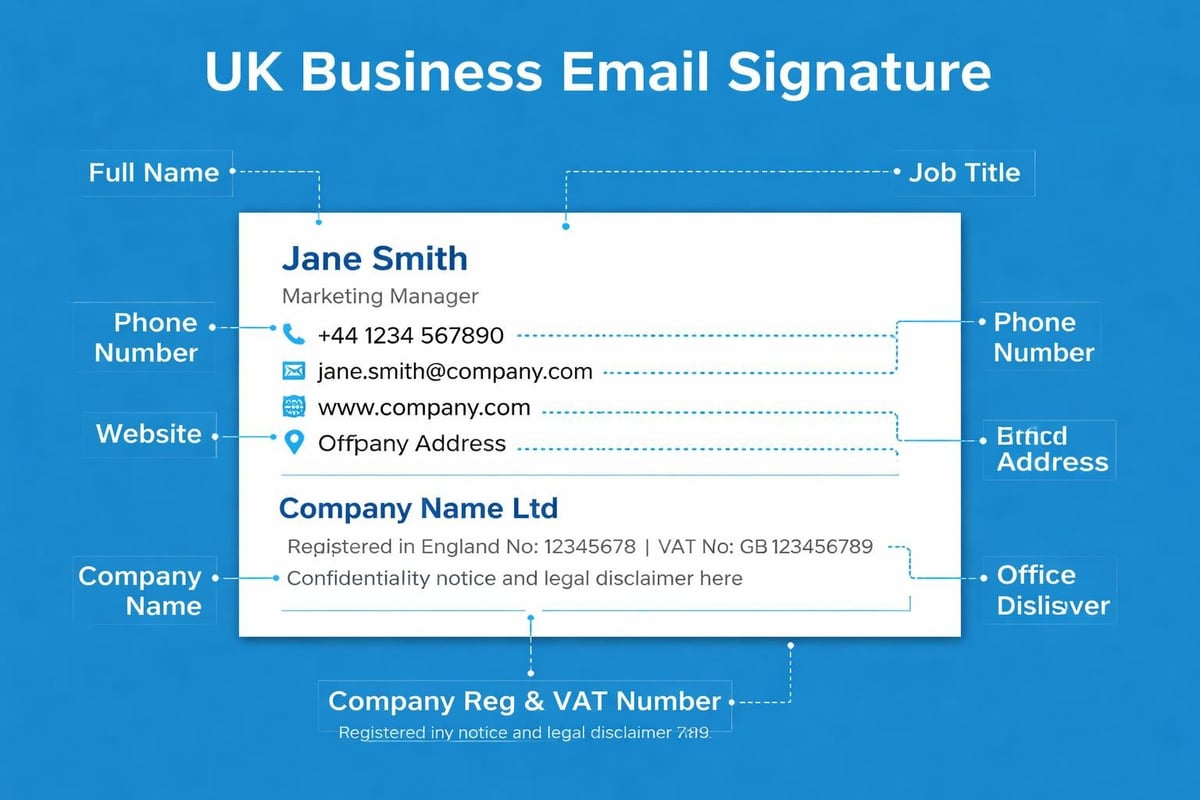
Email signatures extend your business email address UK functionality. Comprehensive signatures include:
- Full name and job title
- Company name with registration details
- Direct phone number
- Website URL
- Professional social media profiles
- Legal disclaimers (if required)
Many businesses find professional email etiquette guidelines help establish consistent communication standards across teams.
Managing Multiple Business Email Addresses
Growing businesses often require multiple email accounts for different functions. Strategic management prevents communication chaos whilst maintaining professional standards.
Email Forwarding and Aliases
Aliases create additional addresses that deliver to existing inboxes. For example, [email protected] and [email protected] might both forward to the same team inbox, simplifying management without multiplying accounts.
Forwarding rules route specific messages based on sender, subject, or content. These automation features ensure appropriate team members receive relevant communications.
Shared Mailboxes and Team Accounts
Collaborative email management suits customer service and sales functions. Shared mailboxes enable multiple team members to access communications whilst maintaining unified sender identity.
Benefits include:
- Seamless coverage during absences
- Transparent conversation histories
- Consistent response quality
- Simplified training for new staff
When implementing shared access, establish clear ownership and response protocols to prevent duplicated efforts or missed messages.
Mobile Access and Remote Working
Modern business email address UK systems must support flexible working arrangements. Mobile accessibility enables productivity beyond traditional office environments.
Security considerations intensify with mobile access:
- Require strong device passwords or biometric authentication
- Enable remote wipe capabilities for lost devices
- Implement mobile device management (MDM) policies
- Restrict sensitive data downloads to personal devices
- Use VPN connections for public WiFi access
Balancing accessibility with security protects business communications whilst supporting workforce flexibility demanded by contemporary employment expectations.
Email Integration with Business Systems
Your business email address UK becomes more powerful when integrated with other operational systems. Seamless connections improve efficiency and reduce manual data entry.
CRM Integration
Customer relationship management platforms synchronise with email systems, automatically logging communications and updating contact records. This integration provides complete interaction histories accessible across teams.
Marketing Automation Connections
Email marketing platforms like Astonish Email connect to your business email address UK infrastructure, enabling sophisticated campaign management whilst maintaining sender reputation. Proper integration ensures consistent branding and reliable deliverability.
Calendar and Scheduling Tools
Email-calendar integration streamlines appointment scheduling, meeting coordination, and deadline management. Automated reminders and availability sharing reduce administrative overhead.
Troubleshooting Common Issues
Even properly configured business email address UK systems encounter occasional problems. Understanding common issues accelerates resolution.
Deliverability problems often stem from authentication failures or reputation issues. Check SPF, DKIM, and DMARC records regularly. Monitor blacklist status and address any listings immediately.
Storage limitations affect archived communications and attachment handling. Implement regular cleanup protocols and consider cloud storage integration for large files.
Synchronisation errors between devices create confusion and duplicate work. Verify IMAP/Exchange settings across all access points and ensure consistent configuration.
Cost Considerations for Small Businesses
Budget constraints influence business email address UK decisions for small companies. Evaluating total cost of ownership requires looking beyond monthly subscription fees.
Pricing Models Compared
| Provider Type | Monthly Cost | Setup Complexity | Features | Support |
|---|---|---|---|---|
| Basic hosting bundle | £2-5 per account | Low | Limited | Email only |
| Dedicated email hosting | £3-8 per account | Moderate | Enhanced | Priority support |
| Cloud productivity suite | £4-12 per account | Moderate | Comprehensive | Full support |
| Enterprise solutions | £12+ per account | High | Advanced | Dedicated support |
Hidden costs include:
- Domain registration and renewal fees
- SSL certificate expenses
- Additional storage charges
- Advanced security features
- Migration services from previous systems
Understanding professional email costs helps you budget accurately whilst selecting appropriate service levels.
Future-Proofing Your Email Infrastructure
Technology evolution requires adaptable business email address UK systems. Planning for growth prevents costly migrations and service disruptions.
Scalability considerations include:
- Account addition processes and pricing
- Storage expansion options
- Advanced feature availability
- Integration capabilities with emerging tools
- Migration pathways between service tiers
Select providers offering flexible upgrade paths that accommodate business expansion without requiring complete system changes.
Emerging trends shaping email communications include:
- Artificial intelligence for inbox management and response suggestions
- Enhanced authentication protocols combating sophisticated phishing
- Unified communications platforms merging email with chat and video
- Privacy-focused solutions addressing growing data protection concerns
Staying informed about developments helps you make strategic decisions that maintain competitive advantage whilst ensuring ongoing compliance with evolving regulations.
Establishing and maintaining a professional business email address UK requires attention to legal compliance, technical configuration, and communication standards. From selecting the right domain and hosting provider to implementing proper authentication and adhering to GDPR requirements, each decision impacts your business credibility and operational efficiency. If you're looking for an email marketing solution that integrates seamlessly with your professional email infrastructure, Astonish Email provides the tools small businesses need to create effective campaigns whilst maintaining deliverability and compliance standards.