Best Business Email: Complete Guide for Small Businesses
March 14, 2026
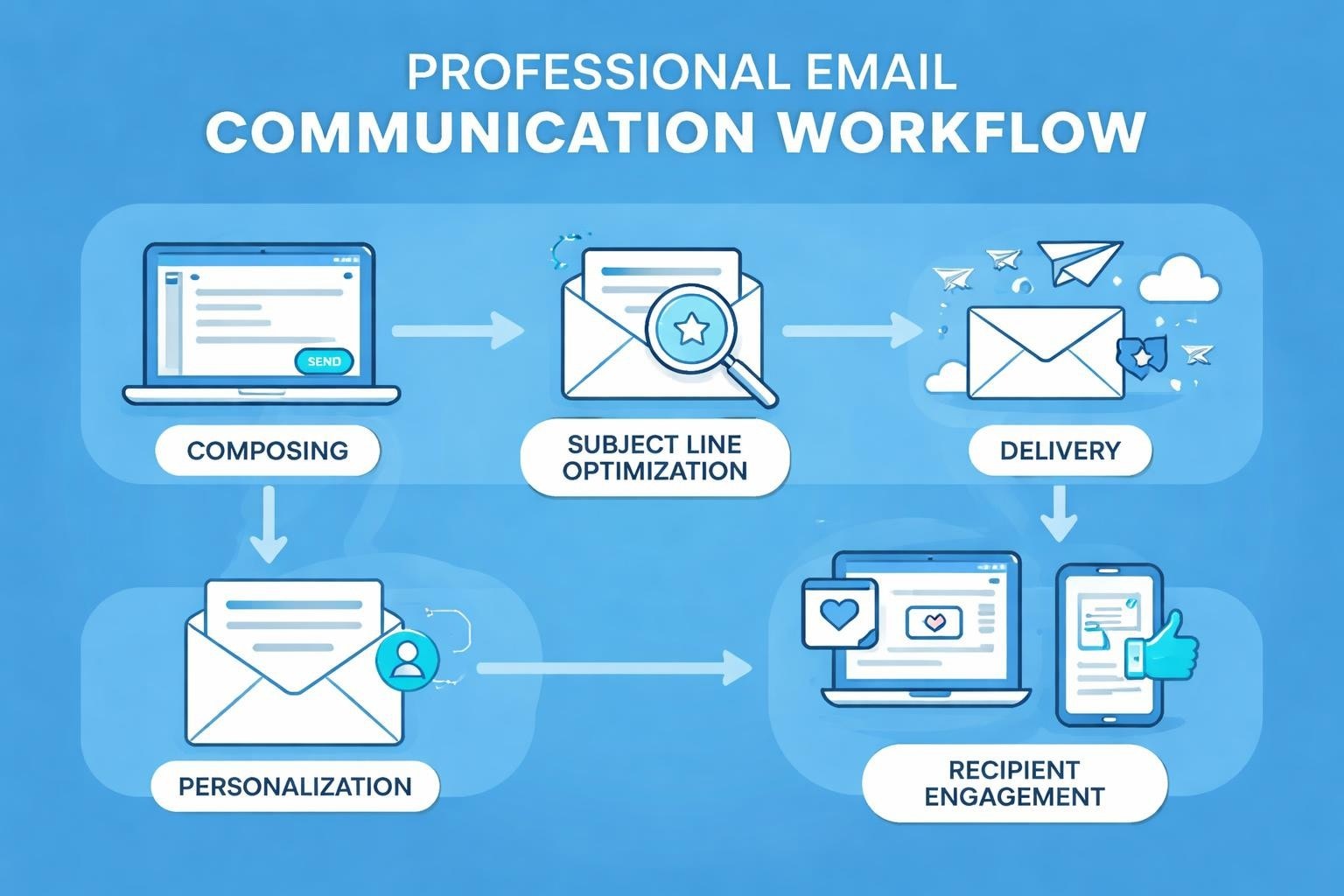
Finding the best business email solution isn't just about selecting a provider-it's about understanding how professional email communication shapes your company's reputation, drives customer engagement, and supports growth. For small businesses in 2026, email remains the most cost-effective and reliable channel for reaching customers, with an average ROI of £36 for every pound spent. Whether you're creating a professional email address for the first time or refining your existing email strategy, mastering the fundamentals of business email is essential for success.
Choosing the Best Business Email Provider
Selecting the right email service provider forms the foundation of your business communication strategy. The best business email platforms combine reliability, security, and features that support your operational needs.
Key features to evaluate include:
- Custom domain capability – Using [email protected] instead of generic providers
- Storage capacity – Adequate space for attachments and long-term message retention
- Security protocols – Encryption, two-factor authentication, and spam filtering
- Integration options – Compatibility with CRM systems and marketing tools
- Mobile accessibility – Seamless access across devices
Professional vs Free Email Services
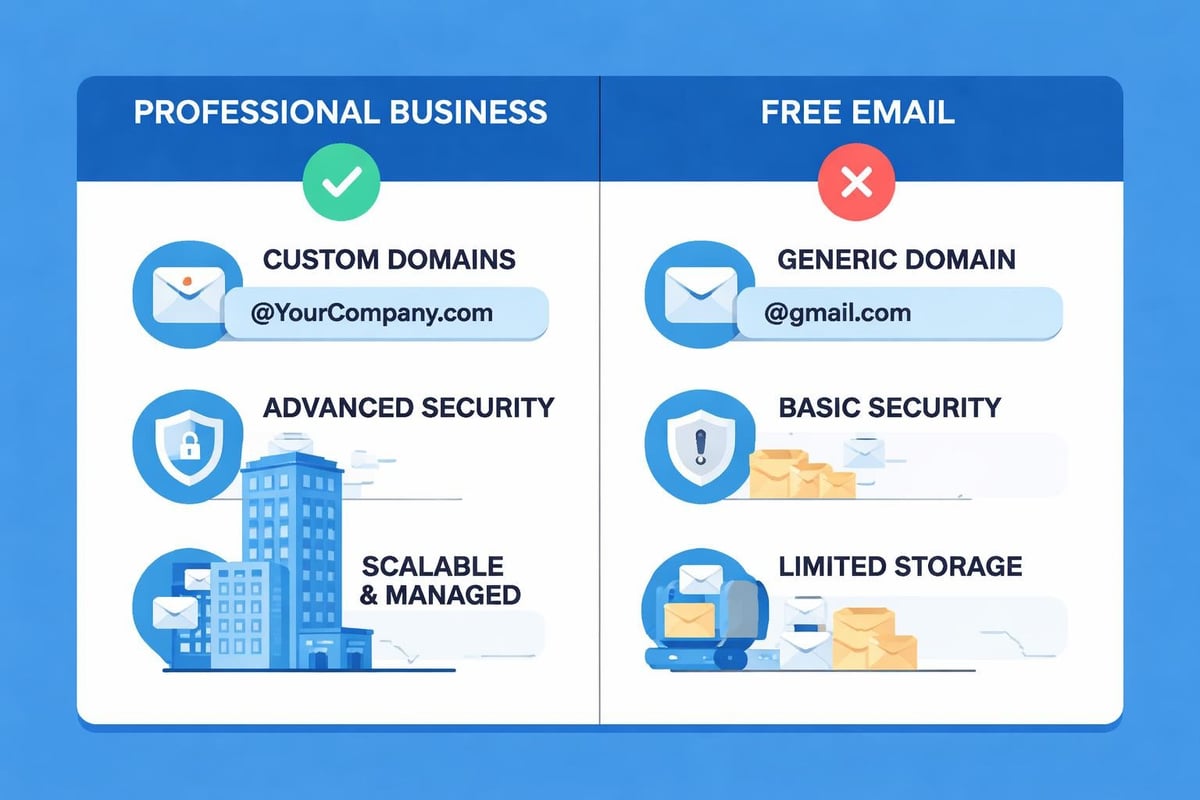
The distinction between professional and free email services significantly impacts how recipients perceive your business. A professional email address using your domain name conveys legitimacy and builds trust with customers.
Free email services like Gmail or Yahoo work adequately for personal use, but they lack the branding and professional appearance essential for business communications. When potential clients see emails from yourcompany.com rather than [email protected], they immediately recognise a legitimate business.
| Feature | Professional Email | Free Email |
|---|---|---|
| Custom Domain | Yes | No |
| Business Branding | Full Control | None |
| Storage | Scalable | Limited |
| Support | Priority | Community-based |
| Cost | Subscription | Free |
Small businesses should consider providers that align with their growth trajectory. Some companies need basic email functionality, whilst others require advanced features like automated workflows and detailed analytics.
Essential Features of the Best Business Email
Understanding which features truly matter helps you avoid paying for unnecessary add-ons whilst ensuring you have the tools needed for effective communication.
Deliverability and Reputation Management
The best business email systems prioritise deliverability-ensuring your messages reach recipients' inboxes rather than spam folders. This requires robust antispam policies and sender reputation management.
Deliverability depends on several factors:
- Sender authentication – SPF, DKIM, and DMARC records verify your identity
- IP reputation – Clean sending history prevents blacklisting
- Content quality – Avoiding spam triggers in subject lines and body text
- Engagement rates – High open rates signal legitimate communication
- Bounce management – Removing invalid addresses maintains list health
According to Fulton Bank's email best practices guide, small businesses must focus on building trust through consistent, valuable communication to maintain strong deliverability rates.
Analytics and Tracking Capabilities
Modern business email requires data-driven decision making. The best business email platforms provide comprehensive analytics showing:
- Open rates and click-through rates
- Geographic and device-based engagement patterns
- Time-of-day performance metrics
- Conversion tracking from email to action
- A/B testing results for subject lines and content
These insights enable continuous improvement of your email strategy. When you understand which messages resonate with your audience, you can refine your approach for better results.
Crafting Professional Business Email Content
Even with the best business email platform, success depends on how you compose your messages. Professional email writing follows established conventions that enhance clarity and effectiveness.
Subject Line Best Practices
Subject lines determine whether recipients open your emails. The most effective subject lines are:
Concise – Keep under 50 characters for mobile readability Specific – Clearly indicate the email's purpose Action-oriented – Use verbs that prompt engagement Personalised – Include recipient names or relevant details when appropriate Honest – Never mislead recipients about content
Research shows that personalised subject lines increase open rates by 26%. However, personalisation must feel genuine rather than formulaic. "Sarah, your Q1 results are ready" outperforms "IMPORTANT: Open now!"
Email Body Structure and Tone
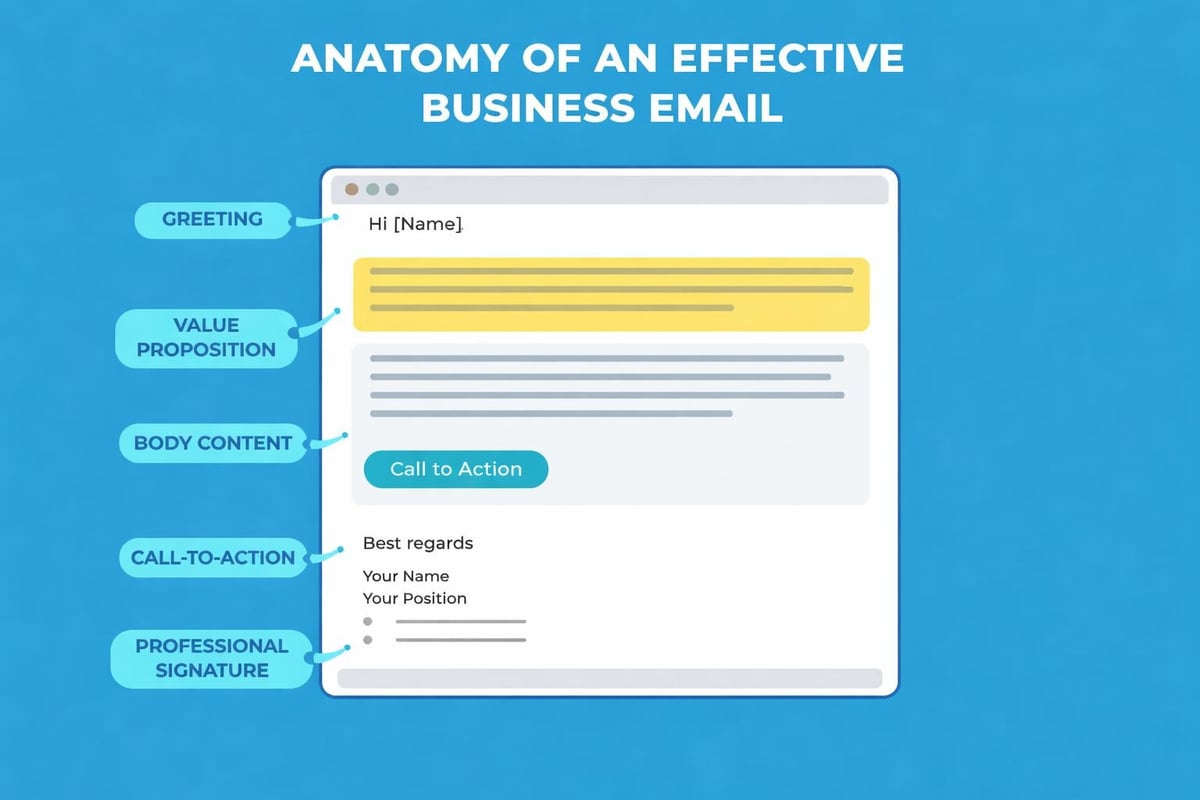
The Stanford Graduate School of Business email best practices emphasise clarity and brevity as fundamental principles. Structure your business emails with these elements:
- Appropriate greeting – Match formality to relationship and context
- Clear opening – State your purpose in the first sentence
- Concise body – Present information logically with visual breaks
- Specific call-to-action – Tell recipients exactly what you need
- Professional closing – Sign off appropriately with contact details
Breaking text into short paragraphs improves readability. Dense blocks of text overwhelm readers, whilst white space creates breathing room that encourages engagement.
According to Business News Daily's comprehensive email etiquette guide, maintaining a professional yet approachable tone builds stronger business relationships than overly formal or casual communication.
Business Email Etiquette for Small Businesses
Understanding the unwritten rules of business email communication prevents costly mistakes and strengthens professional relationships.
Response Time Expectations
In 2026, response time expectations have accelerated. Whilst immediate replies aren't always possible, acknowledging receipt demonstrates professionalism.
| Email Type | Expected Response Time |
|---|---|
| Customer Enquiries | Within 4 hours |
| Internal Communications | Same business day |
| Vendor Questions | Within 24 hours |
| Networking Requests | Within 48 hours |
| General Correspondence | Within 72 hours |
When immediate responses aren't feasible, brief acknowledgements maintain goodwill: "Thanks for reaching out. I'll review this thoroughly and respond by Friday."
Common Pitfalls to Avoid
Even experienced professionals make email mistakes that damage credibility. Grammarly's business email etiquette guide highlights critical errors to avoid:
- Reply-all overuse – Only include necessary recipients
- Vague subject lines – "Following up" doesn't indicate content
- Missing context – Assuming recipients remember previous conversations
- Emotional responses – Never send emails whilst angry or frustrated
- Attachment failures – Forgetting to attach referenced files
The Purdue Online Writing Lab email guidelines recommend proofreading all business emails before sending. Typos and grammatical errors undermine professionalism, particularly in initial contacts.
Email Marketing Integration for Small Businesses
For small businesses, the best business email approach combines transactional communication with strategic marketing. This integration maximises the value of your email infrastructure.
Building Effective Email Lists
Quality email lists drive successful campaigns. Rather than purchasing contact lists-which damages sender reputation and violates regulations-build organically through:
- Website signup forms – Offer valuable content in exchange for subscriptions
- Purchase opt-ins – Invite customers to receive updates during transactions
- Event registrations – Collect contacts from webinars and workshops
- Social media promotion – Drive followers to email subscriptions
- Referral programmes – Encourage existing subscribers to share
When setting up your email marketing approach, focus on permission-based marketing. Explicit consent ensures engaged subscribers who want to hear from you.
Segmentation Strategies
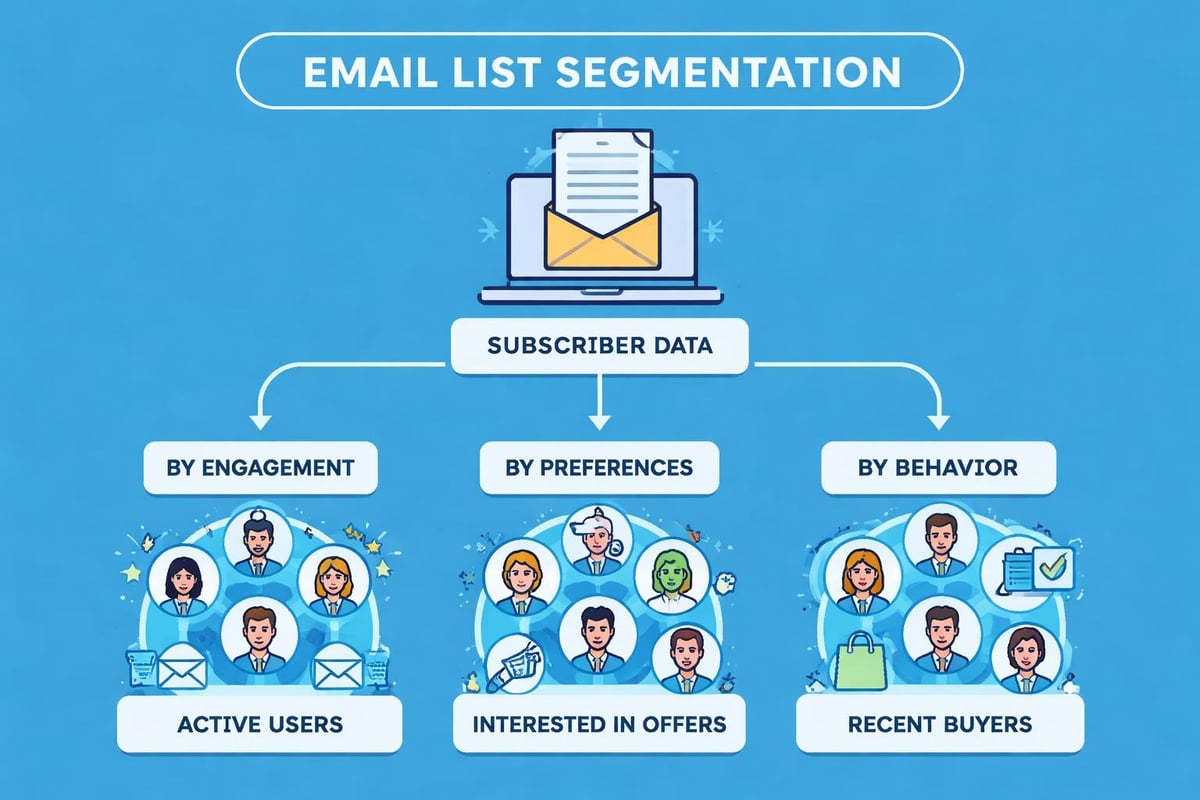
The best business email campaigns don't treat all recipients identically. Segmentation allows targeted messaging based on:
- Purchase history – Different products require different follow-up
- Engagement levels – Active subscribers receive different content than dormant ones
- Demographics – Age, location, and industry influence relevance
- Customer lifecycle stage – Prospects, customers, and advocates need distinct approaches
Segmented campaigns generate 760% more revenue than broadcast messages. This dramatic difference reflects the power of relevance in email marketing.
Technical Considerations for Business Email
Behind effective business email lies technical infrastructure that ensures security, compliance, and optimal performance.
Authentication and Security Protocols
Email authentication prevents spoofing and phishing whilst improving deliverability. The best business email setups implement:
SPF (Sender Policy Framework) – Specifies which servers can send email from your domain DKIM (DomainKeys Identified Mail) – Adds digital signatures verifying message authenticity DMARC (Domain-based Message Authentication) – Provides instructions for handling authentication failures
These protocols work together to protect your domain reputation. Without proper authentication, legitimate emails may land in spam folders, whilst bad actors could impersonate your business.
Compliance and Data Protection
In 2026, email compliance encompasses multiple regulations depending on your audience location. UK businesses must navigate GDPR requirements, whilst companies with international customers face additional obligations.
Critical compliance elements include:
- Explicit consent documentation
- Easy unsubscribe mechanisms
- Clear data usage policies
- Proper data retention protocols
- Transparent privacy practices
Non-compliance carries significant penalties. Beyond financial consequences, violations damage trust and brand reputation. Building compliance into your email processes from the start prevents costly corrections later.
Optimising Business Email Performance
Continuous improvement separates adequate email communication from truly effective strategies. The best business email practitioners regularly analyse and refine their approaches.
A/B Testing Methodologies
Systematic testing reveals what resonates with your audience. Effective A/B tests focus on single variables:
- Subject line variations
- Send time differences
- Call-to-action placement
- Content length adjustments
- Visual element inclusion
Testing requires sufficient sample sizes for statistical significance. Sending variation A to 50 people and variation B to 50 people provides more reliable insights than splitting a 20-person list.
MoreBusiness.com's email best practices emphasise the importance of testing before broad deployment. What works for one industry or audience may fail with another.
Mobile Optimisation Requirements
Over 60% of business emails open on mobile devices in 2026. The best business email designs prioritise mobile experiences through:
- Responsive templates – Layouts that adapt to screen sizes
- Concise content – Shorter paragraphs for small screens
- Large touch targets – Buttons sized for finger tapping
- Simplified navigation – Streamlined paths to action
- Fast loading – Optimised images and minimal code
Desktop-optimised emails often fail on mobile, with tiny text, broken layouts, and inaccessible buttons. Testing across devices ensures consistent experiences regardless of how recipients access messages.
Automation and Workflow Efficiency
The best business email systems leverage automation to maintain consistent communication without constant manual effort. Small businesses benefit tremendously from automated workflows.
Welcome Series and Onboarding
New subscribers represent peak engagement opportunities. Automated welcome series capitalise on this initial interest through:
- Immediate confirmation and thank-you messages
- Brand story and value proposition introduction
- Product or service education over multiple messages
- Social proof through testimonials and case studies
- Clear next steps for deeper engagement
Well-designed welcome series achieve open rates 86% higher than standard promotional emails. This remarkable performance reflects recipients' receptiveness during the onboarding phase.
Triggered Email Campaigns
Behavioural triggers enable timely, relevant communication. Common triggers include:
| Trigger Event | Automated Response |
|---|---|
| Cart Abandonment | Reminder with incentive |
| Purchase Completion | Confirmation and delivery tracking |
| Milestone Achievement | Congratulations and next level unlock |
| Subscription Renewal | Reminder and easy renewal link |
| Engagement Lapse | Re-engagement campaign |
These automated touchpoints maintain relationships without overwhelming your team. For small businesses managing limited resources, automation extends reach and consistency beyond what manual processes allow.
When exploring email marketing solutions, consider how automation features align with your business model and customer journey. The most sophisticated automation won't help if it doesn't match your actual needs.
Measuring Business Email Success
Understanding performance metrics transforms email from a communication channel into a strategic business asset. The best business email strategies rely on comprehensive measurement.
Key Performance Indicators
Different email types require different success metrics. Transactional emails prioritise deliverability and open rates, whilst marketing campaigns focus on conversions.
Essential metrics include:
- Delivery rate – Percentage successfully reaching recipients
- Open rate – Proportion of delivered emails opened
- Click-through rate – Percentage clicking links within messages
- Conversion rate – Recipients completing desired actions
- Unsubscribe rate – Opt-outs indicating content misalignment
- Spam complaint rate – Negative feedback signals
Benchmark performance against industry standards, but focus primarily on your own trends. A 25% open rate might be excellent in one sector and poor in another.
Attribution and ROI Calculation
Proving email's business value requires connecting email activity to revenue outcomes. Proper attribution tracks:
- Direct conversions – Purchases or signups from email clicks
- Assisted conversions – Email touchpoints in multi-channel journeys
- Customer lifetime value – Long-term revenue from email-acquired customers
- Retention impact – Email's role in preventing churn
- Referral generation – New customers from email-driven word-of-mouth
Calculating ROI involves dividing revenue generated by total email costs (platform fees, design, copywriting, management time). The best business email programmes demonstrate clear financial returns that justify continued investment.
Integration with Broader Marketing Strategy
Email doesn't exist in isolation. The best business email approaches connect seamlessly with other marketing channels and business systems.
CRM Synchronisation
Customer relationship management systems provide the data foundation for personalised email. Integration enables:
- Automated contact updates as customer information changes
- Behavioural triggers based on CRM-tracked activities
- Sales team visibility into marketing email engagement
- Unified customer views across touchpoints
- Coordinated communication preventing message conflicts
When your email system works harmoniously with other business tools, you eliminate data silos and create cohesive customer experiences.
Multi-Channel Campaign Coordination
Effective marketing orchestrates consistent messages across channels. Email campaigns should align with:
- Social media content calendars
- Paid advertising initiatives
- Content marketing publication schedules
- Event promotion timelines
- Product launch sequences
This coordination amplifies impact through repetition and reinforcement. Customers encountering consistent messages across multiple touchpoints develop stronger brand recognition and trust.
Implementing the best business email practices requires ongoing attention to technical infrastructure, content quality, and strategic alignment with business objectives. By focusing on professional communication standards, leveraging automation intelligently, and measuring performance rigorously, small businesses can transform email into their most valuable marketing and communication channel. Astonish Email provides the tools and support small businesses need to execute sophisticated email strategies without enterprise-level complexity, enabling you to build stronger customer relationships and drive sustainable growth through effective email marketing.