Find Owner of Email Guide: Expert Tips for 2026
December 23, 2025

Ever received a suspicious or unknown email and wondered who’s behind it? You are not alone. In 2026, the need to find owner of email addresses is more important than ever, with online scams on the rise and digital privacy always evolving.
This expert guide will show you exactly how to uncover the identity behind any email. We will explore proven methods, including search engines, reverse lookup tools, social media, and email headers, while considering the latest privacy and legal rules.
Stay with us to discover practical steps and expert tips that help you communicate securely and confidently online.
Understanding Email Ownership and Privacy in 2026
Have you ever wondered how privacy laws and ethical standards shape your ability to find owner of email addresses? With digital communication at the core of modern life, knowing how to navigate these boundaries is essential. In 2026, understanding the legal and practical aspects of email ownership is the first step toward responsible and effective searches.
The Evolution of Email Privacy Laws
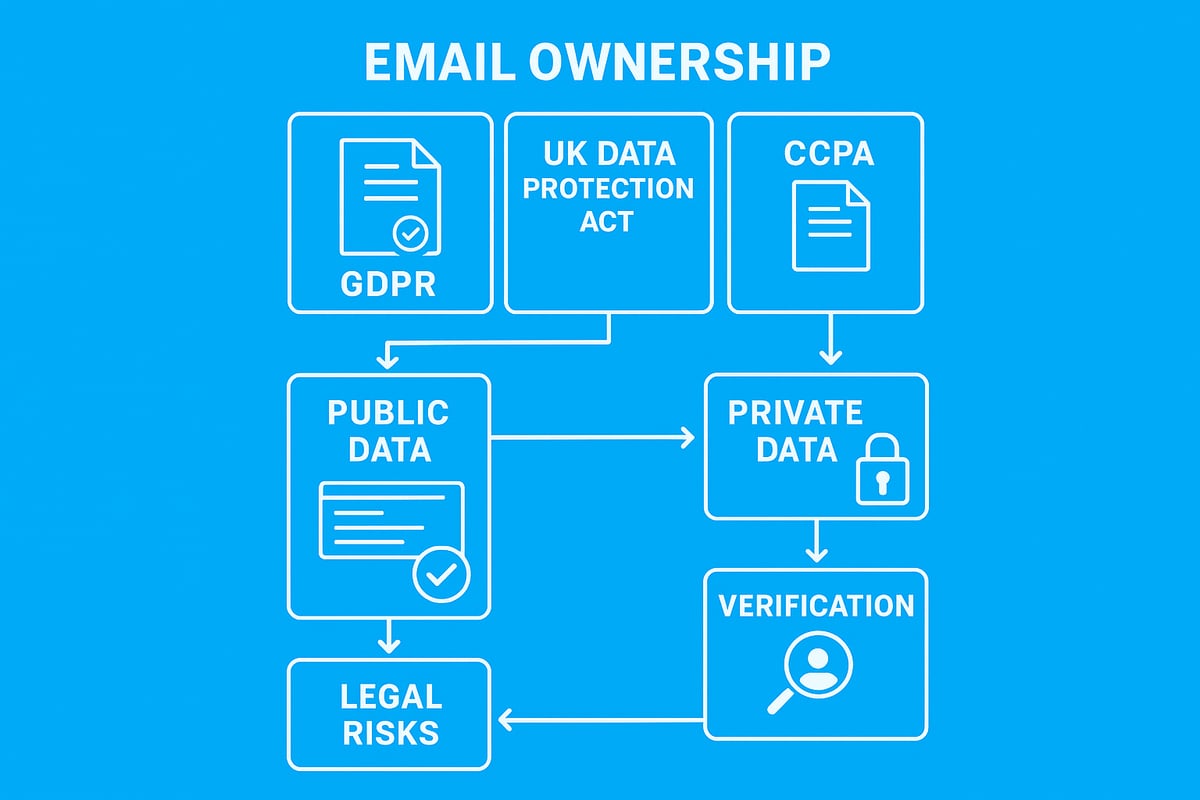
The landscape of email privacy has changed dramatically in recent years. Global regulations like the GDPR, UK Data Protection Act, and CCPA continue to set the standard for handling personal data. In 2026, updates to these laws have further restricted unauthorised access to email ownership details, making it crucial to understand what you can and cannot do when you try to find owner of email addresses.
Legal cases in the last year have highlighted the risks of overstepping privacy boundaries. For example, several organisations faced fines after using unauthorised lookup tools to identify individuals behind email addresses. These incidents underscore the importance of balancing privacy rights with the need for security and transparency.
The current legal framework reflects society’s growing demand for data protection. However, exceptions exist for fraud prevention, law enforcement, and certain business needs. For a deeper dive into the legal landscape, you can refer to Email Privacy Concerns, which explains the implications of the Electronic Communications Privacy Act and related regulations.
What Information Can Be Legally Accessed?
When you attempt to find owner of email, the distinction between public and private data is key. Publicly available information often includes email addresses listed on company websites, blogs, or social media profiles. Email headers can also reveal technical details, such as the sender’s mail server or IP address, but rarely disclose personal details unless made public by the owner.
A table can help clarify:
| Data Type | Publicly Accessible? | Requires Consent? |
|---|---|---|
| Email address on business site | Yes | No |
| Email header info | Sometimes | No |
| Social media profile | Yes (if public) | No |
| Private inbox content | No | Yes |
Breaching privacy laws by accessing restricted data or using unauthorised tools risks legal penalties. Consent remains a cornerstone of ethical searches. Always consider whether your methods respect user rights and align with current regulations when you try to find owner of email.
Why People Need to Find Email Owners
There are many valid reasons to find owner of email. Individuals often want to verify the legitimacy of a message, reconnect with an old colleague, or address security concerns. Businesses use email lookups to prevent fraud, ensure compliance, or reach out to potential clients.
Phishing and scam emails are on the rise. Recent 2025 industry reports show that the volume of suspicious messages increased by nearly 20 percent, making verification more important than ever. For example, a business recently avoided a costly fraud attempt by confirming the sender’s identity before transferring funds.
The need to find owner of email is driven by safety, trust, and the desire for secure communication. However, it is always essential to balance these needs with respect for privacy and legal boundaries.
Step-by-Step Guide: How to Find the Owner of an Email Address
Ever wondered how experts reliably find owner of email addresses in 2026? This actionable guide walks you through the exact steps, combining practical methods with privacy-conscious best practices. Whether you are verifying a suspicious message or reconnecting with a lost contact, follow this checklist for results.

Step 1: Start with a Google Search
Begin your search by entering the full email address in quotation marks within Google. This technique helps you find owner of email details if the address appears on public websites, forums, or business directories.
For example, searching "[email protected]" may reveal a LinkedIn profile or a company staff page. Look for clues in the search results, such as mentions in news articles or personal blogs.
However, remember that not all email addresses are indexed. Private or newly created emails may not appear in search engines at all. Combine this method with others for the most comprehensive approach.
Step 2: Analyse the Email Address Structure
Break down the email into username and domain components to find owner of email clues. For instance, [email protected] suggests a corporate address, while random strings like [email protected] may indicate a personal or temporary account.
Look for patterns:
- Full names or initials often signal legitimate use.
- Numbers or nicknames may hint at aliases or spam.
- Company domains can be cross-referenced on corporate websites.
By analysing structure, you can infer whether the sender is an individual, organisation, or potentially a scammer.
Step 3: Leverage Social Media Platforms
Many social networks let you search by email address, making them powerful tools to find owner of email information. Try entering the email into LinkedIn, Facebook, Twitter/X, or Instagram search bars.
If the address is linked to a user profile, you may see names, photos, or job titles. For example, LinkedIn often reveals business connections and employment history.
Privacy settings can block results, so do not rely solely on this step. Always respect platform terms and user privacy when searching for personal details.
Step 4: Use Free Reverse Email Lookup Tools
Free reverse lookup sites can automate your attempt to find owner of email data. Tools like Hunter.io, Pipl, and HaveIBeenPwned scan public records, social profiles, and breach databases.
These platforms may uncover names, company associations, or past data breaches. However, accuracy varies, and some results may be outdated.
To compare effectiveness, consult resources like the Email Finder Benchmark 2025, which evaluates tool performance and reliability. Always use trusted services to avoid privacy risks.
Step 5: Examine Email Headers for Technical Clues
Access the full email header in your client (e.g., Gmail, Outlook) to find owner of email origins. Headers contain routing details, timestamps, and sometimes sender IP addresses.
Here is a sample header line:
Received: from mail.example.com (123.45.67.89)
Use this information to trace the sender's region or internet service provider. Note that VPNs or anonymisation services can obscure true locations.
Headers can be complex, so consult official help guides for your email platform if unsure how to access or interpret them.
Step 6: Consider Direct Contact
If other steps do not yield answers, consider reaching out to the sender to find owner of email confirmation. Craft a polite, non-intrusive message requesting identification.
Example template for business:
"Hello, I received an email from this address regarding a business matter. Could you please confirm your identity and affiliation?"
Be cautious. Avoid sharing sensitive information or provoking unwanted responses. If the sender refuses or does not reply, respect their decision and move on.
Step 7: Document Your Findings and Respect Privacy
As you find owner of email details, keep careful records of your research steps. Note sources, search queries, and any contact attempts.
Always comply with privacy regulations and ethical standards. If your search leads to private or sensitive information, stop and consider whether further action is justified.
Respect boundaries. Unauthorised or persistent investigation can cross legal and ethical lines. When in doubt, prioritise privacy and consent.
Advanced Methods: Paid Tools and Professional Services
Exploring advanced methods to find owner of email in 2026 requires a careful blend of technology, expertise, and respect for privacy. When free searches fall short, paid tools and professional services offer deeper insights, but they come with their own risks and responsibilities.

Top Paid Reverse Email Lookup Services
Paid services have evolved in 2026, providing robust solutions for those needing to find owner of email addresses quickly and accurately. Platforms like Spokeo, InfoTracer, CUFinder, and RocketReach are at the forefront, offering bulk search capabilities, social media data extraction, and risk scoring features.
A comparison table helps illustrate their main differences:
| Service | Bulk Search | Social Discovery | Risk Scoring | Price Range |
|---|---|---|---|---|
| Spokeo | Yes | Yes | No | £-££ |
| InfoTracer | Yes | Limited | Yes | ££ |
| CUFinder | Yes | Yes | Yes | £££ |
| RocketReach | Yes | Extensive | Yes | £££ |
For example, using CUFinder to find owner of email can reveal not only the person's name but also their company, social profiles, and even recent activity. Paid tools are particularly valuable for businesses seeking secure communication and compliance, as discussed in Secure Email for Small Business.
Using OSINT (Open Source Intelligence) Techniques
Open Source Intelligence, or OSINT, enables advanced users to find owner of email information by combining multiple public data sources. Tools like Maltego and EmailRep.io allow investigators to map connections, uncover social profiles, and spot suspicious activity patterns.
A typical OSINT workflow might involve:
- Aggregating information from public records and data leaks.
- Cross-referencing social media, company registries, and news reports.
- Analysing patterns for potential fraud or impersonation.
A notable case in 2026 involved tracing a phishing attempt by using Maltego to visualise all digital footprints linked to a suspicious address. OSINT is powerful, but it demands technical skill and strict adherence to data protection laws when you find owner of email.
Email Tracers and Metadata Analysis
Professional tracers use metadata analysis to find owner of email details that most users miss. Examining full email headers can reveal technical information such as:
- Sender IP addresses
- Email client or device used
- Time and date stamps
- Routing paths through mail servers
By mapping these data points, experts can sometimes pinpoint the sender's region or ISP. However, anonymisation tools and VPNs often obscure this trail, limiting the effectiveness of metadata analysis. When you use this method to find owner of email, always consider privacy boundaries and the legal context.
When to Hire a Professional Investigator
There are scenarios where even the best tools cannot help you find owner of email with certainty. If you face high-stakes fraud, persistent harassment, or legal threats, hiring a licensed investigator is the safest route.
Professional investigators offer:
- In-depth reporting and documentation
- Legal compliance and ethical standards
- Access to proprietary databases
For example, a business targeted by a sophisticated email scam turned to an investigator, who combined OSINT and legal discovery to identify the perpetrator. Although costs can be significant, the benefits of expert intervention often outweigh the investment, especially when you must find owner of email for critical security or legal reasons.
Risks and Warnings with Advanced Methods
Advanced methods to find owner of email are not without pitfalls. False positives, outdated data, and technical errors can lead to misidentification. Overstepping legal boundaries can result in severe penalties, especially if you access restricted information without consent.
Key risks include:
- Mistaking similar or spoofed email addresses
- Accessing protected data and breaching privacy laws
- Ethical concerns around persistence or unwanted contact
Always act transparently, check your sources, and document your process. Respect privacy, and stop your investigation if there are signs you may cross ethical or legal lines. Responsible use of advanced methods ensures you find owner of email information safely and lawfully.
Free vs Paid Solutions: What Works Best in 2026?
Choosing the right method to find owner of email can be confusing with so many free and paid solutions available in 2026. Understanding how these tools compare helps you make informed, secure, and cost-effective decisions.
Comparing Free and Paid Lookup Tools
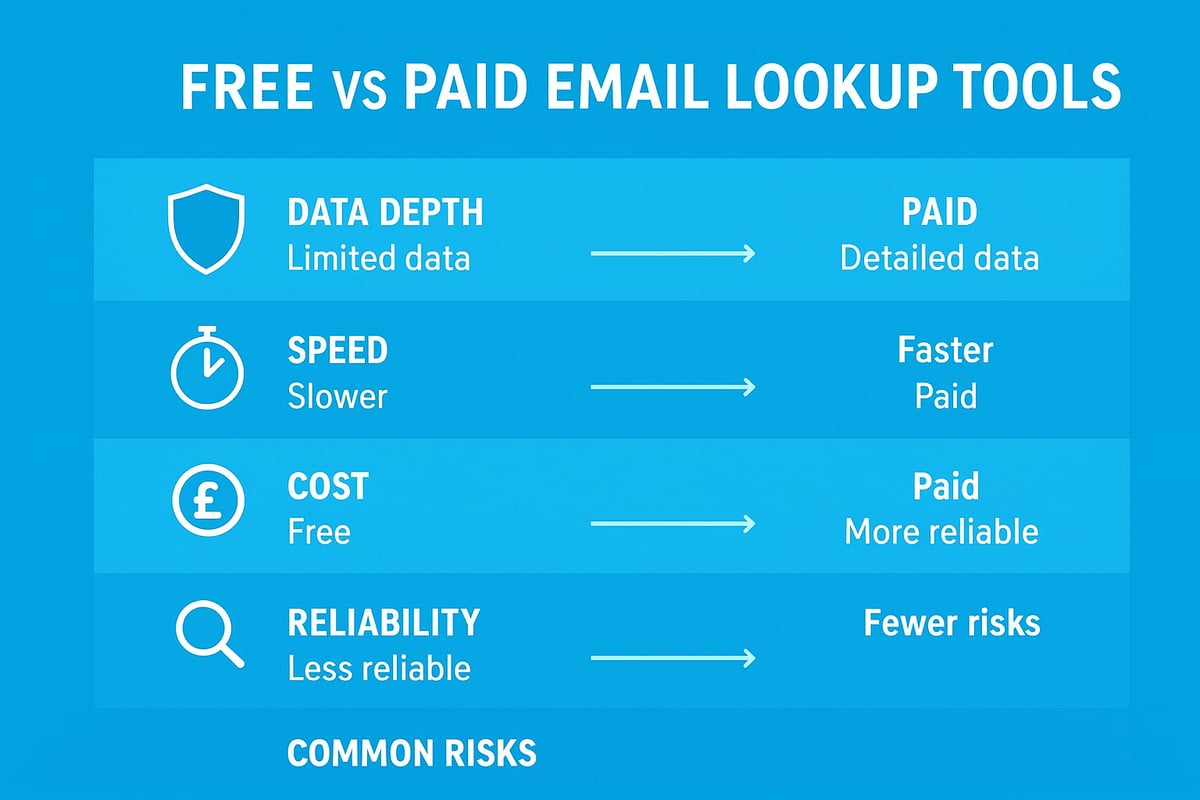
When you try to find owner of email, both free and paid lookup tools have their strengths and weaknesses. Free tools like Hunter.io and HaveIBeenPwned offer basic information, such as public profiles and breach data. Paid platforms like Spokeo or CUFinder provide deeper insights, including social media links and risk scoring.
| Feature | Free Tools | Paid Tools |
|---|---|---|
| Data Depth | Basic | Comprehensive |
| Speed | Moderate | Fast |
| Reliability | Varies | High |
| Cost | Free | Subscription/Pay-per-use |
| User Satisfaction | 60-70% | 85-90% |
Recent industry reports show paid tools have higher accuracy, but free options are often enough for straightforward cases.
Common Pitfalls and How to Avoid Them
While you search to find owner of email, you may encounter outdated databases or unreliable sites. One major risk is stumbling upon scam lookup services that promise results but deliver malware or phishing attempts.
To avoid these issues, always check for up-to-date sources and read user reviews. Be cautious of sites that request payment upfront with no free trial. For more on the risks tied to suspicious email sign-ups, see Email Sign-Ups and Spam Risks.
Best Practices for Choosing a Lookup Solution
Selecting the right tool to find owner of email requires careful consideration. Start with these best practices:
- Check service reviews and ratings.
- Review privacy policies and data sources.
- Favour established, reputable brands.
- Use trial periods before committing financially.
- Ensure transparent pricing and clear cancellation policies.
By following these steps, you reduce the likelihood of falling victim to scams and improve your chances of accurate results.
Real-World Scenarios: Success and Failure Stories
In practice, a free lookup tool may help you find owner of email for common addresses, such as reconnecting with old colleagues. However, businesses often benefit from paid services, especially when verifying high-value contacts or investigating fraud.
One user described how a scam lookup site led to a phishing attack, highlighting the importance of due diligence. On the other hand, a marketing agency improved campaign performance by using a paid platform to validate email lists, reducing bounce rates and increasing engagement.
Ethical, Security, and Legal Considerations
Understanding the ethical, security, and legal landscape is essential when you try to find owner of email addresses. The process can be a powerful tool, but mishandling it may cross legal lines or put your own safety at risk. Let us explore the critical considerations that should guide your approach.
Navigating Data Protection and Consent
Whenever you attempt to find owner of email details, you must understand data protection rules. In the UK and globally, strict laws like GDPR and the UK Data Protection Act require clear consent for processing personal data. Recent updates, as highlighted in the Data Privacy Update 2025, have strengthened privacy rights and increased penalties for misuse.
Accessing or sharing email ownership information without consent can result in legal consequences. High-profile cases in 2025 saw companies fined for failing to obtain proper permission. Always ensure you have a legitimate reason and, where possible, explicit approval before conducting an email lookup.
Security Risks of Email Lookup
Attempting to find owner of email information can expose you to online threats. Cybercriminals often use fake lookup services to distribute malware or steal your data. Phishing attacks may also exploit your search efforts, tricking you into revealing sensitive information.
To stay secure, use only reputable lookup platforms. Keep your device and antivirus software up to date. Be cautious with any site or service that asks for excessive permissions or payment up front. Recognise red flags, such as poorly designed websites or unsolicited offers, and avoid downloading unknown files during your search.
Respecting Privacy and Avoiding Harassment
It is vital to respect boundaries when you find owner of email data. Persistently searching for or contacting someone without their consent can cross ethical lines and even lead to harassment claims. The impact of unwanted outreach may cause distress or legal action, especially if repeated attempts are made after a request to stop.
Always consider the intent and frequency of your communication. If your purpose is legitimate, ensure your approach is polite and transparent. If someone asks not to be contacted, honour their wishes immediately to avoid escalation.
Using Lookup Results Responsibly
Once you find owner of email information, you must use it appropriately. Acceptable uses include verifying identities for security, reconnecting with known contacts, or confirming business legitimacy. However, using discovered details for spamming, stalking, or unauthorised marketing is strictly prohibited by law and industry guidelines.
Refer to regulations such as the Email Privacy Act Overview for further clarity on what is allowed. Always prioritise transparency, document your process, and never use obtained data for unethical purposes. Responsible use protects both you and the privacy rights of others.
Maximising Value: Practical Uses for Email Owner Identification
Understanding how to find owner of email can deliver significant benefits across security, trust, and efficiency. By applying these techniques, individuals and businesses can improve safety, foster genuine connections, and maintain compliance in a digital-first world.
Verifying Legitimate Contacts and Preventing Fraud
One of the most critical uses of find owner of email is verifying if a contact is genuine before responding or sharing information. Businesses and individuals can cross-reference the sender's details to spot phishing or scam attempts. For example, a finance department may prevent payment fraud by confirming the sender's identity. If you encounter issues when contacting a suspicious address, reviewing Emails Bouncing Back Explained can clarify common problems with undeliverable messages and help you troubleshoot safely.
Building Professional and Personal Connections
People often use find owner of email to reconnect with old colleagues, friends, or potential business partners. By verifying an address, you ensure you are reaching the correct person and avoid misdirected communication. This is especially important in professional settings, where contacting the right individual can open doors to new opportunities or revive dormant relationships. The process supports both personal and business growth by ensuring accurate outreach.
Supporting Security and Compliance Efforts
In the realm of cybersecurity, organisations rely on find owner of email to trace suspicious activity and ensure compliance with internal policies. HR departments may use these methods to verify applicant details, while IT teams investigate suspicious logins or access attempts. Accurate identification helps prevent internal threats and supports adherence to regulations, which is vital for safeguarding both data and reputation.
Streamlining Marketing and Outreach Campaigns
Marketing professionals use find owner of email to maintain clean contact lists and target the right audience. Verifying addresses improves deliverability rates and minimises bounce-backs. When expanding your outreach, it can be helpful to Get a Free Email Account for testing or verification purposes, ensuring your messages reach real recipients. This approach boosts campaign effectiveness and supports responsible communication practices.
Limitations and Responsible Use
While the ability to find owner of email offers many advantages, it is essential to respect privacy boundaries and legal requirements. Not every email can or should be traced, especially if the search risks breaching consent or ethical standards. Always balance your need for information with respect for individual rights, and stop your search if it could lead to harassment or non-compliance. Responsible use ensures these tools remain beneficial for all.