7 Essential Secure Email for Small Business Solutions 2026
December 16, 2025
Cyber criminals are targeting small businesses with more sophisticated email attacks than ever before. In 2026, the risk of data breaches and phishing is at an all-time high, making secure email for small business a critical priority.
Without strong protection, a single email threat could cost thousands and damage your reputation. New regulations and the rise of remote work add even more pressure to keep communications safe.
This guide reveals the seven most essential secure email solutions for small businesses in 2026. You will discover their features, pricing, and how each one addresses unique business needs.
By the end, you will have the knowledge to make an informed choice and protect your business communications with confidence.
Why Secure Email Matters for Small Businesses in 2026
Small businesses are facing an unprecedented wave of cyber threats in 2026. Ransomware attacks, sophisticated phishing campaigns, and data breaches now target SMEs as much as large corporations. According to recent small business cyberattack statistics, over 60 percent of UK small businesses experienced at least one email-based attack in the past year. The need for secure email for small business has never been more urgent.
Regulatory demands are also tightening. The GDPR and UK Data Protection Act require strict controls over customer communications and personal data. Compliance is no longer optional, and fines for breaches can cripple a small business. Secure email for small business helps ensure that sensitive information is handled in line with these evolving regulations, providing peace of mind and legal protection.
The financial stakes are high. The average cost of a data breach for a UK SME is now estimated at over £45,000, not including the hidden costs of recovery and downtime. For many, a single incident could threaten the business’s survival. Secure email for small business acts as a frontline defence, blocking threats before they reach your inbox.
Reputational damage is another critical concern. Customers expect their data to be protected, and a single breach can erode years of trust. Once lost, reputation is difficult to rebuild. Secure email for small business reassures clients and partners that you take security seriously, which is vital for long-term relationships.
The rise of remote and hybrid work has expanded the attack surface. Employees access email from home networks and mobile devices, increasing vulnerability. Secure email for small business ensures encrypted communications and safe access, regardless of location or device.
Recent high-profile attacks on SMEs have shown how quickly a business can be compromised. In many cases, a single phishing email led to significant financial and data losses. These incidents highlight the importance of proactive security measures.
Ultimately, secure email for small business is not just about defence. When customers see that you prioritise security, it builds confidence and can even become a selling point. Secure communication supports growth by enabling new business opportunities, protecting sensitive deals, and ensuring compliance every step of the way.
Key Features to Look For in Secure Email Solutions
Selecting the right secure email for small business is crucial in 2026. Small businesses face a complex landscape of cyber threats, compliance demands, and operational needs. Understanding essential features can help you make a smart, future-proof choice that protects your communications and supports business growth.
End-to-End Encryption
End-to-end encryption is fundamental to secure email for small business. It ensures only intended recipients can read your messages, protecting sensitive client and internal information from interception. This feature is especially vital for businesses handling confidential data or regulated industries.
Advanced Spam and Phishing Protection
Modern cybercriminals use sophisticated tactics to target SMEs. Advanced spam and phishing protection, often powered by AI, blocks malicious emails before they reach your inbox. For more detail on how these defences work, review the anti-spam measures for small business that leading providers employ.
User-Friendly Interface
A secure email for small business must be accessible to all staff, regardless of technical skill. An intuitive interface reduces training time, encourages adoption, and helps prevent accidental security lapses. Look for platforms that offer guided onboarding and clear navigation.
Compliance Tools
Regulatory requirements are tightening worldwide. Built-in compliance tools help your secure email for small business meet GDPR, the UK Data Protection Act, and industry-specific standards. Features like audit logs, encrypted storage, and policy management are essential for peace of mind and legal protection.
Mobile and Remote Access
With remote and hybrid work now standard, secure email for small business needs to function seamlessly across devices. Mobile apps and web-based access let teams communicate securely from anywhere, without compromising usability or data protection.
Integration with Business Tools
Efficiency matters. The best secure email for small business solutions integrate with CRM systems, productivity suites, and workflow tools. This streamlines processes, reduces context-switching, and enhances overall productivity by keeping communications centralised.
Scalability and Pricing Flexibility
As your business grows, your secure email for small business should scale with you. Look for solutions offering flexible pricing, user management, and feature upgrades. This ensures you only pay for what you need, while supporting future expansion.
Feature Comparison Table
Below is a comparison of key features offered by top secure email for small business providers:
| Feature | End-to-End Encryption | AI Spam/Phishing | User-Friendly | Compliance Tools | Mobile Access | Integrations | Scalable Pricing |
|---|---|---|---|---|---|---|---|
| Proton Mail | Yes | Yes | Yes | Yes | Yes | Limited | Yes |
| Microsoft 365 Business Premium | Yes | Yes | Yes | Yes | Yes | Extensive | Yes |
| Tutanota | Yes | Yes | Yes | Yes | Yes | Limited | Yes |
| Zoho Mail | Yes | Yes | Yes | Yes | Yes | Good | Yes |
| Astonish Email | Yes | Yes | Yes | Yes | Yes | Limited | Yes |
Choosing a secure email for small business with these features empowers your team to communicate safely, comply with regulations, and adapt as your needs evolve.
7 Essential Secure Email for Small Business Solutions 2026
Selecting the right secure email for small business is crucial in 2026. Small businesses face mounting cyber threats, strict regulations, and growing client expectations around privacy. The following seven solutions offer robust protection, user-friendly tools, and flexible pricing for modern SMEs. Each option is designed to tackle specific business needs, helping you make an informed decision. For a broader comparison, you might also explore independent reviews of top secure email providers 2025.
1. Proton Mail
Proton Mail stands out as a leading secure email for small business in 2026, thanks to its strong privacy foundation and Swiss jurisdiction. The platform provides end-to-end encryption, ensuring only sender and recipient can access message content. With a zero-access architecture, even Proton Mail staff cannot read your communications.
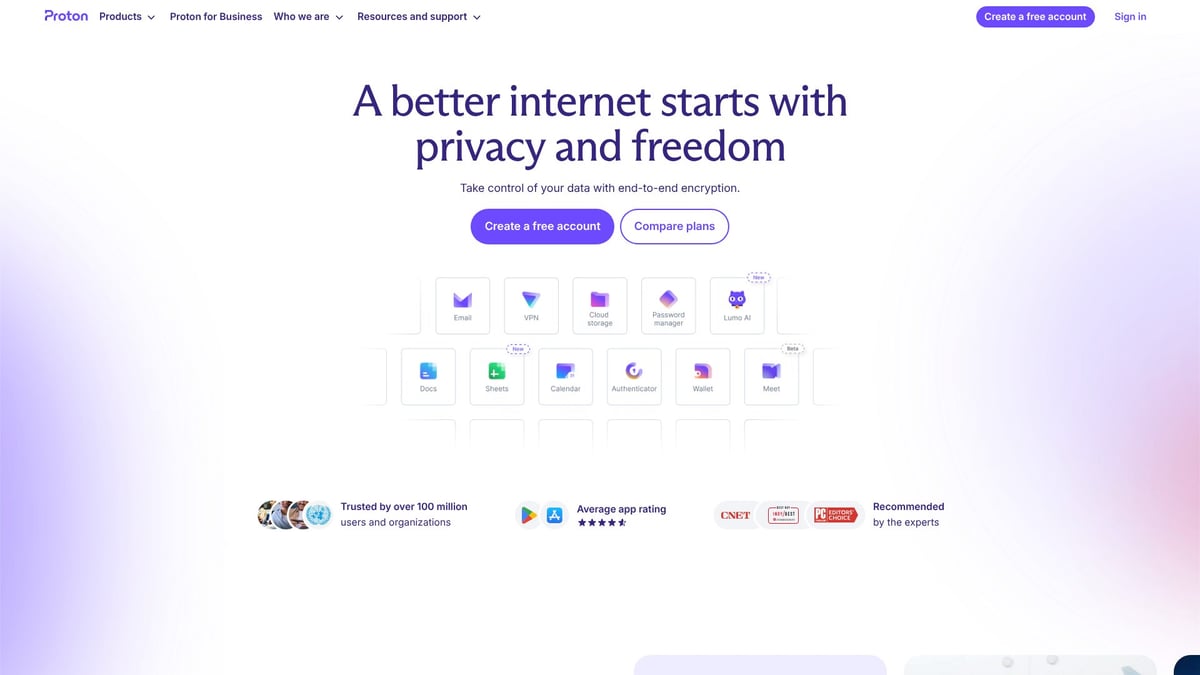
Pricing is competitive, starting with a free basic plan and business options from £7.99 per user per month. This flexible approach suits both startups and established SMEs. Proton Mail’s open-source technology adds transparency, while the anonymous sign-up feature appeals to privacy-focused businesses.
Key features include:
- End-to-end encrypted emails and attachments
- Secure contact and calendar management
- No advertising or tracking
- GDPR compliance
- Custom domains for branding
Ideal for privacy-conscious small businesses, Proton Mail is especially popular in the legal and financial sectors, where client confidentiality is paramount. The platform offers easy migration tools, making it simple to switch from legacy systems.
Pros:
- Strong encryption by default
- User-friendly web and mobile apps
- No ads, protecting user data
- Backed by strict Swiss privacy laws
Cons:
- Limited integrations with third-party tools
- Some advanced features require a paid plan
UK consultancy firms rely on Proton Mail for GDPR compliance and secure client communications. Choosing this secure email for small business ensures sensitive information remains protected, fostering client trust and regulatory peace of mind.
2. Microsoft 365 Business Premium
Microsoft 365 Business Premium is an all-in-one solution that combines productivity and secure email for small business. With pricing from £18.10 per user per month, it offers a comprehensive suite, including Word, Excel, Teams, and Outlook, all integrated with advanced security features.
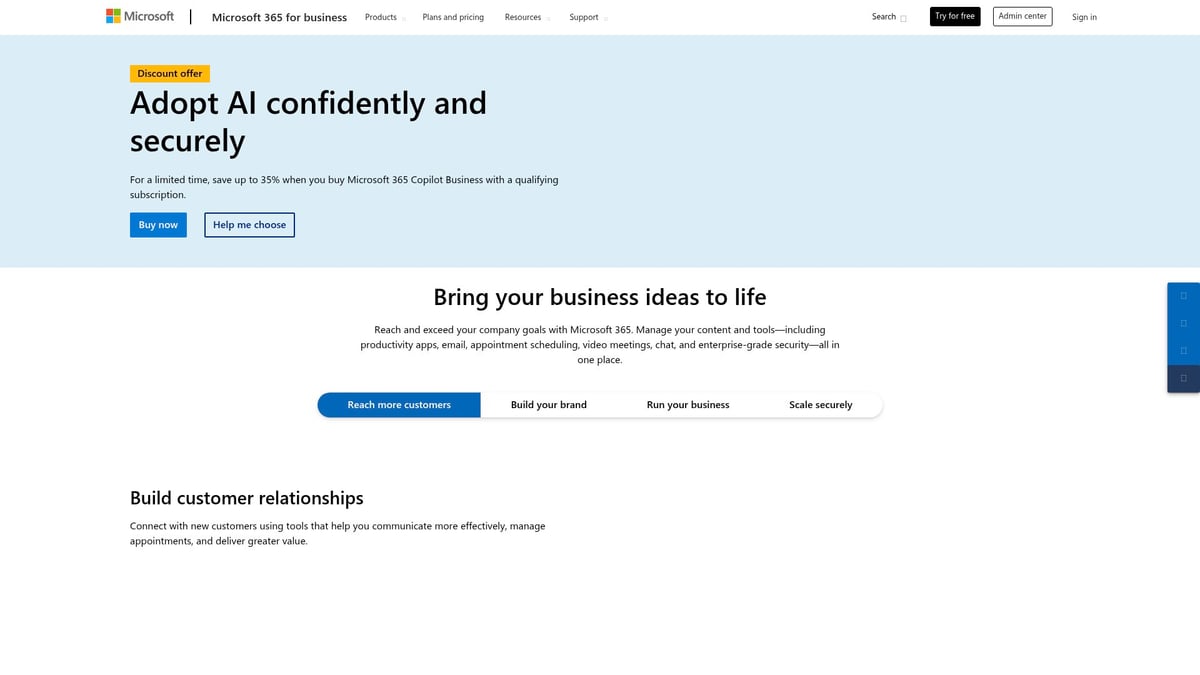
Core security capabilities:
- Advanced Threat Protection to block phishing and malware
- Encrypted email and secure file sharing
- Multi-factor authentication for enhanced access control
- Data loss prevention and compliance tools
This solution is ideal for businesses seeking a familiar interface and seamless integration across productivity apps. Microsoft 365’s robust admin controls allow IT teams to manage security policies centrally, while 24/7 support assists with any issues.
Pros:
- Well-known, intuitive interface for staff
- Strong admin controls and reporting
- Regular feature updates and patches
Cons:
- Higher price point than some competitors
- Can be complex for very small teams
Retail SMEs frequently use Microsoft 365 to unify communications, leveraging Teams, Outlook, and secure email for small business in one package. This integration streamlines workflows and protects against evolving cyber threats, making it a strong choice for growing enterprises.
3. Tutanota
Tutanota delivers secure email for small business with a focus on privacy, sustainability, and simplicity. It offers a free plan for individuals and business plans starting at £6.50 per user per month. The platform’s end-to-end encryption covers emails, calendars, and contacts, ensuring comprehensive protection.
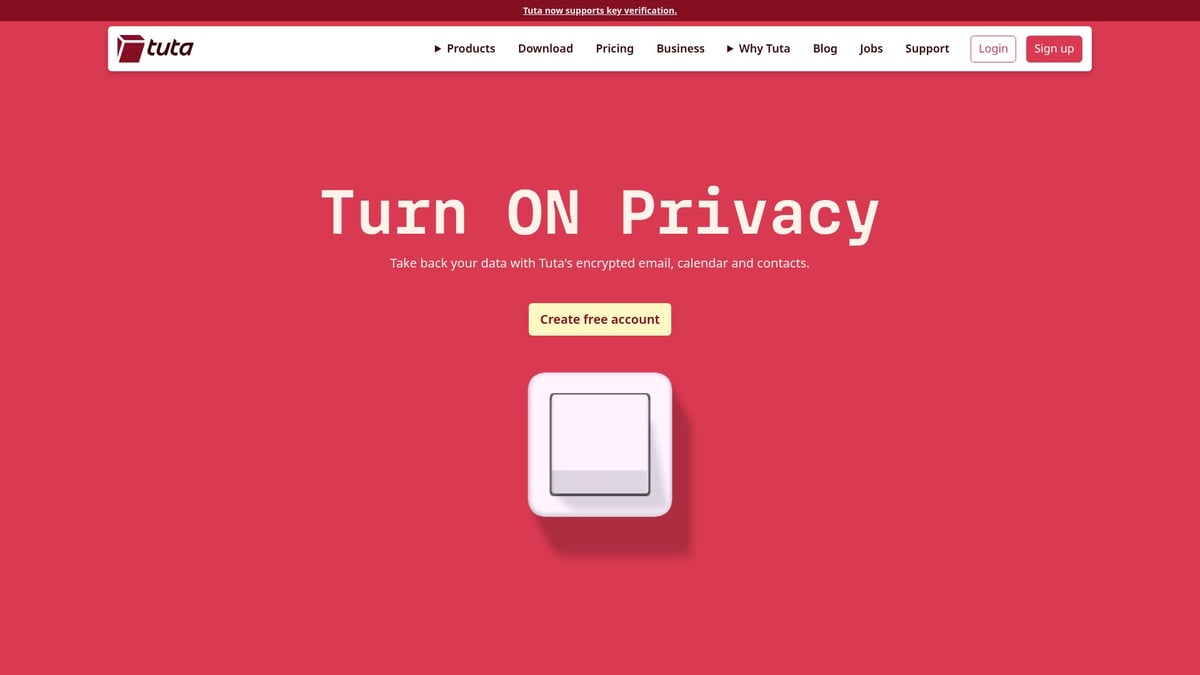
Key features:
- Encrypted email and calendar functions
- Open-source software for transparency
- Runs entirely on renewable energy
- GDPR-compliant and ad-free
- Custom domains and encrypted search
Tutanota appeals to environmentally conscious SMEs and those prioritising privacy. Its straightforward interface makes onboarding non-technical staff easy, while encrypted search and custom domains support business professionalism.
Pros:
- No advertising or data mining
- Easy-to-use apps for web and mobile
- Strong focus on privacy and sustainability
Cons:
- Fewer integrations than larger competitors
- Smaller third-party ecosystem
Creative agencies across the UK trust Tutanota to manage confidential client information. For businesses seeking secure email for small business that balances privacy, compliance, and sustainability, Tutanota is a standout choice. For more details on encryption methods, see Tuta email encryption details.
4. Zoho Mail
Zoho Mail is a cost-effective secure email for small business, starting at just £0.80 per user per month for the Standard plan. The platform is ad-free, with encrypted email, custom domains, and seamless migration tools to onboard your team quickly.
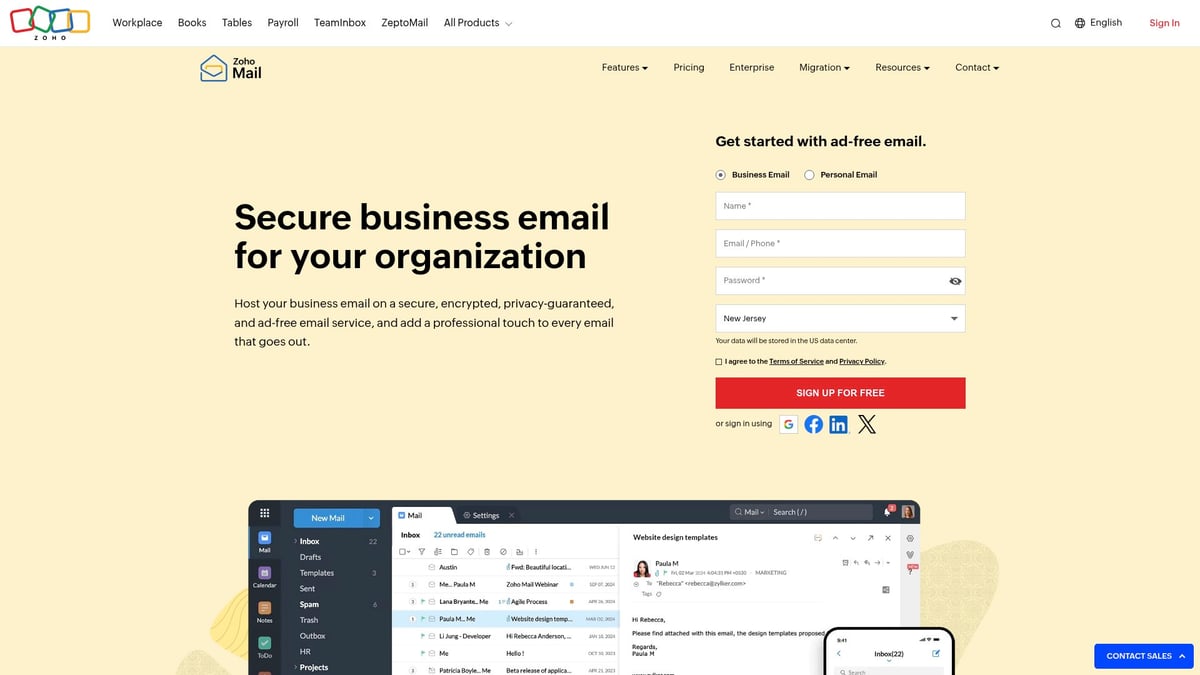
Notable features:
- End-to-end encrypted messaging
- Clean, user-focused interface
- Admin controls for account management
- GDPR compliance and data retention policies
- Deep integration with Zoho’s suite (CRM, Projects, and more)
Zoho Mail is ideal for startups and budget-conscious SMEs that still require enterprise-grade security. Its robust admin console simplifies user management and access controls, while integration with Zoho’s business tools supports growth and productivity.
Pros:
- Highly affordable for small teams
- No advertising or tracking
- Flexible migration and import options
Cons:
- Some advanced features require higher-tier plans
- Fewer integrations outside Zoho’s ecosystem
UK startups often use Zoho Mail for secure email for small business communications, benefiting from its low cost and ease of use. This solution helps SMEs stay compliant without sacrificing usability or breaking the bank.
5. Astonish Email
Astonish Email is designed specifically for UK small businesses seeking secure email for small business and streamlined marketing communications. With free and paid plans from £25 per month, it combines 256-bit encryption, easy contact import, and real-time analytics in one platform.

Key features:
- Powerful encryption for outgoing and marketing emails
- Ultra-simple setup for non-technical users
- Responsive UK-based support team
- Real-time analytics to measure campaign performance
- High ROI, reported at £40 per £1 spent
Astonish Email focuses on secure marketing communications rather than being a full email client. Its user-friendly design makes it accessible for entrepreneurs and small retailers. The platform’s local support ensures quick resolution of issues, supporting business continuity.
Pros:
- Extremely easy to set up and use
- Local, responsive support for UK businesses
- Detailed analytics for campaign optimisation
Cons:
- Primarily focused on marketing emails
- Not a comprehensive email client for all business needs
Small retailers use Astonish Email to securely engage customers and drive sales. By choosing a secure email for small business like Astonish, you can enhance your marketing reach without compromising data security.
6. Hushmail for Business
Hushmail for Business offers a reliable secure email for small business, focusing on industries with strict compliance needs such as healthcare, legal, and finance. Starting at £4.99 per user per month, Hushmail provides encrypted email, secure web forms, and GDPR/HIPAA compliance.
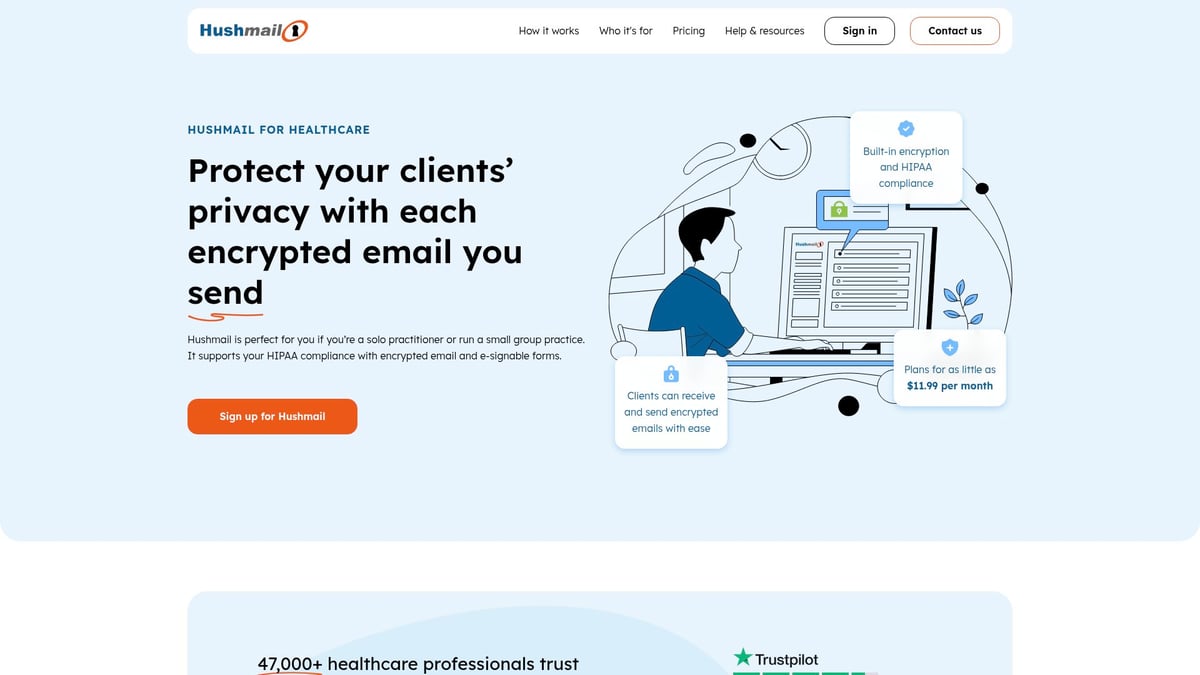
Features include:
- End-to-end encrypted emails and attachments
- Custom domain support for professional branding
- Secure web forms for data collection
- Integration with Outlook
- Easy-to-use web and mobile apps
Hushmail’s simple interface makes it accessible for all staff, while its form builder streamlines gathering sensitive client data securely. Businesses can manage compliance requirements while maintaining seamless communication.
Pros:
- Reliable encryption for all messages
- Built-in form builder for secure data collection
- Custom domains to reinforce trust
Cons:
- Limited to the Hushmail ecosystem
- Basic interface compared to larger providers
UK health clinics and legal firms use Hushmail to maintain confidentiality in patient and client communications. This secure email for small business solution enables SMEs to meet regulatory demands and build client trust.
7. Mimecast Email Security
Mimecast Email Security is an enterprise-grade secure email for small business, offering advanced threat protection and compliance tools. With custom pricing (typically £3 to £6 per user per month), Mimecast delivers layered security for growing SMEs.
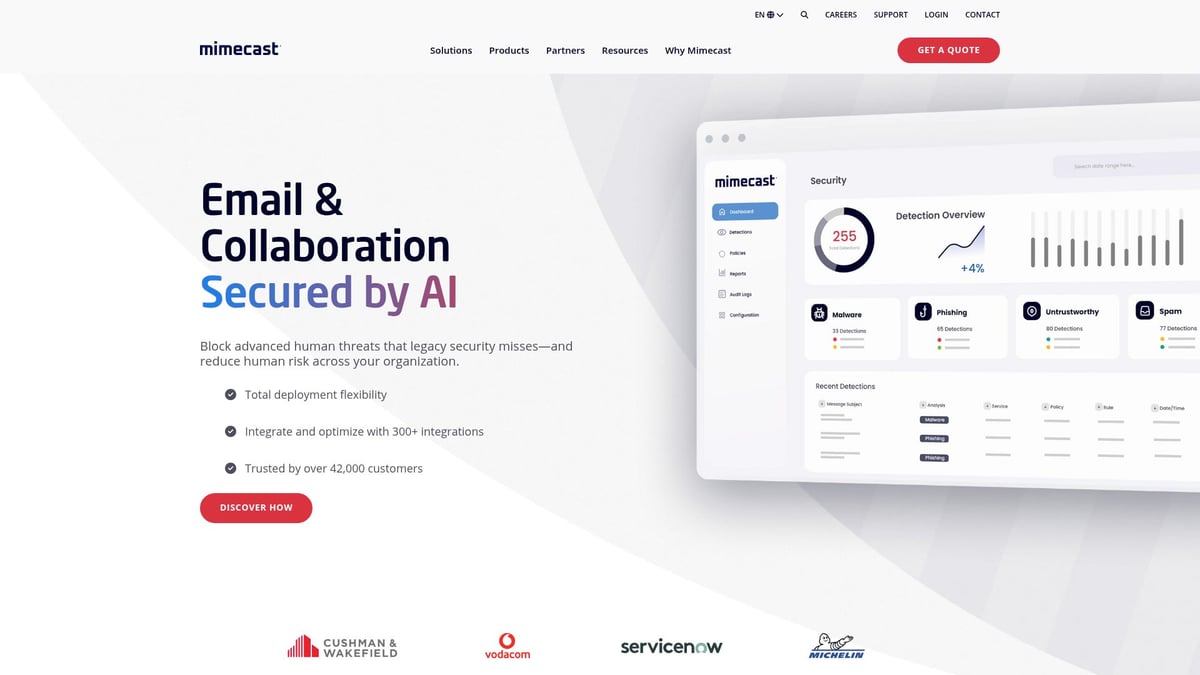
Key features:
- Advanced threat detection using AI and machine learning
- Data loss prevention and email archiving
- Seamless integration with Microsoft and Google platforms
- Detailed reporting and analytics
- Scalable to support business growth
Mimecast is ideal for professional services firms and larger SMEs needing robust defences against sophisticated attacks. Its filtering and reporting tools allow businesses to monitor threats and compliance in real time.
Pros:
- Powerful email filtering and anti-phishing tools
- Comprehensive reporting for IT teams
- Scalable for businesses of all sizes
Cons:
- Steeper learning curve for setup and management
- More complex than basic email security solutions
UK professional services firms rely on Mimecast to deliver secure email for small business, protecting sensitive client data and maintaining operational resilience. Mimecast’s layered approach ensures threats are stopped before reaching your inbox.
Implementation Best Practices for Secure Email in Small Businesses
Establishing secure email for small business environments requires a balanced approach between technical tools, staff awareness, and ongoing risk management. The right strategy not only protects data but also ensures compliance and business continuity. By following structured best practices, small businesses can significantly reduce their exposure to cyber threats.
Assessing Needs and Laying the Foundation
Begin by evaluating your business’s unique requirements. Consider regulatory obligations such as GDPR or industry-specific standards, and map out the types of sensitive data you handle. This assessment helps align secure email for small business solutions with both compliance and operational needs.
List all current email systems, user roles, and integration points with existing tools. Determine if your business requires built-in encryption, advanced threat protection, or flexible mobile access. A tailored approach ensures you select features that directly address your risks.
Employee Training and Security Awareness
Human error is often the weakest link in secure email for small business protection. Invest in regular, practical training sessions to build a culture of vigilance. Teach staff how to recognise phishing attempts, suspicious attachments, and social engineering tactics.
A recent SME case study found that consistent training reduced phishing incidents by 70 percent within a year. Interactive workshops, simulated attacks, and up-to-date guidance keep security top of mind for every team member.
Technical Controls and Policy Management
Implement technical safeguards to reinforce your defences. Multi-factor authentication (MFA) adds a critical layer beyond passwords, making it harder for attackers to access accounts. Schedule routine software updates and patch management to close vulnerabilities promptly.
Develop and enforce clear email usage policies, covering topics such as password strength, external communications, and secure handling of attachments. For guidance on compliance, refer to a robust data retention policy for SMEs to ensure that sensitive email data is stored and managed securely.
Monitoring, Metrics, and Continuous Improvement
Ongoing monitoring is essential for effective secure email for small business operations. Track key metrics such as the number of threats blocked, phishing attempts detected, and user compliance rates. Use automated alerts and reports to identify unusual activity quickly.
Review performance regularly and adjust your approach as threats evolve. Insights from the Email security breach report 2025 highlight the importance of proactive monitoring to minimise financial and reputational risks. Continuous improvement keeps your defences resilient and responsive.
Future Trends in Secure Email for SMEs (2026 and Beyond)
Looking ahead, the landscape of secure email for small business is set to evolve rapidly. Artificial intelligence will play a pivotal role, enabling real-time threat detection and automated responses to suspicious activities. This shift will help small businesses stay a step ahead of increasingly sophisticated cyber risks.
Quantum-resistant encryption is expected to become a standard feature, protecting sensitive data from emerging threats. Integration with business collaboration platforms will also streamline workflows, ensuring that secure email for small business remains both efficient and robust.
User experience will take centre stage, with providers focusing on intuitive design and mobile-first security. As communication channels diversify, mastering email subject line best practices will become even more crucial for clarity and safety.
Ultimately, secure email for small business will serve as a cornerstone of digital trust and resilience, empowering growth in a connected world.