Call With Email: The Definitive Guide for 2026
February 6, 2026
Imagine if every business conversation could be instantly transformed into an actionable, trackable record. In 2026, this vision becomes reality with call with email technology, seamlessly connecting voice calls and email in one streamlined workflow.
This definitive guide will show you how call with email is changing professional communication. We will explore key benefits, emerging trends, and what makes this integration essential for smarter collaboration.
Ready to boost productivity and improve client engagement? Discover step-by-step how to implement call with email, learn best practices, and see what the future holds for unified communication.
What is ‘Call With Email’ and Why Does It Matter in 2026?
Imagine managing every business call and email in one seamless flow. That is precisely what call with email delivers in 2026. This technology combines voice calls with email, creating a unified workspace where every conversation is tracked, stored, and actionable. By embedding calling features directly within email platforms, professionals can initiate, record, and summarise calls without switching between apps. Unlike traditional systems, where emails and calls existed in separate silos, call with email brings clarity and efficiency to every interaction.
Defining ‘Call With Email’ Technology
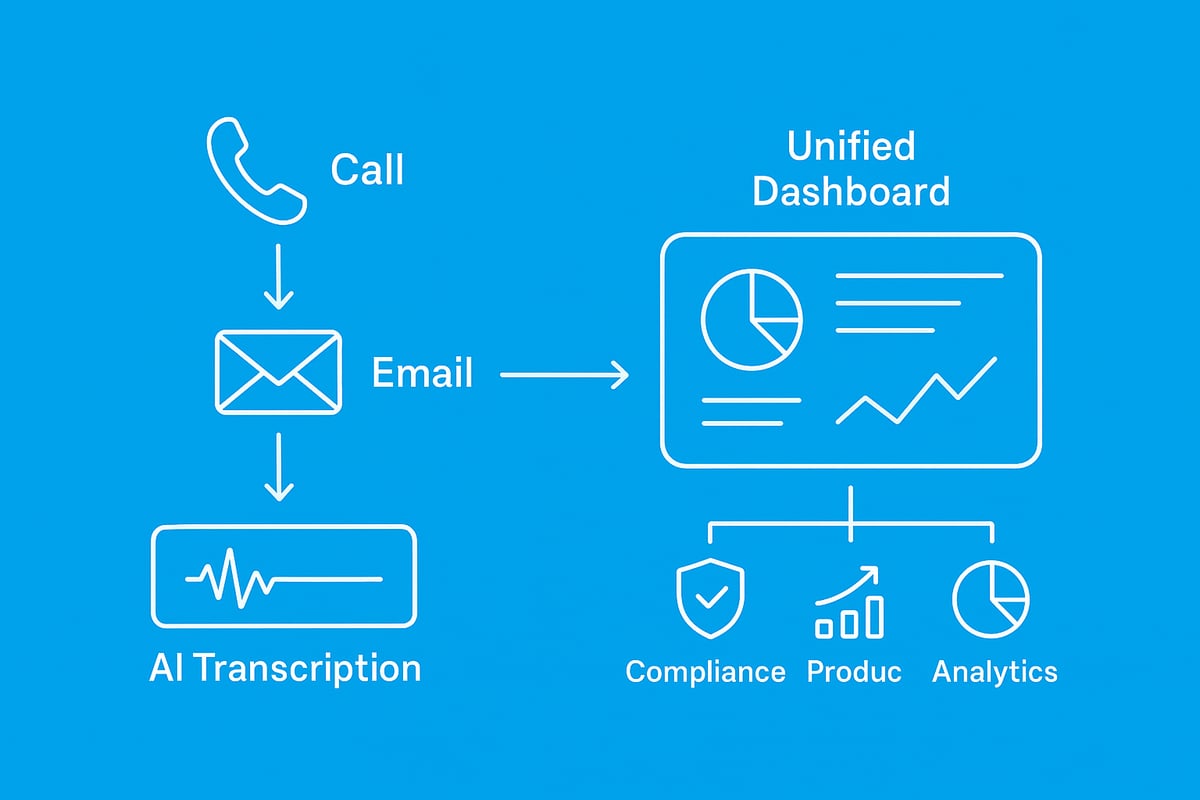
Call with email refers to the integration of voice calling directly within email platforms. This means users can start a call from their inbox, have that call automatically transcribed, and receive a summary delivered to their email thread. Unlike the old model, where phone and email were separate, this approach bridges the gap, turning every exchange into a searchable, documented record.
Modern platforms in 2026, such as Microsoft Teams, Google Workspace, and tailored unified business email solutions, now offer this level of integration. These tools enable users to move smoothly from written to spoken communication and back again, all within a single environment.
The Evolution of Communication: From Separate Channels to Unified Workflows
Before the 2020s, calls and emails operated in isolation. Professionals wasted time toggling between phones, inboxes, and note-taking apps. The rise of unified communications platforms changed this landscape, merging chat, email, and calls into a single workflow.
By 2025, 70% of businesses had adopted integrated communication solutions, according to Gartner. This shift has not only streamlined processes but also made collaboration more intuitive. Today, call with email stands at the centre of this evolution, as shown by the growing demand for unified business email solutions.
The Business Case for Integration
Why have organisations embraced call with email so quickly? The answer lies in measurable business benefits:
- Increased productivity, as users spend less time switching between channels.
- Enhanced record-keeping, with every call summarised and attached to relevant email threads.
- Improved compliance, offering audit trails essential for regulated sectors.
Take law firms as an example. With call with email, every client conversation is automatically logged and summarised, making case tracking far more efficient. This approach means less manual work and more reliable documentation for legal teams.
Why 2026 is the Tipping Point
Several forces have combined to make 2026 a breakthrough year for call with email. AI-driven transcription has reached new heights, providing near-instant, highly accurate call summaries. Automated email follow-ups ensure no action item slips through the cracks.
Remote and hybrid work environments have also driven demand for seamless communication. According to Forbes, 85% of remote teams now cite unified communication as central to their productivity. The combination of advanced AI and changing work habits makes call with email a must-have for businesses in 2026.
Key Challenges Addressed
Call with email solves some of the most persistent problems in workplace communication. It reduces missed information from verbal-only calls, streamlines follow-up processes, and ensures consistent documentation.
Additionally, industries such as finance and healthcare benefit from improved compliance and audit readiness. By making every interaction traceable, call with email also boosts client engagement and minimises misunderstandings.
How ‘Call With Email’ Works: Step-by-Step in 2026
Understanding how call with email operates in 2026 is essential for any business aiming to streamline communication. This technology brings together voice, text, and automation, making interactions smoother and easier to manage.
Let us walk through the main steps that define the call with email process, from initiating a call to analysing rich communication data.
Step 1: Initiating a Call-Enabled Email
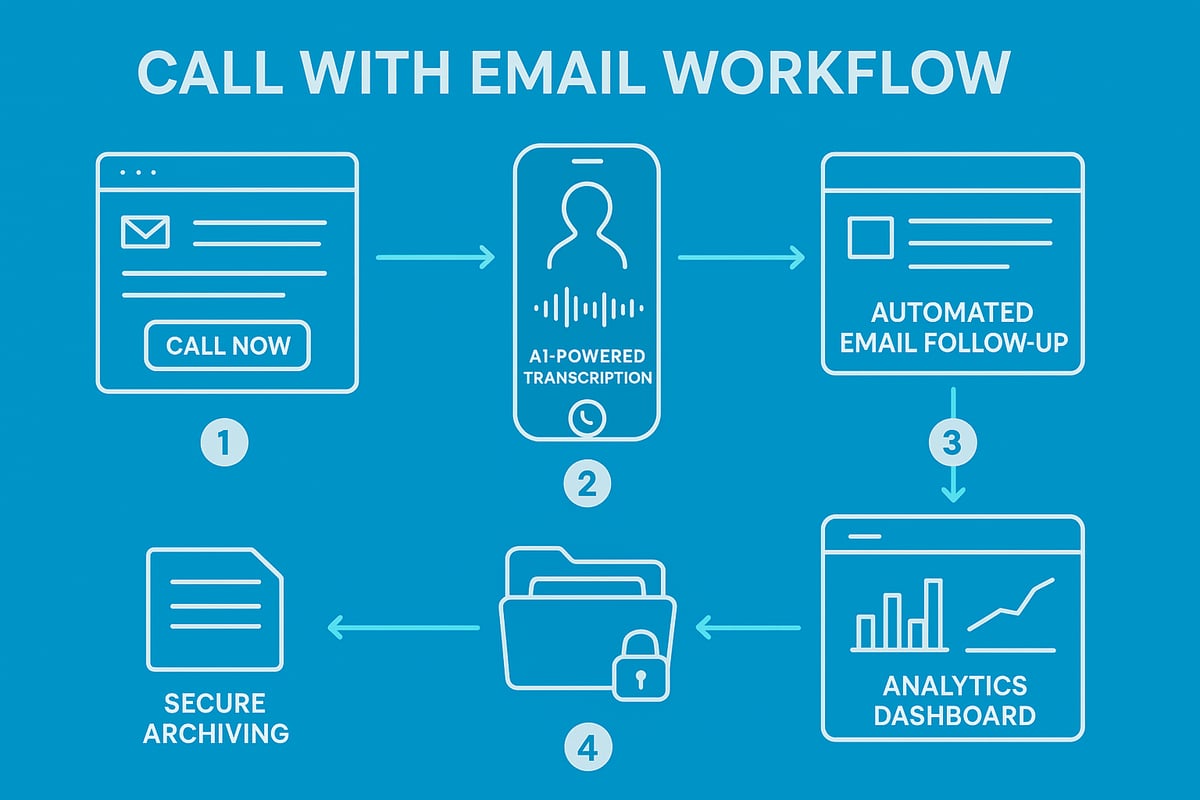
The first step in the call with email workflow begins within your email platform. Users can start a voice call directly from their inbox by clicking a dedicated button, often labelled 'Call Now' or similar.
This action triggers a secure connection using built-in protocols, ensuring that both parties are authenticated. Modern platforms embed these buttons within email signatures or message footers, making access effortless.
For instance, a sales manager might initiate a client call straight from a prospect’s email thread, instantly linking the call to all related correspondence.
Security is a priority at this stage. Encryption and multi-factor authentication are standard, preventing unauthorised access and ensuring compliance with company policies.
By embedding call functionality into email, call with email eliminates the need to switch between multiple apps, saving valuable time and reducing friction in daily workflows.
Step 2: Real-Time Call Integration and Transcription
Once the call is active, advanced AI tools immediately transcribe the conversation in real time. This transcription appears alongside the ongoing email thread, creating a unified record.
The accuracy of these AI-driven transcriptions is now remarkably high, with leading solutions reaching up to 92% accuracy according to AI Transcription Accuracy Benchmarks. This ensures that important details are captured and searchable.
Benefits include instant meeting notes, improved accessibility, and the ability to revisit any part of the conversation later. All transcripts are attached to the relevant email, keeping information centralised.
This seamless integration means that call with email not only documents verbal exchanges but also makes them actionable and easy to review.
Step 3: Automated Email Follow-Ups and Summaries
After the call ends, the system automatically generates a follow-up email. This message includes a summary of the discussion, action points, and any key decisions made.
For example, sales teams use these automated recaps to nurture leads, ensuring that no task is overlooked. Integration with CRM and project management tools allows these summaries to trigger reminders or updates across platforms.
The automation in call with email reduces manual data entry, eliminates delays, and ensures that all stakeholders receive timely updates. This leads to faster response times and improved client satisfaction.
With every call documented and summarised, professionals can focus more on building relationships and less on administrative work.
Step 4: Archiving and Compliance Management
Compliance and security are at the heart of call with email technology. All call recordings, transcripts, and related emails are securely archived within the platform.
These archives are encrypted and indexed, making it easy to retrieve specific conversations when needed. This is particularly valuable for industries with strict regulatory requirements, such as finance or healthcare.
Automated archiving supports compliance with global regulations, including GDPR and FCA guidelines. For example, financial firms rely on call with email to ensure that every client interaction is securely stored and audit-ready.
A typical archiving workflow might look like this:
| Step | Action | Compliance Check |
|---|---|---|
| Record Call | Save audio & transcript | Encryption enabled |
| Store Email | Archive with metadata | GDPR/FCA compliant |
| Retrieve | Searchable access | Audit trail logged |
This structured approach not only reduces risk but also increases transparency across the organisation.
Step 5: Analytics and Insights
The final step in the call with email process is analytics. AI-powered dashboards aggregate data from calls and emails, providing insights into engagement, call duration, topics discussed, and customer sentiment.
Managers and team leaders use these insights to identify trends, measure team performance, and improve client relationships. For instance, analytics might reveal which topics generate the most questions or highlight areas for staff training.
A recent IDC report found a 60% improvement in customer satisfaction scores for teams using integrated analytics. These metrics make it easier to align communication strategies with business goals.
By turning every call with email interaction into structured data, organisations unlock the power of informed decision-making.
Common Integrations and Compatibility
Call with email technology is designed to work across a range of popular platforms. Outlook, Gmail, Slack, and other unified communication tools now support direct integration, making adoption smooth for most businesses.
APIs and third-party connectors allow for deeper customisation, such as syncing with industry-specific software or automating unique workflows. However, compatibility depends on regular updates and vendor support.
Potential limitations include inconsistent feature support across platforms and the need to manage permissions carefully. Organisations should test integrations thoroughly before wide-scale deployment.
By focusing on compatibility, businesses ensure that call with email enhances productivity without introducing new challenges.
Benefits of ‘Call With Email’ for Businesses and Professionals
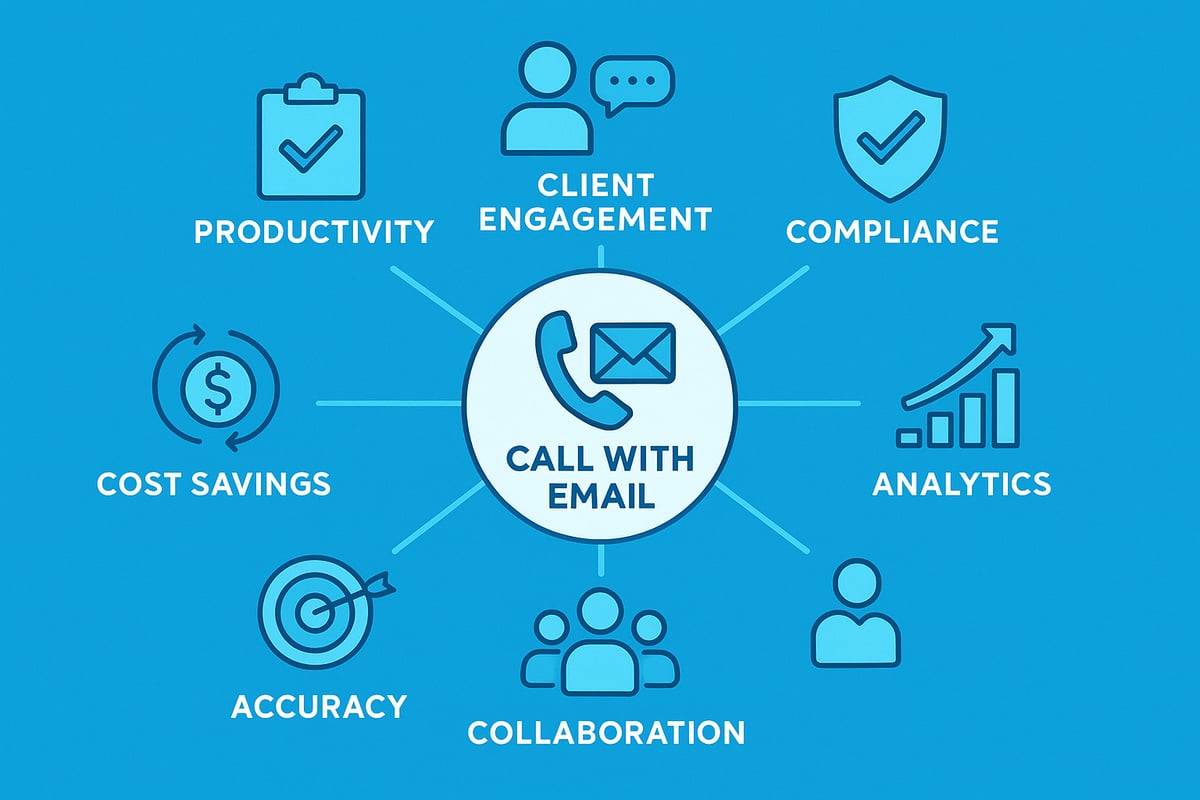
In 2026, the benefits of call with email integration are transforming how teams operate, collaborate, and serve clients. This technology is not just a trend, but a catalyst for measurable business improvements. Let us explore the key advantages that make call with email indispensable for modern professionals.
Enhanced Productivity and Time-Saving
Call with email streamlines daily workflows, cutting down on manual data entry and repetitive follow-ups. Professionals can initiate calls, receive transcriptions, and send action points, all within their email platform.
- No more toggling between apps
- Meetings summarised automatically
- Tasks assigned directly from call notes
Consultants report saving over three hours per week thanks to automated documentation and integrated tools, allowing them to focus on higher-value activities. Call with email ensures every minute counts.
Improved Client Engagement and Responsiveness
Today’s clients expect quick, personalised communication. Call with email enables businesses to respond faster and with greater relevance, as every conversation is linked to a complete communication history.
- Instant recaps sent after calls
- Personalised follow-ups based on discussion points
- Consistent client experience
Agencies using call with email deliver immediate value post-call, building trust and boosting satisfaction. This rapid, informed engagement is now a competitive advantage.
Stronger Compliance and Security
For regulated sectors, maintaining secure, auditable records is non-negotiable. With call with email, every interaction is documented and stored in compliance with industry standards.
- Automated call and email archiving
- Encrypted communications
- Easy retrieval for audits
To further enhance security, many organisations adopt secure email for small business practices alongside call with email, ensuring sensitive information stays protected and compliant.
Data-Driven Decision Making
Call with email generates structured, searchable data from every interaction. Sales, support, and management teams can analyse trends, identify opportunities, and make informed decisions quickly.
- AI-powered sentiment analysis
- Actionable insights from call transcripts
- Integration with CRM and analytics tools
With all communication data in one place, businesses can measure performance, adjust strategies, and drive growth confidently.
Seamless Collaboration Across Teams
Remote and hybrid work styles demand unified communication. Call with email allows teams to share notes, summaries, and action items instantly, no matter where they are.
- Shared access to call and email records
- Real-time updates for ongoing projects
- Reduced silos between departments
Collaboration becomes effortless, as all team members stay aligned and informed throughout every stage of a project.
Reduction in Communication Errors
Misunderstandings and missed details can derail projects. Call with email minimises these risks by providing accurate, automated records for every conversation.
- Fewer missed action items
- Clear documentation for all parties
- Consistent messaging to clients
A recent study found a 40 percent drop in project delays directly attributed to improved communication accuracy with call with email tools.
Cost Savings and ROI
Adopting call with email reduces the need for multiple software solutions, resulting in lower costs and a higher return on investment.
- Consolidated communication platforms
- Fewer licences to manage
- Reduced training and onboarding time
Small and medium-sized businesses report up to 25 percent savings on communication expenses, freeing up resources for strategic growth.
Use Cases and Industry Applications in 2026
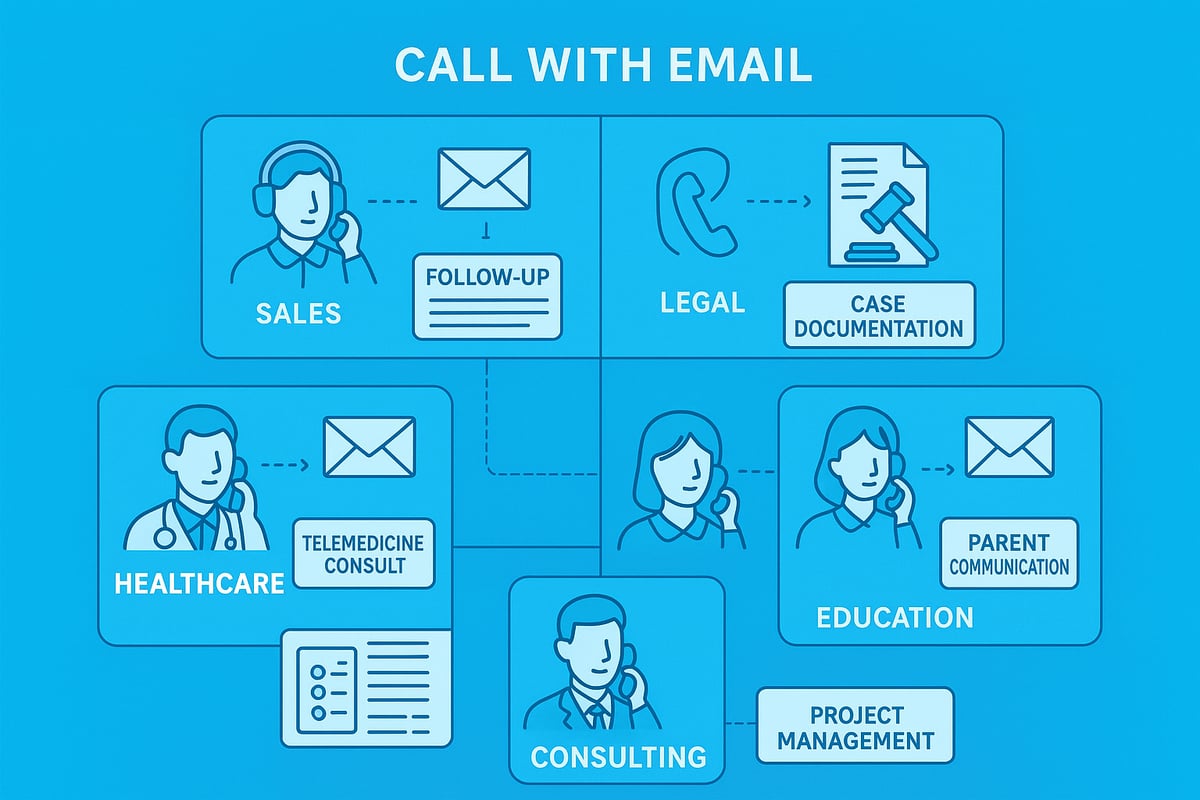
The adoption of call with email is transforming how organisations operate across industries. Seamlessly connecting calls and emails supports efficiency, transparency, and compliance. Let us explore how different sectors are leveraging this advancement in 2026.
Sales and Customer Support
Sales teams in 2026 rely on call with email to capture every interaction with prospects and clients. With this technology, sales representatives can initiate calls from their inbox, automatically log conversations, and receive instant summaries. Customer support teams also benefit, as unified records enable faster issue resolution and better follow-up.
For organisations comparing the best tools for integrating transcription and email, resources like the AI Transcription Tools Comparison provide valuable insights into accuracy and integration features. This ensures that call with email workflows deliver reliable results for both sales and support teams.
Legal and Compliance-Driven Sectors
Law firms and compliance-focused industries have embraced call with email to ensure thorough documentation of client communications. By recording calls and linking them to case files, legal professionals maintain robust audit trails. Regulatory requirements are easier to meet because every call is summarised and securely archived within the email system.
Financial advisors and compliance officers use this integration to demonstrate adherence to industry standards. With call with email, the risk of missing critical details is greatly reduced, and transparency becomes part of the daily workflow.
Healthcare and Telemedicine
Healthcare providers use call with email to enhance patient engagement and care. Doctors conducting telemedicine appointments can record consultations, generate summaries, and send them directly to patients via email. This approach improves follow-up, ensures continuity of care, and supports compliance with regulations like HIPAA.
Medical records are updated automatically, and patients receive clear instructions after every call. In 2026, call with email has become essential for clinics and hospitals aiming to deliver efficient, secure, and patient-centred communication.
Education and Remote Learning
In the education sector, call with email streamlines communication between teachers, parents, and administrators. Teachers can conduct parent-teacher calls and send detailed recaps immediately after the conversation. University staff collaborate on student cases with shared call and email records.
This unified workflow fosters transparency and accountability. Remote learning environments especially benefit, as call with email ensures that key information is documented and accessible to all stakeholders.
Project Management and Consulting
Project managers and consultants often juggle complex communications across multiple teams and clients. Call with email allows them to align project updates, decisions, and action points in a single, searchable location. Team members can access call summaries and email threads, ensuring everyone stays informed.
Consultants use call with email to streamline client communications, reduce manual follow-up, and provide structured feedback. This results in more efficient project delivery and stronger client relationships.
Real-World Examples and Case Studies
A technology startup implemented call with email to support onboarding processes. By integrating voice calls with email summaries, they accelerated training and project delivery. According to Harvard Business Review, integrated teams reported a 50 percent increase in project speed.
Another example comes from a law firm, where call with email enabled seamless documentation of client conversations. This not only improved compliance but also enhanced client satisfaction by providing clear, timely updates.
Limitations and Considerations
Despite its benefits, call with email presents some challenges. Privacy concerns arise in industries where recording conversations requires explicit consent. Organisations must ensure all participants are aware of recording and transcription practices.
Additionally, maintaining compliance with data protection regulations is critical. Companies need to implement clear policies and obtain consent to avoid potential legal issues. By addressing these considerations, organisations can maximise the value of call with email while protecting stakeholder interests.
Best Practices for Implementing ‘Call With Email’ in Your Organisation
Implementing call with email solutions in your organisation requires a strategic, step-by-step approach. By following best practices, you can maximise adoption, ensure data security, and drive meaningful productivity gains. Below, we break down the essential steps and considerations for a successful rollout.
Choosing the Right Tools and Platforms
Selecting the right platforms is the first step in your call with email journey. Prioritise solutions that offer robust security, seamless integration with your existing systems, and intuitive user interfaces. Platforms should support both voice and email workflows natively.
Compare features such as AI-powered transcription, CRM connectivity, and compliance certifications. For a detailed guide on setting up business email accounts, see Setting up business email accounts.
Consider conducting pilot tests before a full-scale rollout to ensure compatibility and user satisfaction.
Training and Change Management
Effective training is vital for successful adoption of call with email technology. Develop a structured onboarding process that introduces employees to new workflows, security protocols, and features.
Leverage resources such as communications plan best practices to create a tailored training strategy. Regular workshops, video tutorials, and peer support can accelerate learning.
Address resistance by highlighting tangible benefits and providing ongoing support channels.
Privacy, Security, and Compliance
Compliance is non-negotiable for any call with email implementation. Ensure the solution adheres to regulations such as GDPR or industry-specific standards.
Establish clear policies on data retention, consent for recording, and access controls. Conduct periodic audits to identify vulnerabilities and enforce best practices.
Create a checklist for privacy and compliance to guide your team:
| Compliance Area | Best Practice |
|---|---|
| Data Storage | Use encrypted, region-specific servers |
| Consent | Obtain explicit participant consent |
| Audit Trails | Enable detailed access logs |
Workflow Automation and Customisation
Enhance efficiency by automating repetitive tasks within your call with email system. Set up automated follow-ups, reminders, and archiving rules.
Customise templates for different departments to ensure consistency. Integrate with project management tools for seamless task tracking.
Review automation settings regularly to align with evolving business needs.
Measuring Success and ROI
Track the impact of call with email adoption using clear KPIs. Monitor metrics such as reduced response times, increased customer satisfaction, and cost savings.
Use dashboards to visualise trends and identify areas for improvement. Report findings to stakeholders to demonstrate value.
A sample table of useful KPIs:
| KPI | Target |
|---|---|
| Average Response Time | < 1 hour |
| Customer Satisfaction | > 90% |
| Communication Cost | -20% annually |
Addressing Common Pitfalls
Avoid over-automation, which can reduce the personal touch in client interactions. Balance technology with human engagement to maintain strong relationships.
Ensure all team members have access to and understand the system. Provide regular feedback opportunities to address challenges early.
Review your communications strategy often to stay aligned with business goals.
Continuous Improvement
Implement a cycle of feedback and iteration for your call with email processes. Gather user insights through surveys and performance data.
Stay updated on technology advancements and regulatory changes. Adapt your approach to maintain a competitive edge.
Foster a culture of innovation by encouraging experimentation and knowledge sharing.
The Future of ‘Call With Email’: Trends and Innovations to Watch
The future of call with email is set to redefine how organisations manage communication, streamline workflows, and harness data. As technology advances, expect a blend of artificial intelligence, smart devices, and personalisation to shape the next generation of business interaction.
AI and Natural Language Processing
AI and natural language processing are transforming call with email into a proactive communication tool. Predictive follow-ups are generated automatically, ensuring that no task or query is left unresolved. Sentiment analysis helps teams understand customer mood in real time, while AI now extracts action items directly from conversations.
Thanks to these advancements, every call with email interaction becomes a structured, searchable, and insightful asset for the business.
Integration with Emerging Technologies
The integration of call with email with voice assistants and smart devices is making communication more intuitive. Imagine launching a call with email session using just a voice command, or receiving instant recaps on your wearable device.
AR and VR are also beginning to play a role, enabling immersive meeting environments where participants can share documents and insights seamlessly.
The Rise of Hyper-Personalisation
Personalisation is at the core of the next wave of call with email solutions. Dynamic content adapts based on previous interactions, while tailored follow-ups ensure that each recipient receives information most relevant to them.
Adaptive customer journeys, informed by conversation history, mean that call with email experiences are more engaging and productive than ever before.
Regulatory and Ethical Considerations
With these innovations come new regulatory and ethical questions. As call with email platforms collect vast amounts of data, organisations must navigate evolving privacy laws and ensure transparent, ethical use of AI.
Maintaining consent, data protection, and compliance is vital, particularly as automated transcription and analysis become standard practice.
Predictions for 2027 and Beyond
Looking ahead, the market for call with email is set for significant growth, driven by demand for unified digital workspaces. According to the AI Transcription Market Growth, adoption rates are climbing as businesses seek efficiency and compliance.
By 2027, expect call with email to be the foundation of most professional communication, seamlessly connecting teams, clients, and data in a single platform.