Timed Email Send Guide: Expert Tips and Best Practices 2026
February 14, 2026
Did you know that sending emails at the optimal moment can boost open rates by up to 50 percent? For many businesses, finding the perfect timing remains a challenge, with shifting routines and global audiences making it even more complex.
Mastering the art of the timed email send means unlocking higher engagement, more conversions, and stronger customer relationships. But how can you achieve this in 2026, given evolving technology and subscriber expectations?
This expert guide will show you how to optimise your timed email send strategies for maximum impact. We will cover the science behind timing, essential tools, step-by-step scheduling, expert insights, and future trends so you can confidently enhance your email marketing performance.
The Science Behind Timed Email Sends
Understanding the science behind a timed email send is crucial for marketers aiming to improve engagement. The timing of your campaigns affects visibility, open rates, and ultimately, conversions. By studying behaviour, data, and psychology, you can unlock the full potential of a timed email send strategy.
Understanding Subscriber Behaviour and Time Zones
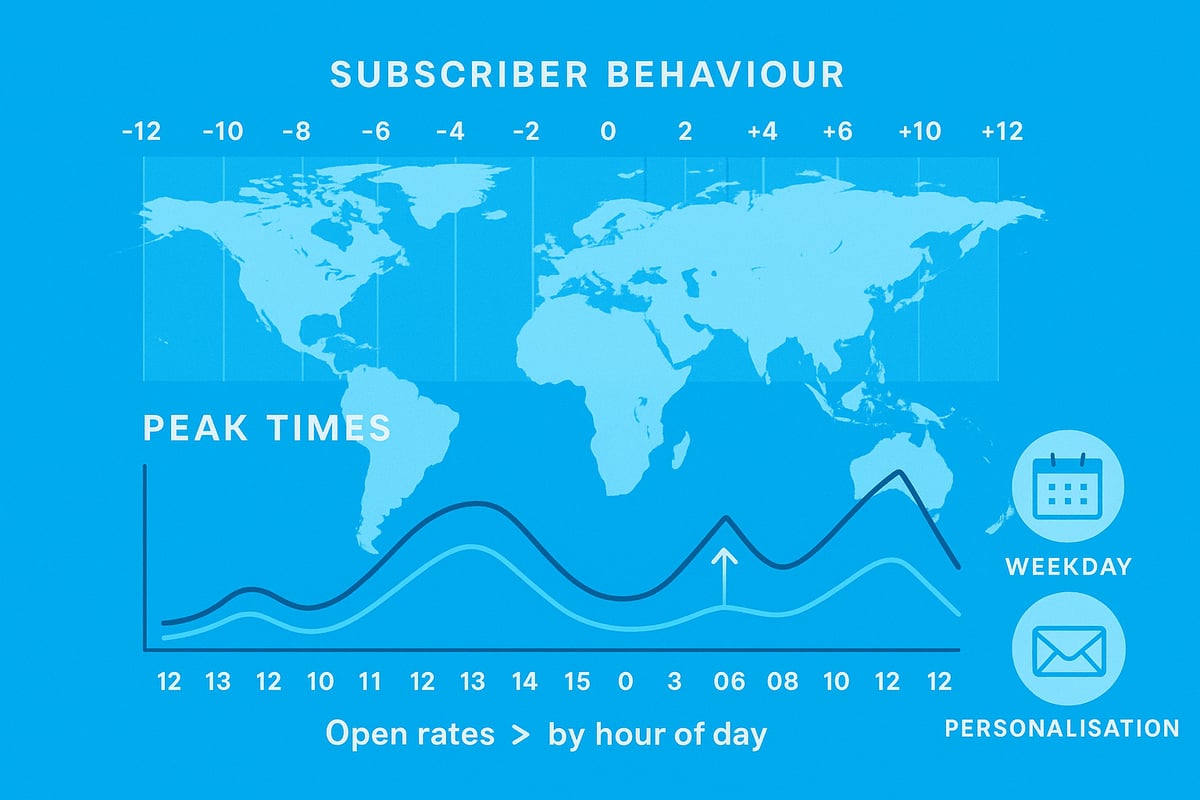
A successful timed email send depends on knowing when subscribers are most likely to engage. People's routines differ based on location, culture, and work habits. For global audiences, sending at the same clock time everywhere can lead to poor results, as recipients may receive emails outside their active hours.
Segmenting your list by geography allows you to target each group when they are most alert. For example, a UK-based retailer saw a 22% increase in open rates after segmenting by time zone and scheduling emails for morning hours in each region. This approach ensures your timed email send reaches inboxes at the most opportune moment.
Peak Engagement Times: What the Data Shows
Industry research for 2025 and 2026 reveals that the ideal time for a timed email send varies by sector. B2B emails often perform best midweek, especially on Tuesday mornings, with some companies reporting up to 35% higher open rates compared to other days. In contrast, B2C brands may see stronger engagement on weekends or evenings, when consumers are more relaxed.
The following table summarises peak times by sector:
| Industry | Best Day | Best Time |
|---|---|---|
| B2B | Tuesday | 10:00–11:00 |
| B2C | Saturday | 18:00–20:00 |
| Retail | Thursday | 09:00–10:00 |
| SaaS | Wednesday | 14:00–15:00 |
For more in-depth data and strategies on optimal send times, see Best time to send emails.
The Psychology of Email Timing
The psychology behind a timed email send is rooted in human behaviour and motivation. People are more likely to notice and act on messages when they are already checking their inbox or looking for solutions. Campaigns that create a sense of urgency or FOMO (fear of missing out) can prompt quicker action, especially when timed around limited offers or popular events.
Marketers leveraging psychological triggers in their timed email send often see higher click-through rates. For example, sending a flash sale email just before lunch can drive immediate interest, as subscribers are more receptive to spontaneous decisions.
Impact of Frequency and Consistency
Consistency is vital for a successful timed email send strategy. Regular scheduling helps build anticipation and trust, as subscribers come to expect valuable content at certain times. However, over-sending can lead to diminishing returns, with open rates dropping and unsubscribe rates rising if audiences feel overwhelmed.
Studies show that brands sticking to a predictable timed email send schedule experience greater long-term engagement. The key is to find the right frequency that maintains interest without crossing into fatigue.
Personalisation and Timing
Personalisation elevates the effectiveness of a timed email send. By analysing individual subscriber behaviour, marketers can target each person when they are most likely to open and interact. Advanced platforms use AI to learn from past engagement patterns, automatically adjusting send times for each recipient.
A leading retailer implemented AI-driven timed email send personalisation and saw a 19% increase in engagement. This approach ensures every subscriber receives content at their preferred moment, boosting relevance and results.
Essential Tools and Technologies for Timed Email Sends
Mastering the right tools is essential for any business aiming to improve their timed email send strategy. With the evolution of email marketing platforms, scheduling and optimisation have become both more powerful and user-friendly.
Overview of Scheduling Features in Leading Platforms
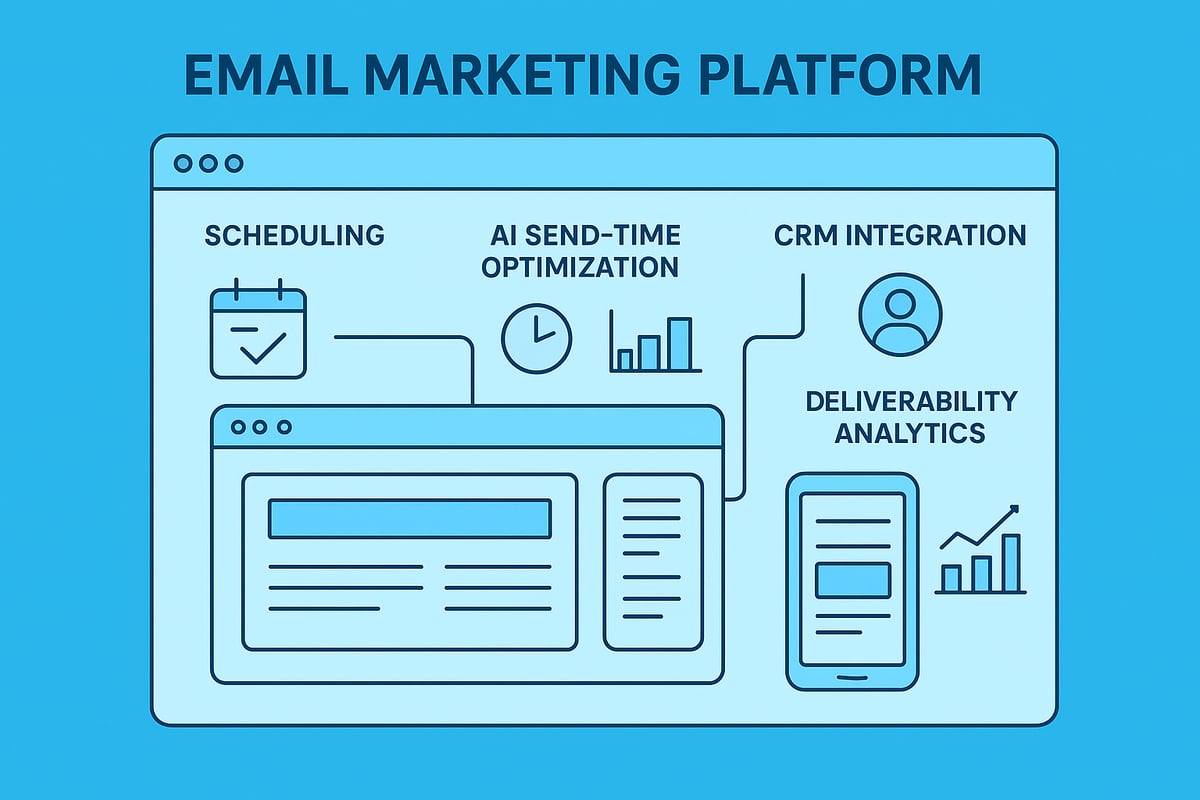
Choosing the right platform is vital for a successful timed email send. Top tools like Mailchimp, Astonish Email, and Sendinblue offer advanced scheduling, enabling businesses to target subscribers at the most effective moments.
| Platform | Time Zone Detection | Batch Scheduling | A/B Testing | Real-Time Analytics |
|---|---|---|---|---|
| Astonish Email | Yes | Yes | Yes | Yes |
| Mailchimp | Yes | Yes | Yes | Yes |
| Sendinblue | Yes | Yes | Yes | Yes |
A robust timed email send relies on features such as time zone detection, recurring campaign options, and split testing. For detailed guidance on using these features, see this practical guide to scheduling email campaigns.
AI and Machine Learning in Send Time Optimisation
Artificial intelligence is transforming the timed email send landscape. AI-powered platforms analyse recipient behaviour, learning the moments each subscriber is most likely to engage. This approach allows campaigns to be sent when open and click rates are highest.
For example, some platforms use machine learning to automatically adjust the scheduled time based on historical engagement data. Businesses have seen impressive improvements, such as a 20 percent increase in click-throughs, after implementing AI-driven timed email send strategies.
Integrations with CRM and E-commerce Platforms
Integrating your timed email send with CRM and e-commerce tools brings a new level of precision. Syncing contact lists and behavioural triggers ensures emails are sent at the right time, based on customer actions.
For example, an e-commerce brand can trigger abandoned cart emails exactly when a user leaves their basket. CRM integration allows for highly targeted timed email send campaigns, increasing relevance and engagement.
Deliverability Considerations
Deliverability is a crucial factor in any timed email send. Scheduled campaigns must be configured to avoid spam traps and maintain sender reputation. Factors like sender score, list hygiene, and send time all influence whether your email lands in the inbox.
Recent studies show that emails scheduled during peak hours may face more competition, impacting deliverability rates. Monitoring sender reputation and adjusting the timing of your timed email send can help improve inbox placement.
Mobile and Device Optimisation
A successful timed email send must account for device preferences. With nearly 60 percent of emails now opened on mobile, timing campaigns for morning commutes or lunch breaks is increasingly important.
Segmenting by device usage ensures your timed email send reaches subscribers when they are most likely to check their phones. Statistics reveal that open rates on mobile devices often spike during peak travel times, so aligning your strategy to these trends can significantly boost engagement.
Step-by-Step Guide to Scheduling Effective Timed Email Sends
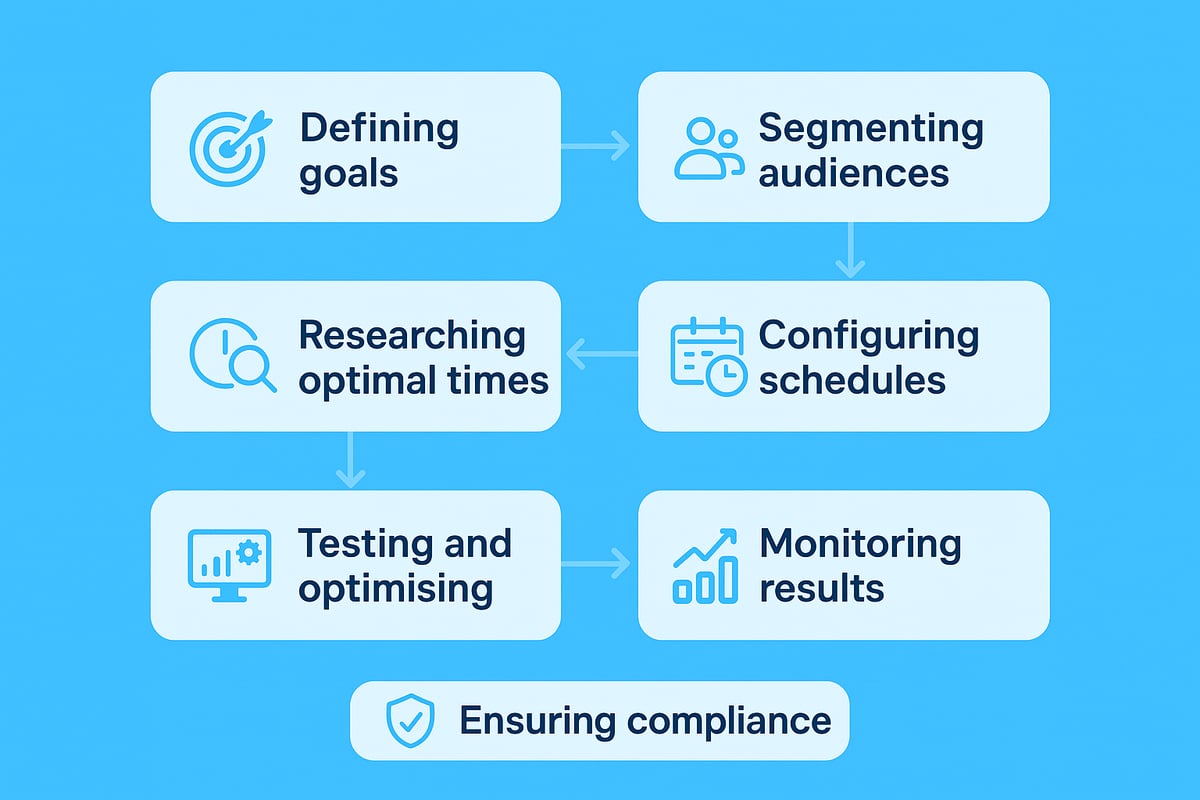
Mastering the art of timed email send is essential for driving engagement and results. This step-by-step guide is designed to help you implement a robust, data-driven approach, ensuring your campaigns land in inboxes at the right moment for every subscriber.
Step 1: Define Campaign Goals and Audience Segments
Start every timed email send by clarifying your objectives. Are you aiming for more sales, greater engagement, or increased awareness? Define the purpose for each campaign before you craft your messaging or schedule your send.
Next, segment your audience. Consider behaviour, location, and preferences. Segmentation allows you to target the right message at the right time, maximising the impact of every timed email send. For example, a non-profit might differentiate between donors and volunteers, sending tailored content to each.
Here is a simple segmentation table:
| Segment | Criteria | Example Content |
|---|---|---|
| Donors | Past donations | Impact reports |
| Volunteers | Event participation | Upcoming opportunities |
| New Subscribers | Sign-up date | Welcome offers |
By investing effort in this step, you lay the foundation for a successful timed email send strategy.
Step 2: Research and Select Optimal Send Times
Analysing past campaign data is crucial. Review your analytics to see when your audience is most responsive. Look for trends in open and click rates by time and day. This insight will inform your timed email send schedule and help you avoid guesswork.
Industry benchmarks provide additional guidance. For instance, B2B emails may perform better mid-week, while B2C campaigns see higher engagement on weekends. To further refine your approach, consult resources such as Optimal Email Send Times in 2026 for up-to-date statistics and operational strategies.
Remember, even small changes in timing can yield significant improvements. A SaaS company, for example, increased trial signups by shifting to afternoon sends, demonstrating the value of precise timed email send planning.
Step 3: Configure Scheduling in Your Email Platform
Once you have determined the best timing, set up your timed email send within your chosen platform. Choose a system that allows you to select time zones, batch schedule, and automate recurring campaigns. Here are some essential tips:
- Double-check time zone settings for each segment.
- Use batch scheduling to streamline multiple sends.
- Set reminders for daylight saving changes.
For technical teams, consider using scheduling logic like:
if user.time_zone:
    schedule_email(user.email, preferred_time[user.time_zone])
else:
    schedule_email(user.email, default_time)
Avoid common pitfalls, such as forgetting to update schedules for seasonal changes. A well-configured timed email send ensures consistency and reliability.
Step 4: Test and Optimise with A/B Experiments
Testing is key to refining your timed email send strategy. Set up A/B experiments, sending your campaign at different times to measure which performs best. Focus on these metrics:
- Open rates
- Click-through rates
- Conversion rates
For example, a retailer boosted revenue by 15 percent after systematically A/B testing their send times. Analyse the results to identify your optimal timing window. Continual testing allows your timed email send approach to evolve with subscriber habits.
Step 5: Monitor Results and Adjust Strategy
After your timed email send goes live, use real-time analytics to track its performance. Monitor open, click, and conversion rates closely. Set up feedback loops to collect insights from your team and your subscribers.
If you notice lower engagement during certain periods, adjust your strategy accordingly. For example, you might find that holiday periods require a different approach. Ongoing monitoring ensures your timed email send remains effective and relevant.
Step 6: Ensure Compliance and Respect Subscriber Preferences
Compliance is essential for any timed email send. Review GDPR and CAN-SPAM regulations before scheduling. Make it easy for subscribers to choose their preferred times or pause communications.
Offering scheduling options, such as morning or evening updates, can improve satisfaction and reduce unsubscribes. For instance, a travel company allowed users to select when they receive updates, resulting in higher engagement and trust.
Incorporating compliance and preference management into your timed email send process builds stronger customer relationships and protects your reputation.
Expert Tips for Maximising Timed Email Send Performance
Mastering the art of a well-timed email send is as much about strategy as it is about technology. The following expert tips will help you fine-tune your approach, boost engagement, and achieve better results from every campaign.
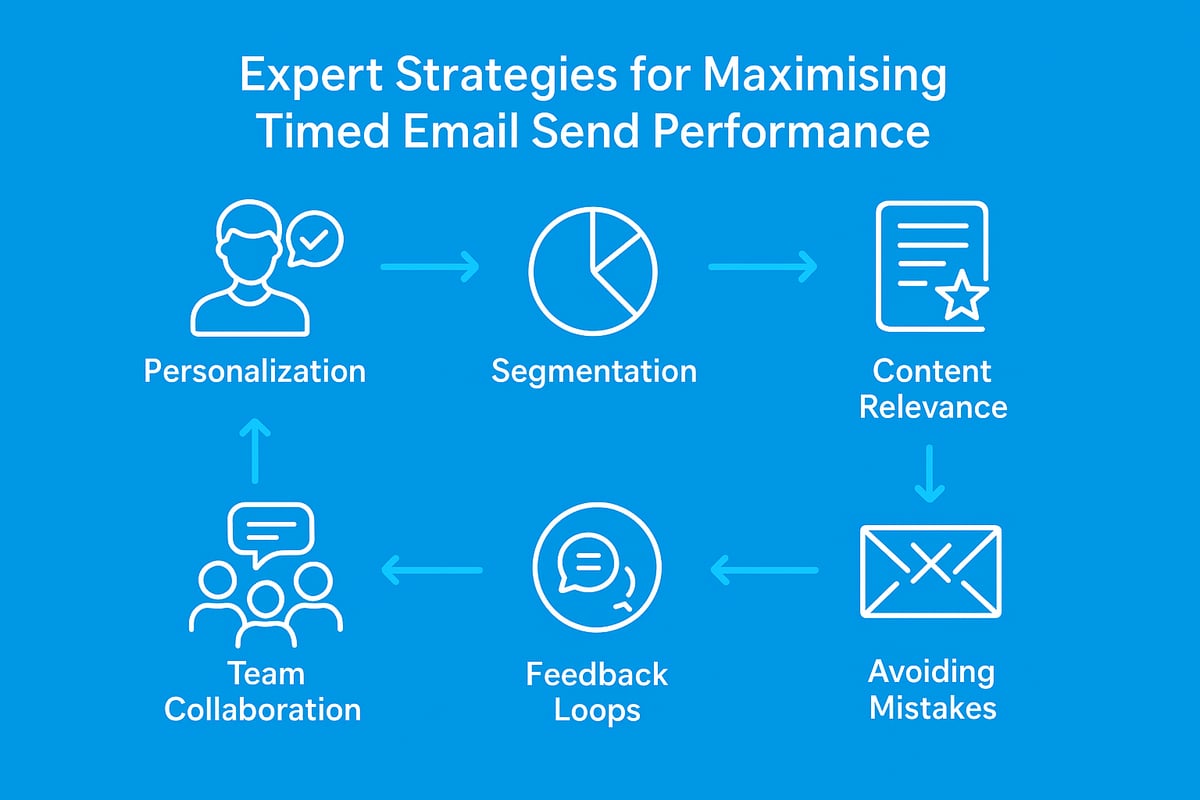
Leveraging Personalisation and Dynamic Content
A successful timed email send depends on reaching subscribers when they are most receptive. Personalisation is key. By analysing behavioural data, you can schedule emails to land at each recipient’s peak engagement window. Dynamic content further increases relevance, ensuring messages align with real-time user interests.
AI-powered solutions now automate this process. For example, AI-Powered Send Time Optimization tools analyse engagement patterns to predict the best delivery time for each individual. This approach has been shown to significantly improve open and click rates, making your timed email send strategy more effective.
Segmenting by Engagement Level
Not all subscribers engage in the same way. Segmenting your audience by engagement level allows for targeted timed email send strategies. Highly active users may prefer frequent updates, while dormant subscribers respond better to less frequent, well-timed re-engagement emails.
Consider creating segments such as:
- New subscribers
- Loyal customers
- Lapsed users
Tailor the timing and frequency for each group. This reduces fatigue and increases the likelihood that your timed email send reaches the right person at the right time.
Combining Timing with Content Relevance
Timing alone is not enough; content relevance amplifies your results. Align your timed email send with seasonal events, industry news, or key sales periods. For instance, financial services firms often schedule tax reminders near important deadlines, while retailers sync campaigns with holiday shopping seasons.
Review industry statistics to pinpoint high-performing windows for your sector. Combining timely delivery with valuable content ensures your emails stand out and drive more engagement from your audience.
Avoiding Common Mistakes
Even the most sophisticated timed email send strategy can fail if you overlook basic pitfalls. Over-sending can lead to unsubscribes, while ignoring time zones or neglecting to test delivery times may hurt engagement.
To avoid these issues:
- Monitor send frequency closely
- Always account for recipient time zones
- Test scheduled sends for accuracy
For more detailed guidance, visit on-time email delivery tips to ensure your emails arrive when intended and maintain your sender reputation.
Using Feedback Loops for Continuous Improvement
Continuous improvement is essential for a successful timed email send strategy. Monitor real-time analytics to track open, click, and conversion rates. Use subscriber feedback, such as survey responses, to uncover preferred send times and content types.
Set up regular review cycles. Adjust your scheduling based on performance data and changing audience behaviours. This proactive approach helps you stay ahead of trends and ensures your timed email send remains effective over time.
Collaborating Across Teams for Cohesive Timing Strategy
Effective timed email send performance relies on cross-team collaboration. Align marketing, sales, and support teams to ensure consistent messaging and coordinated scheduling. Share insights from each department to refine timing decisions and avoid overlaps.
Regular communication helps your organisation maintain a unified voice and maximises the impact of every timed email send. A cohesive strategy ensures subscribers receive relevant messages at the right moments, strengthening brand trust.
Future Trends in Timed Email Sends: What to Expect in 2026 and Beyond
As we approach 2026, the landscape of timed email send strategies is rapidly evolving. Businesses are adapting to new technologies and shifting consumer expectations, aiming to maximise engagement through smarter timing. Understanding these future trends is essential for anyone looking to stay ahead in email marketing.
Predictive Analytics and Hyper-Personalisation
Advancements in artificial intelligence are transforming the timed email send process. Predictive analytics now enables marketers to determine the exact moment each subscriber is most likely to engage. Hyper-personalisation takes this further by using behavioural data to inform send times on an individual basis.
Machine learning models, such as those described in the RNN-Survival Model for Email Timing, are paving the way for more accurate and impactful email delivery. In 2026, expect platforms to offer send-time personalisation at scale, ensuring emails land in inboxes when attention is highest.
Integration with Omnichannel Marketing
The future of timed email send will be closely tied to omnichannel strategies. Marketers are synchronising email campaigns with SMS, push notifications, and social media to create unified experiences.
For example, retailers launch flash sales across all channels simultaneously, amplifying reach and urgency. By aligning the timing of each touchpoint, businesses can drive higher engagement and conversion rates. As technology evolves, seamless integration will become standard practice for effective campaigns.
Privacy, Data Regulations, and Ethical Timing
With stricter privacy laws emerging, the way businesses approach timed email send is changing. Regulations such as GDPR and new global standards require marketers to be transparent about data use and respectful of subscriber preferences.
Ethical timing is also in focus. Marketers need to balance frequency and relevance, avoiding intrusive or excessive messaging. In 2026, compliance will not only be legally necessary but also fundamental to building trust and loyalty.
Automation and No-Code Solutions
Automation is reshaping the timed email send workflow, making sophisticated scheduling accessible to all. No-code tools empower small businesses to automate campaigns without technical expertise.
For instance, weekly newsletters can be set up and managed with just a few clicks. These user-friendly platforms reduce barriers, save time, and ensure consistency. As automation advances, expect even more intuitive features tailored to non-technical users.
The Role of Real-Time Data
Real-time data is set to revolutionise how marketers approach timed email send. By leveraging live behavioural signals, businesses can trigger emails at moments of peak relevance.
Imagine a travel company sending offers as soon as a user searches for flights. This in-the-moment approach boosts engagement by matching communication with intent. In the coming years, real-time data will drive more dynamic, responsive campaigns across industries.
Evolving Subscriber Expectations
Subscriber preferences are shaping the future of timed email send. People increasingly expect control over when and how they receive communications. Recent Email Marketing Statistics for 2026 highlight a growing demand for personalised timing and reduced frequency.
Marketers who listen and adapt to these expectations will see stronger relationships and better results. The most successful campaigns in 2026 will be those that respect subscriber autonomy and deliver value at just the right moment.