One Email Address: Why It's Risky for Your Business
March 16, 2026
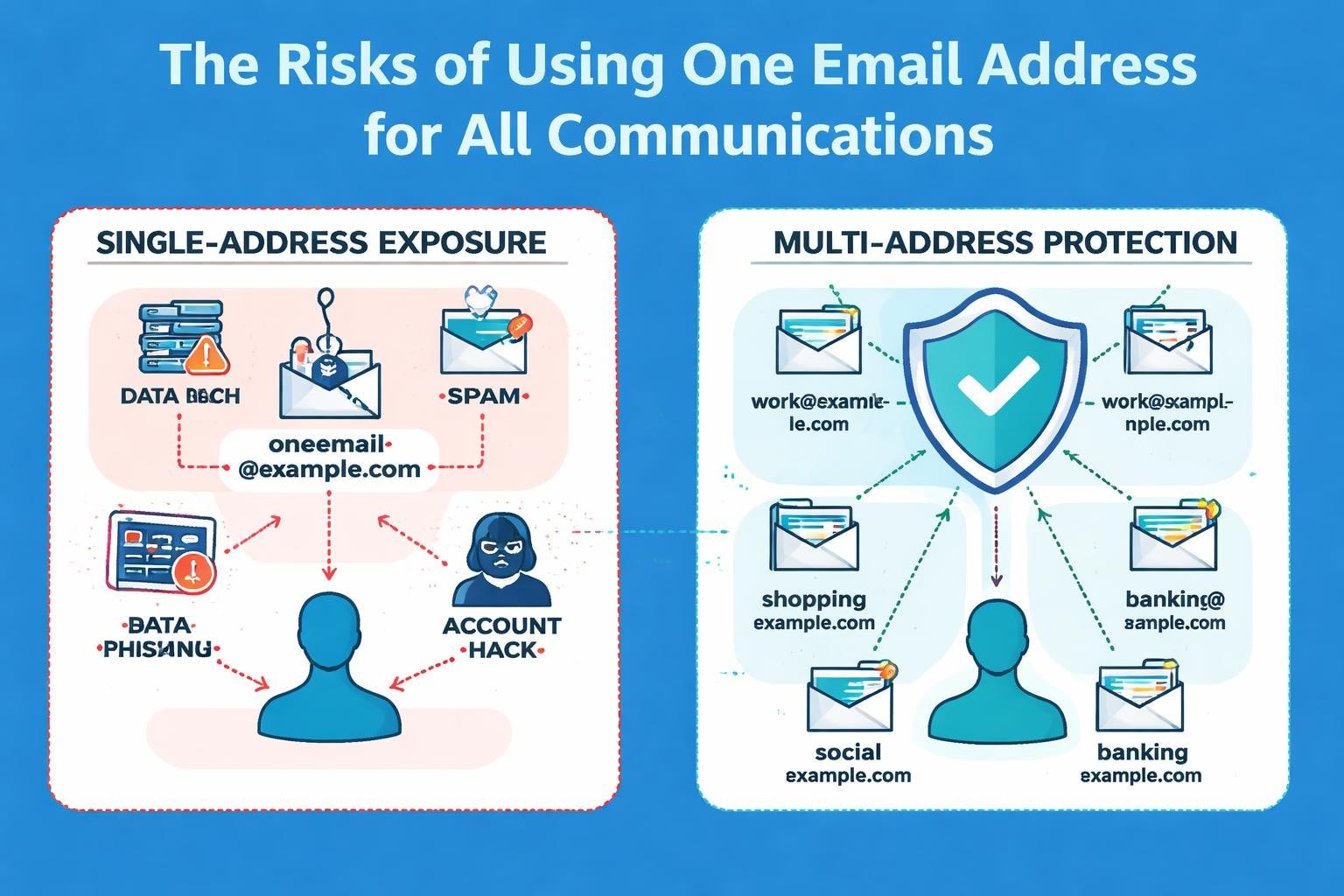
Managing your business communications through one email address might seem like a simple solution, but this approach can create significant challenges for small business owners. From security vulnerabilities to missed opportunities, the practice of consolidating all your professional correspondence into a single inbox carries risks that many entrepreneurs overlook until problems emerge. Understanding these challenges and implementing smarter email strategies can protect your business reputation, strengthen security, and improve operational efficiency.
The Hidden Dangers of Relying on One Email Address
When you funnel all business communications through one email address, you create a single point of failure that can compromise your entire operation. The convenience factor becomes a liability rather than an asset.
Security Vulnerabilities Multiply
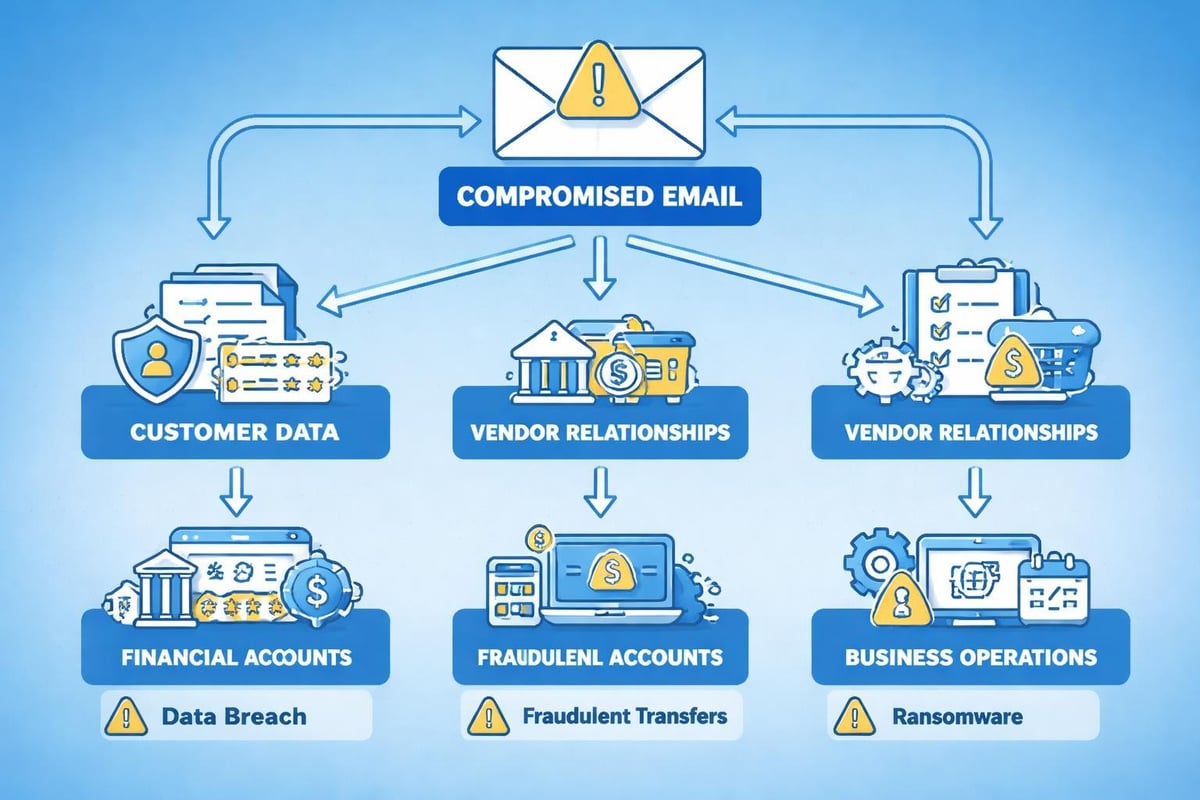
Using one email address for everything from customer enquiries to vendor communications, software registrations, and financial transactions means that a security breach at any single service can cascade through your entire business ecosystem. Research shows that linking multiple accounts to a single email address increases your vulnerability to targeted phishing attacks and identity theft.
Key security risks include:
- Increased exposure to data breaches across multiple platforms
- Higher likelihood of successful phishing attempts
- Compromised password recovery processes
- Centralized access point for hackers
When cybercriminals gain access to one email address that controls numerous accounts, they effectively hold the keys to your entire digital presence. This concentration of risk is particularly dangerous for small businesses that may lack dedicated IT security resources.
Professional Reputation Takes a Hit
Beyond security concerns, using one email address for all purposes can damage your professional credibility. Customers expect businesses to maintain distinct communication channels for different departments and functions.
Consider the impression you create when:
| Scenario | Customer Perception | Professional Impact |
|---|---|---|
| Sales enquiries go to personal email | Lack of organization | Reduced trust in business processes |
| Support requests share inbox with marketing | Slow response times | Damaged customer satisfaction |
| Financial communications mix with general enquiries | Privacy concerns | Questions about data handling |
The risks associated with sharing an email address extend to brand perception, with customers potentially questioning whether they're dealing with a legitimate, established business.
Operational Inefficiencies That Drain Resources
Small business owners already face time management challenges. Relying on one email address compounds these issues by creating organizational chaos that reduces productivity.
Inbox Overwhelm Becomes Inevitable
When every type of business communication flows into a single inbox, prioritization becomes nearly impossible. Your urgent client proposal sits alongside newsletter subscriptions, automated notifications, and spam. This clutter leads to missed opportunities and delayed responses.
Research demonstrates that maintaining multiple email accounts improves organization and helps reduce inbox clutter that drains productive hours. Small business owners report spending up to three hours daily managing overflowing inboxes when using one email address for everything.
Productivity losses include:
- Time wasted sorting irrelevant messages
- Critical communications buried in spam
- Increased cognitive load from context switching
- Higher stress levels affecting decision-making
- Missed deadlines due to overlooked messages
Team Collaboration Suffers
If multiple team members need access to one email address, you introduce additional complications. Shared email accounts create security risks including password management challenges, lack of accountability, and confusion over message ownership.
Who responded to which customer? Which team member promised what deliverables? These questions become impossible to answer when everyone operates from one email address, leading to duplicated efforts and contradictory customer communications.
The Email Marketing Perspective
For businesses leveraging email marketing, using one email address for both operational communications and marketing campaigns creates specific challenges that undermine campaign effectiveness.
Deliverability Problems Emerge
Email service providers and spam filters evaluate sender reputation based on numerous factors. When you send marketing campaigns from the same address you use for individual customer correspondence, you muddy the waters for reputation algorithms.
Your email marketing success depends on maintaining clean sender practices, which becomes difficult when one email address serves multiple purposes. Mixing transactional emails, marketing broadcasts, and personal communications can trigger spam filters that damage your deliverability rates.
| Email Type | Optimal Strategy | One Address Impact |
|---|---|---|
| Marketing campaigns | Dedicated sending domain | Reduced deliverability |
| Customer support | Department-specific address | Slower response tracking |
| Transactional emails | Automated system address | Mixed reputation signals |
| Personal outreach | Individual team member addresses | Lost personalization |
Segmentation and Tracking Break Down
Effective email marketing requires sophisticated segmentation and performance tracking. When everything funnels through one email address, attributing responses, conversions, and engagement metrics becomes a nightmare.
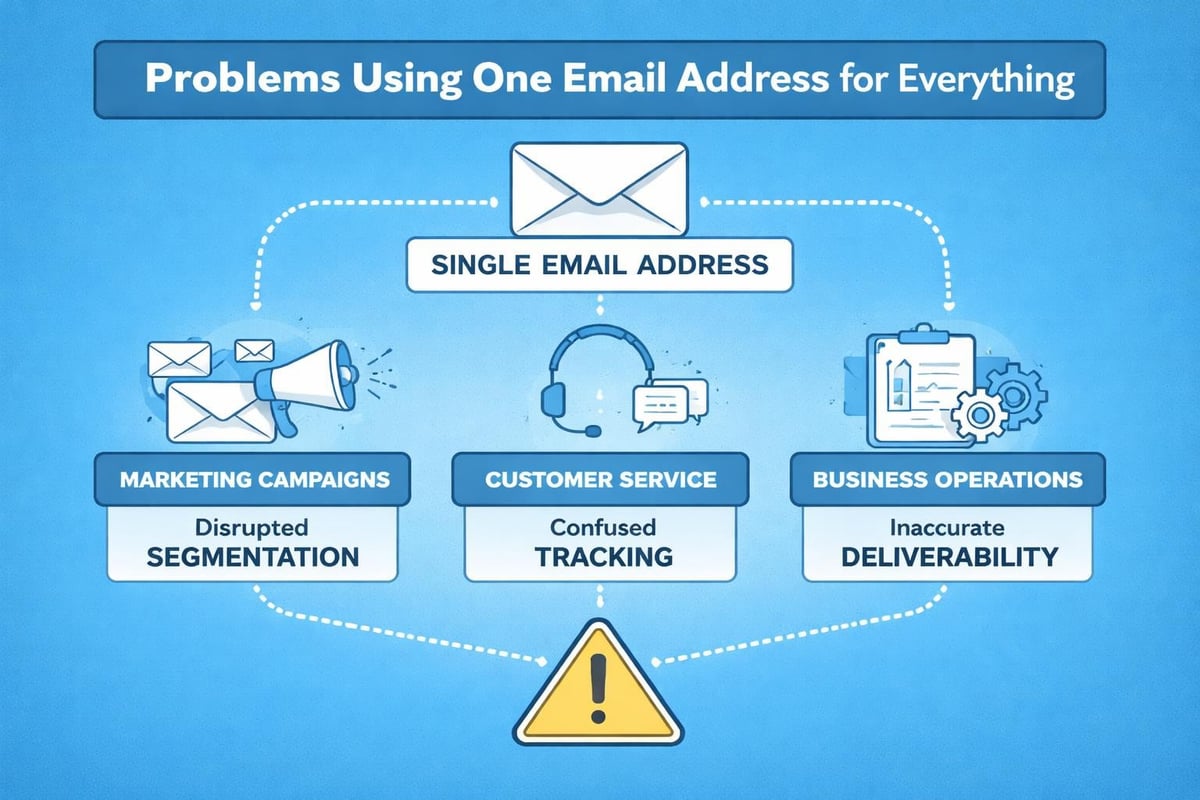
You cannot accurately measure which campaigns drive results when replies mix with support tickets and vendor communications. This data blindness prevents optimization and wastes marketing budget.
Compliance and Legal Considerations
The regulatory landscape surrounding email communications has grown increasingly complex. Relying on one email address can create compliance headaches that expose small businesses to legal risks.
Data Protection Regulations Demand Separation
GDPR, PECR, and similar data protection frameworks require businesses to demonstrate appropriate safeguards for personal information. When customer data, employee communications, and marketing lists all flow through one email address, maintaining required separation becomes extremely difficult.
Compliance challenges include:
- Inability to demonstrate data segregation
- Difficulty implementing appropriate access controls
- Complicated audit trails for data processing activities
- Higher risk of accidental data breaches
Using personal email accounts for work communications creates additional compliance vulnerabilities that can result in significant penalties for small businesses.
Record Retention Requirements
Different types of business communications have varying retention requirements. Financial records might need preservation for seven years, while marketing communications have different rules. Managing these requirements becomes unnecessarily complex when everything exists in one email address.
The proper retention policies require systematic organization that a single, multipurpose email account cannot adequately support.
Strategic Email Address Architecture for Small Businesses
Moving beyond one email address requires thoughtful planning, but the investment pays dividends in security, efficiency, and professionalism.
Developing a Multi-Address Framework
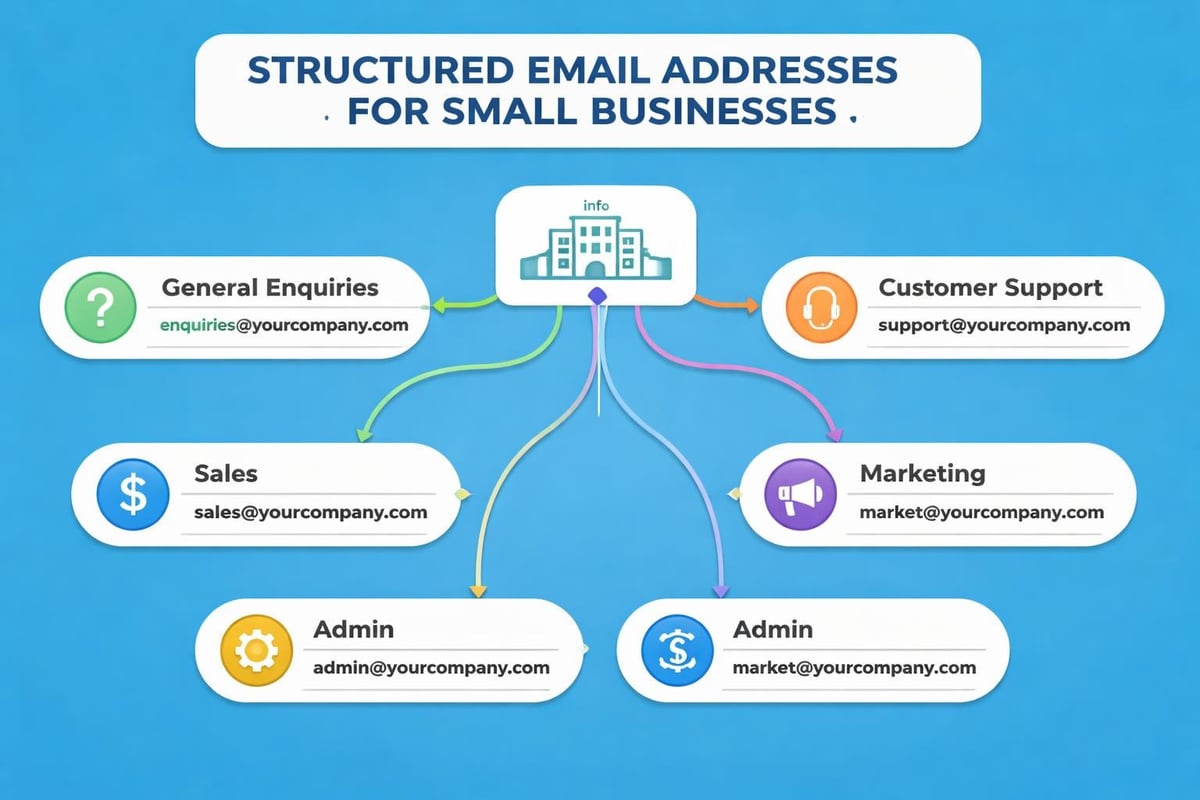
Start by identifying distinct business functions that warrant separate email addresses. Most small businesses benefit from at least these core addresses:
- General enquiries ([email protected])
- Customer support ([email protected])
- Sales ([email protected])
- Marketing campaigns ([email protected])
- Administrative/financial ([email protected])
This structure provides clarity for customers whilst enabling better internal organization. Each address serves a specific purpose, making management and delegation straightforward.
Role-Based vs Personal Email Addresses
The choice between role-based addresses (support@) and personal addresses (jane@) depends on your business model and size. Role-based addresses provide continuity when team members change, whilst personal addresses build stronger customer relationships.
Many businesses find success with a hybrid approach: role-based addresses for initial contact points, with responses coming from personal addresses to add the human touch.
Implementing Email Aliases and Forwarding
You needn't manage dozens of separate inboxes to maintain multiple addresses. Email aliases and forwarding rules allow several addresses to funnel into organized folders within fewer actual inboxes, providing organizational benefits without exponentially increasing management overhead.
Modern email marketing platforms for small businesses offer sophisticated tools for managing multiple addresses whilst maintaining centralized oversight and reporting.
Transitioning Away from One Email Address
If you've been operating with one email address and recognize the need for change, transitioning requires careful planning to avoid disrupting existing communications.
Communication Plan Development
Inform customers, vendors, and stakeholders about new email addresses well in advance. Provide clear guidance on which address to use for which purposes, and maintain forwarding from your old address during a transition period.
Transition steps include:
- Announcing new addresses across all channels
- Updating website contact information
- Modifying email signatures
- Revising business cards and marketing materials
- Setting up auto-responders on the old address
Managing the Legacy Address
Don't immediately abandon your one email address. Instead, maintain it as a forwarding address for at least six months, ensuring no communications fall through the cracks during the transition.
Use this period to gradually migrate subscriptions, account registrations, and recurring communications to appropriate new addresses. Track which services still use the old address and systematically update them.
Email Safety Beyond Address Management
While moving away from relying on one email address significantly improves security, additional email safety practices provide comprehensive protection.
Authentication and Security Protocols
Implementing two-factor authentication on all email accounts adds a critical security layer. Even if credentials for one email address become compromised, attackers cannot access accounts without the second authentication factor.
Email safety toolboxes should include strong, unique passwords for each address, regular security audits, and employee training on recognizing phishing attempts.
Disposable Addresses for High-Risk Situations
For situations requiring email registration but carrying higher risk (new software trials, one-time purchases, unfamiliar vendors), consider disposable email addresses that protect your primary business addresses from potential spam or data breaches.
This layered approach to email security recognizes that different communications carry varying risk levels and deserve appropriate protection measures.
Measuring the Impact of Email Diversification
After transitioning away from one email address, tracking key metrics demonstrates the value of your improved email architecture.
Performance Indicators to Monitor
| Metric | Expected Improvement | Measurement Method |
|---|---|---|
| Email deliverability rate | 15-25% increase | Campaign analytics |
| Average response time | 30-40% decrease | Support ticket tracking |
| Security incidents | 60-70% reduction | Security audit logs |
| Team productivity | 2-3 hours saved weekly | Time tracking analysis |
These improvements translate directly to better customer experiences, reduced operational costs, and enhanced business reputation.
Customer Satisfaction Gains
When customers receive prompt, relevant responses from appropriate departments rather than waiting in a crowded inbox served by one email address, satisfaction scores typically rise significantly. Monitor feedback and reviews to quantify these relationship improvements.
Long-Term Email Strategy Considerations
As your business grows, your email needs will evolve. The infrastructure you build today should accommodate future expansion without requiring complete rebuilds.
Scalability Planning
Design your email address structure with growth in mind. If you plan to expand into new markets, product lines, or service areas, consider how email addresses will support those initiatives. Setting up a professional email system from the start prevents painful migrations later.
Integration with Business Tools
Modern businesses rely on integrated software ecosystems. Ensure your email architecture supports connections with CRM systems, project management tools, accounting software, and marketing automation platforms. Fragmented systems using one email address as a bottleneck limit these valuable integrations.
The right email marketing platform seamlessly connects with your broader business technology stack, enabling automated workflows that save time whilst improving customer experiences.
The Cost-Benefit Analysis
Small business owners rightly question whether moving beyond one email address justifies the investment of time and resources. The mathematics strongly favour diversification.
Direct Cost Savings
Reduced security incidents: Preventing even one data breach saves thousands in remediation costs, legal fees, and reputation damage.
Improved productivity: Recovering three hours weekly per team member translates to substantial annual savings in labour costs.
Higher conversion rates: Better email deliverability and organization can improve marketing ROI by 20% or more.
Opportunity Costs of Inaction
Your email address serves as the key to your online identity, making protection paramount. Continuing to rely on one email address means accepting ongoing risks that compound over time.
Missed sales opportunities, damaged customer relationships, and accumulated security vulnerabilities all represent hidden costs of maintaining inadequate email infrastructure.
The evidence clearly demonstrates that relying on one email address creates unnecessary risks and limitations for small businesses in 2026. By implementing a strategic multi-address framework, you protect your business whilst improving efficiency and customer satisfaction. Astonish Email provides the tools and support small businesses need to manage professional email communications effectively, with features designed specifically for growing companies ready to move beyond single-address limitations.