More Emails: Maximising Impact Without Overwhelming
April 3, 2026
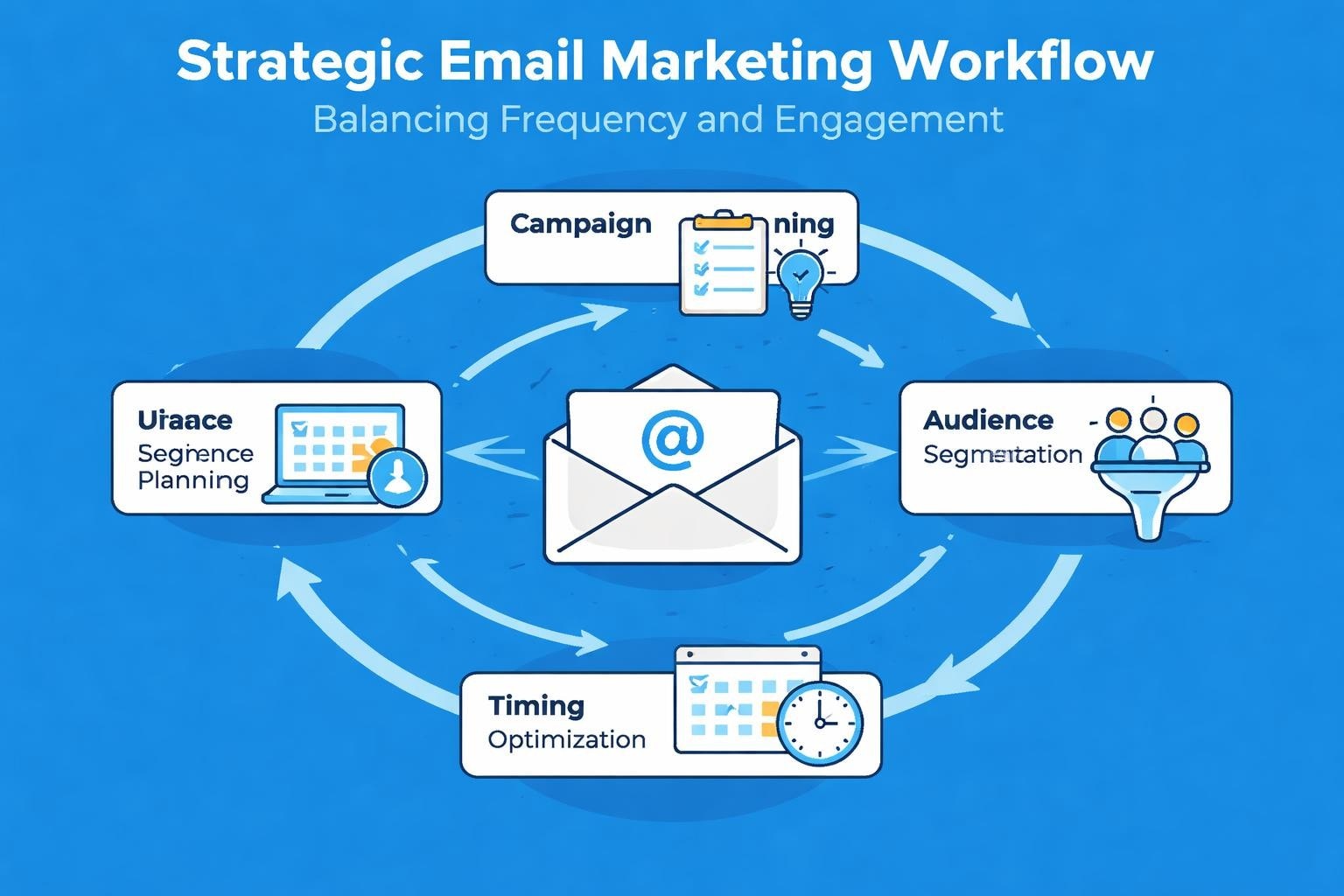
The debate over email frequency remains one of the most contentious topics in digital marketing. Small business owners constantly grapple with the question: should they send more emails to stay top-of-mind, or risk annoying their audience? The truth lies in understanding that sending more emails isn't inherently good or bad-it's about sending the right emails to the right people at the right time. With recent data showing that only 13% of emails sent worldwide are actually written by humans, the landscape is shifting towards more automated, yet strategic approaches to email marketing.
The Strategic Case for Increased Email Frequency
Sending more emails doesn't necessarily mean bombarding your subscribers with daily promotions. Rather, it's about creating a comprehensive communication strategy that provides value at every touchpoint. Research consistently demonstrates that businesses maintaining regular contact with their audiences see higher engagement rates, improved brand recall, and ultimately stronger customer relationships.
The benefits of a well-planned high-frequency approach include:
- Enhanced brand visibility in increasingly crowded inboxes
- Greater opportunities for personalization and segmentation
- Increased touchpoints throughout the customer journey
- Better data collection for refining marketing strategies
- Higher overall revenue potential from engaged subscribers
Small businesses often err on the side of caution, fearing unsubscribes more than missed opportunities. However, subscribers who genuinely want your content will appreciate hearing from you regularly, provided you deliver consistent value. The key lies in understanding that more emails should translate to more value, not simply more noise.
Understanding Your Audience's Appetite
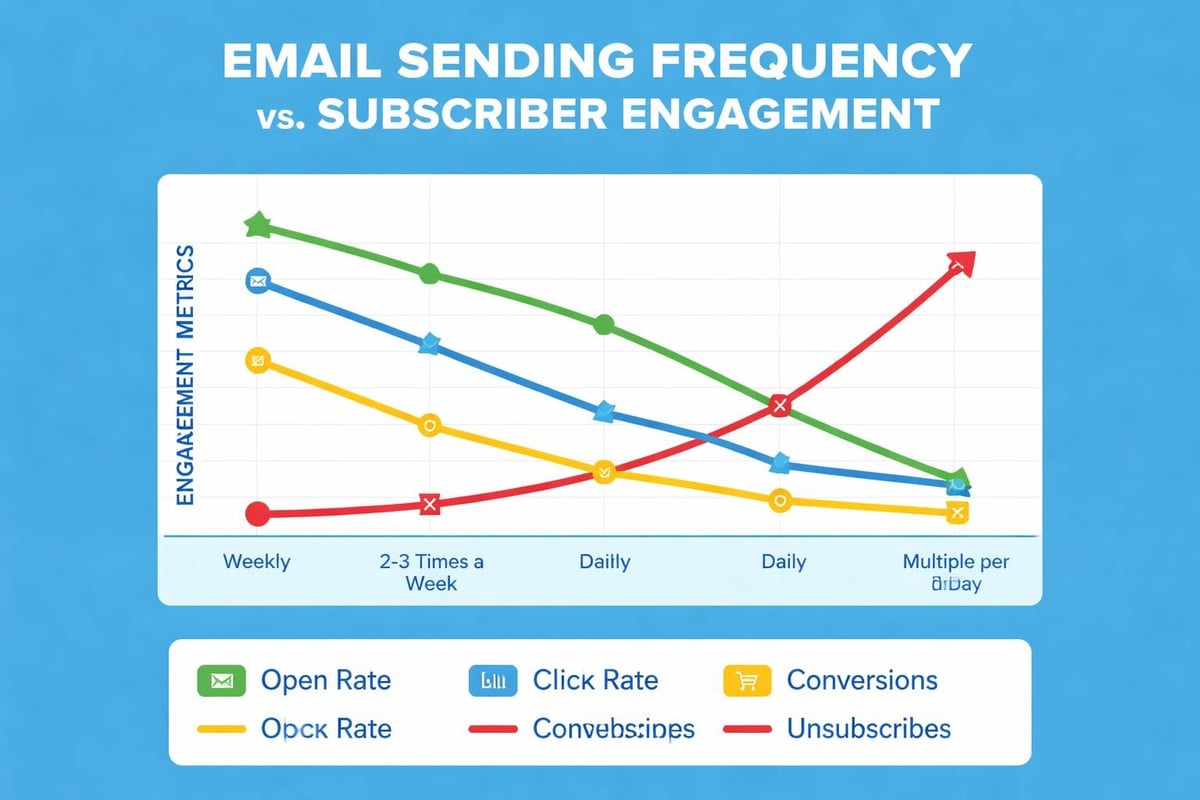
Before committing to sending more emails, you must first understand your audience's preferences and behaviours. Different segments within your subscriber base will tolerate-and even welcome-different frequencies. Some customers crave daily updates, whilst others prefer weekly digests.
Conducting preference surveys provides invaluable insights into what your audience actually wants. Ask subscribers directly how often they'd like to hear from you, and what types of content interest them most. This information becomes the foundation for a segmentation strategy that allows you to send more emails overall whilst respecting individual preferences.
| Frequency | Best For | Potential Challenges |
|---|---|---|
| Daily | News, deals, content sites | High unsubscribe risk |
| 2-3 times weekly | E-commerce, blogs | Requires consistent content |
| Weekly | Newsletters, B2B | Less top-of-mind presence |
| Bi-weekly | Complex products, services | Long gaps between touchpoints |
| Monthly | Infrequent purchasers | Minimal relationship building |
Building a Diversified Email Strategy
The solution to sending more emails without overwhelming subscribers lies in diversification. Rather than increasing the frequency of your promotional newsletter, consider developing multiple email streams that serve different purposes. This approach, often implemented through professional email systems, allows you to maintain regular contact whilst providing varied value.
Transactional Emails as Engagement Opportunities
Transactional emails-order confirmations, shipping notifications, account updates-represent prime real estate for building relationships. These messages enjoy exceptionally high open rates because recipients expect and welcome them. By enhancing these necessary communications with relevant suggestions, helpful resources, or exclusive offers, you effectively send more emails without adding to the promotional load.
Key transactional email opportunities:
- Post-purchase follow-ups with care instructions or usage tips
- Shipping confirmations with related product recommendations
- Account activity summaries with personalized insights
- Renewal reminders with upgrade options
- Feedback requests that demonstrate you value customer opinions
Educational Content Series
Educational emails provide value that transcends promotional messaging. Small businesses can send more emails by developing educational series that help customers solve problems, learn new skills, or better use products they've purchased. These sequences naturally justify higher frequency because they deliver tangible value.
Creating an educational email series around your product or industry positions your business as a helpful resource rather than just a seller. When subscribers know they'll learn something useful, they actively anticipate your emails. This strategy works particularly well for SaaS email marketing, where customer education directly correlates with product adoption and retention.
Personalization at Scale
The ability to send more emails strategically depends heavily on personalization capabilities. Generic mass emails quickly wear out their welcome, but highly targeted messages based on behaviour, preferences, and purchase history maintain relevance regardless of frequency.
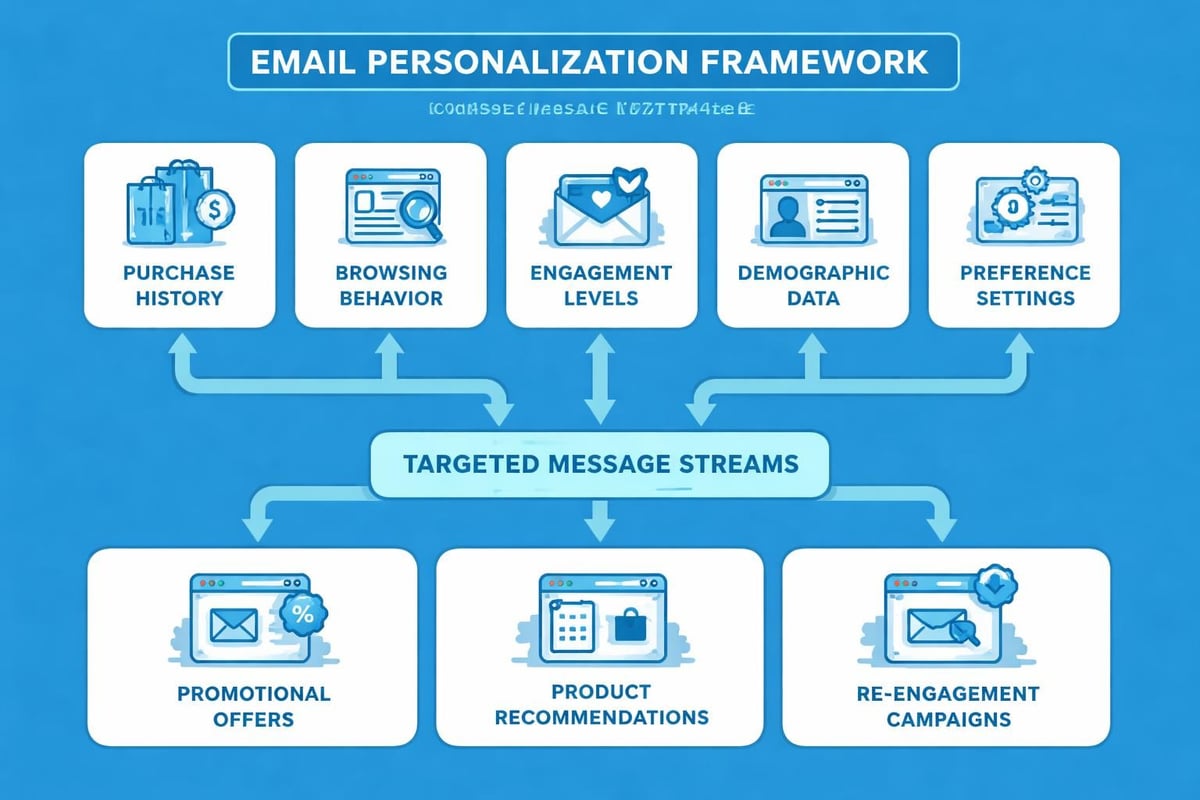
Modern email marketing platforms enable small businesses to create sophisticated automation workflows that send the right message to the right person automatically. Someone who browses your website daily might appreciate frequent product updates, whilst someone who visits monthly might prefer condensed weekly summaries. By implementing best practices for email marketing, you can scale your communication without sacrificing relevance.
Behavioral Triggers and Automation
Behavioural triggers allow you to send more emails reactively rather than according to a fixed schedule. When someone abandons a cart, downloads a resource, or clicks a specific link, automated sequences can nurture that interest without manual intervention.
Effective behavioral trigger campaigns include:
- Browse abandonment sequences for window shoppers
- Cart abandonment recovery with incentives
- Post-purchase cross-sell and upsell flows
- Re-engagement campaigns for dormant subscribers
- Win-back sequences for churned customers
- Milestone celebrations based on customer tenure
These automated touchpoints increase your overall email volume whilst feeling timely and relevant to recipients. The perception isn't that you're sending more emails, but rather that you're paying attention and responding appropriately to their actions.
Testing Your Way to Optimal Frequency
There's no universal answer to how many more emails you should send. The optimal frequency varies by industry, audience, content quality, and business model. The only way to determine what works for your specific situation is through systematic testing.
A/B Testing Email Cadence
Divide your subscriber base into test groups and experiment with different sending frequencies. One group might receive three emails weekly, whilst another receives five. Monitor key metrics across groups to identify the frequency that maximizes engagement and revenue whilst minimizing unsubscribes.
| Metric | Why It Matters | What to Track |
|---|---|---|
| Open Rate | Initial engagement level | Trend over time, not individual campaigns |
| Click Rate | Content relevance | Clicks per subscriber, not per email |
| Conversion Rate | Revenue impact | Sales attributed to email frequency |
| Unsubscribe Rate | Audience tolerance | Changes relative to baseline |
| Revenue per Subscriber | Bottom-line impact | Total value across all email types |
Remember that some metrics may temporarily decline when you increase frequency, but overall revenue might still improve. A slightly lower open rate across more emails can generate more total revenue than a higher open rate on fewer messages. Understanding these email benefits requires looking at holistic performance rather than isolated metrics.
Quality Control for High-Frequency Campaigns
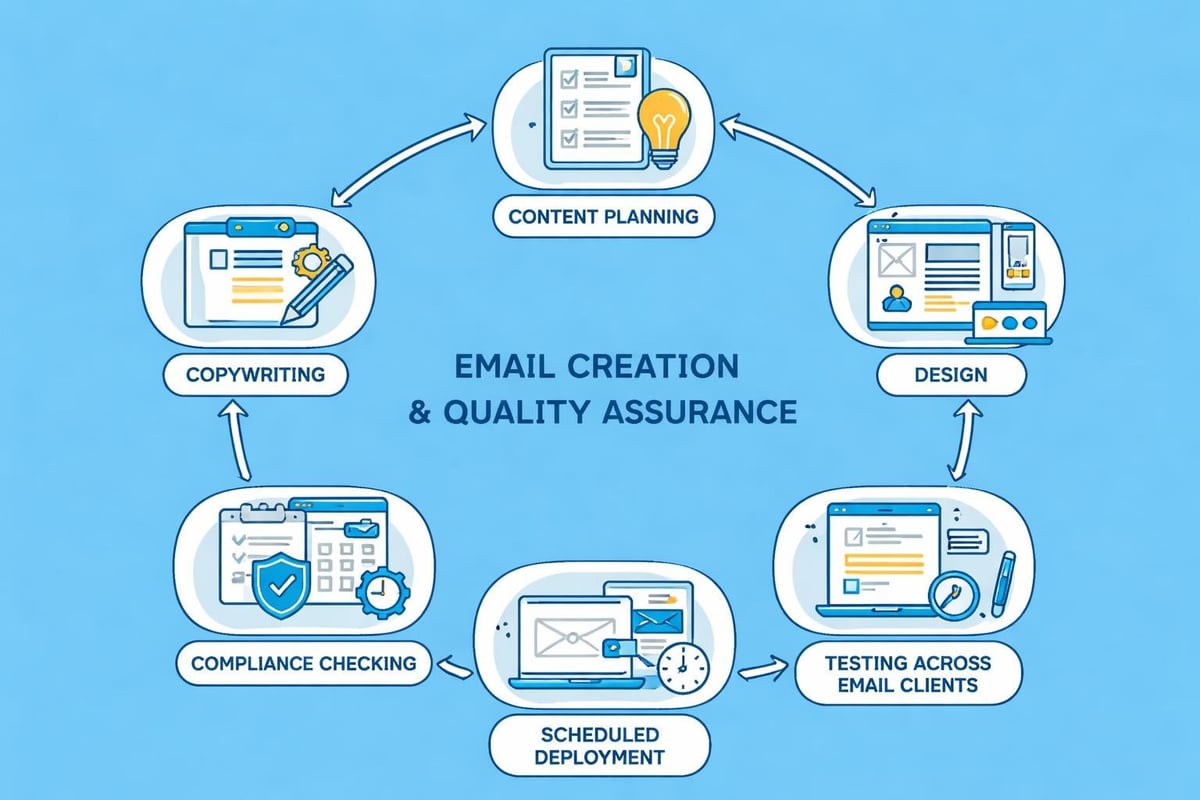
Sending more emails amplifies both your successes and your mistakes. A minor error in a weekly newsletter is embarrassing; the same error in a daily email damages credibility more significantly. As you increase frequency, quality control becomes paramount.
Content Quality Standards
Every additional email you send must justify its existence by providing clear value. Before scheduling any message, ask whether it serves your subscriber's interests or merely your promotional agenda. Avoiding common email marketing mistakes becomes increasingly important as volume increases.
Quality checklist for every email:
- Does this message provide specific value to recipients?
- Is the timing appropriate for the content?
- Have we segmented to reach only relevant subscribers?
- Does the subject line accurately reflect the content?
- Is the call-to-action clear and singular?
- Have we tested across major email clients?
- Does mobile rendering preserve readability and functionality?
Maintaining these standards across a high-volume email programme requires robust processes, thorough testing protocols, and often dedicated resources. Small businesses should consider whether they have the capacity to maintain quality before committing to significantly more emails.
Segmentation: The Secret to Sustainable Volume
The most successful high-frequency email programmes rely on sophisticated segmentation. Rather than sending more emails to everyone, you send targeted emails to specific segments, allowing different subscribers to receive different volumes based on their preferences and behaviours.
Multi-Dimensional Segmentation Approaches
Basic segmentation divides subscribers by demographics or purchase history. Advanced segmentation combines multiple data points to create highly specific audience segments. Someone who purchased recently, engages with every email, and browses frequently represents a very different opportunity than someone who subscribed months ago but never opens your messages.
Effective segmentation dimensions include:
- Purchase frequency and recency
- Email engagement levels (opens, clicks, forwards)
- Product category preferences
- Website browsing behaviour
- Geographic location and time zones
- Lifecycle stage (new subscriber, active customer, at-risk)
- Stated preferences from preference centres
By implementing comprehensive segmentation through business email platforms, you can send dramatically more emails overall whilst each individual subscriber receives only the messages most relevant to them. This approach satisfies both the marketer's need for frequency and the subscriber's need for relevance.
Managing Subscriber Expectations
Transparency about email frequency builds trust and reduces complaint rates. When subscribers know what they're signing up for, they're far more tolerant of regular communication. Setting clear expectations at the point of subscription prevents future frustration.
Preference Centres as Volume Enablers
Rather than offering a binary subscribe/unsubscribe choice, preference centres allow subscribers to customize their email experience. They might opt into daily deals whilst choosing weekly digests for educational content. This granular control empowers subscribers whilst enabling you to send more emails to those who want them.
Modern preference centres should offer options for:
- Email frequency per content type
- Specific topics or product categories
- Communication channels (email, SMS, push notifications)
- Preferred sending times
- Content format preferences
When subscribers feel in control, they're remarkably tolerant of high email volumes. The frustration comes not from receiving emails per se, but from receiving irrelevant emails they can't easily control.
Monitoring Deliverability as Volume Increases
Sending more emails can strain your sender reputation if not managed carefully. Internet service providers watch for sudden volume increases, which can trigger spam filters even for legitimate senders. Maintaining strong deliverability requires attention to technical factors and subscriber engagement.
Technical Infrastructure for Scale
As you increase email volume, ensure your technical infrastructure can support it. This includes proper email authentication (SPF, DKIM, DMARC), maintaining clean subscriber lists, and monitoring bounce rates. Following email marketing best practices from Salesforce helps maintain deliverability as you scale.
| Deliverability Factor | Target Metric | Impact of Poor Performance |
|---|---|---|
| Bounce Rate | Below 2% | ISP reputation damage |
| Spam Complaint Rate | Below 0.1% | Potential blacklisting |
| Unsubscribe Rate | Below 0.5% | Indicates relevance issues |
| Engagement Rate | Above 20% | Affects inbox placement |
| List Quality | 95%+ valid addresses | Wasted resources, reputation risk |
Regular list hygiene becomes non-negotiable when sending more emails. Remove hard bounces immediately, suppress chronic non-openers after reasonable periods, and make unsubscribing easy to prevent spam complaints.
Revenue Impact of Strategic Email Increases
Ultimately, the decision to send more emails should tie directly to business outcomes. More emails aren't valuable if they don't generate more revenue, improve customer retention, or achieve other meaningful business objectives.
Tracking revenue attribution from email requires moving beyond last-click models to understand the full customer journey. A subscriber might receive five emails before making a purchase-crediting only the final email undervalues the nurturing role of earlier messages. Multi-touch attribution models provide clearer pictures of how increased email frequency influences revenue.
Revenue-focused email strategies include:
- Promotional calendars aligned with inventory and seasonal demand
- Cross-sell campaigns triggered by purchase behaviour
- Loyalty programmes that reward engagement
- Exclusive offers for highly engaged segments
- Win-back campaigns with special incentives
When sending out emails strategically, businesses often discover that modest frequency increases generate disproportionate revenue gains, particularly when combined with better segmentation and personalization.
Building Sustainable Growth Through Email
The long-term viability of sending more emails depends on building a sustainable programme that grows with your business. This means investing in proper tools, developing clear processes, and continuously optimizing based on data rather than assumptions.
Small businesses often outgrow basic email tools when they begin scaling frequency and sophistication. Platforms designed for email marketing for small businesses provide the automation, segmentation, and analytics capabilities necessary for sustainable high-volume programmes.
Continuous Optimization Cycles
High-frequency email programmes require constant refinement. What works today may not work next quarter as subscriber preferences evolve, inboxes become more crowded, and competitive pressures increase. Establishing regular optimization cycles ensures your programme remains effective.
Quarterly optimization process:
- Analyse performance data across all email types
- Conduct subscriber surveys to gauge satisfaction
- Test new content formats and messaging approaches
- Refine segmentation based on behaviour patterns
- Update automation workflows to reflect customer journey changes
- Review and refresh template designs
- Audit technical infrastructure and deliverability metrics
This systematic approach to improvement ensures that sending more emails continues delivering value rather than creating diminishing returns.
Sending more emails successfully requires strategic thinking, robust infrastructure, and unwavering focus on subscriber value. The businesses that thrive with high-frequency email programmes are those that combine increased volume with better segmentation, personalization, and quality control. When every additional email serves a clear purpose and reaches only those subscribers who find it relevant, frequency becomes an asset rather than a liability. Astonish Email provides small businesses with the tools and capabilities needed to scale email marketing intelligently, ensuring that more emails translate to stronger customer relationships and improved business outcomes.