Email Simple Guide: Your Essential Handbook for 2026
December 25, 2025
Imagine stepping into 2026, where inboxes are tidy, messages are secure, and every conversation is more efficient than ever. The landscape of digital communication is evolving, and having an email simple approach is essential for keeping up.
This handbook is designed to make email simple for everyone, removing confusion and providing clear, actionable steps. Whether you are just starting or are already familiar with email, you will find expert insights and current best practices to enhance your daily routine.
Inside, you will discover how email has changed over the years, learn how to set up accounts with ease, boost productivity, and protect your privacy. By following this guide, you will master modern tools and strategies, making email work smarter for you in 2026.
The Evolution of Email: 1990s to 2026
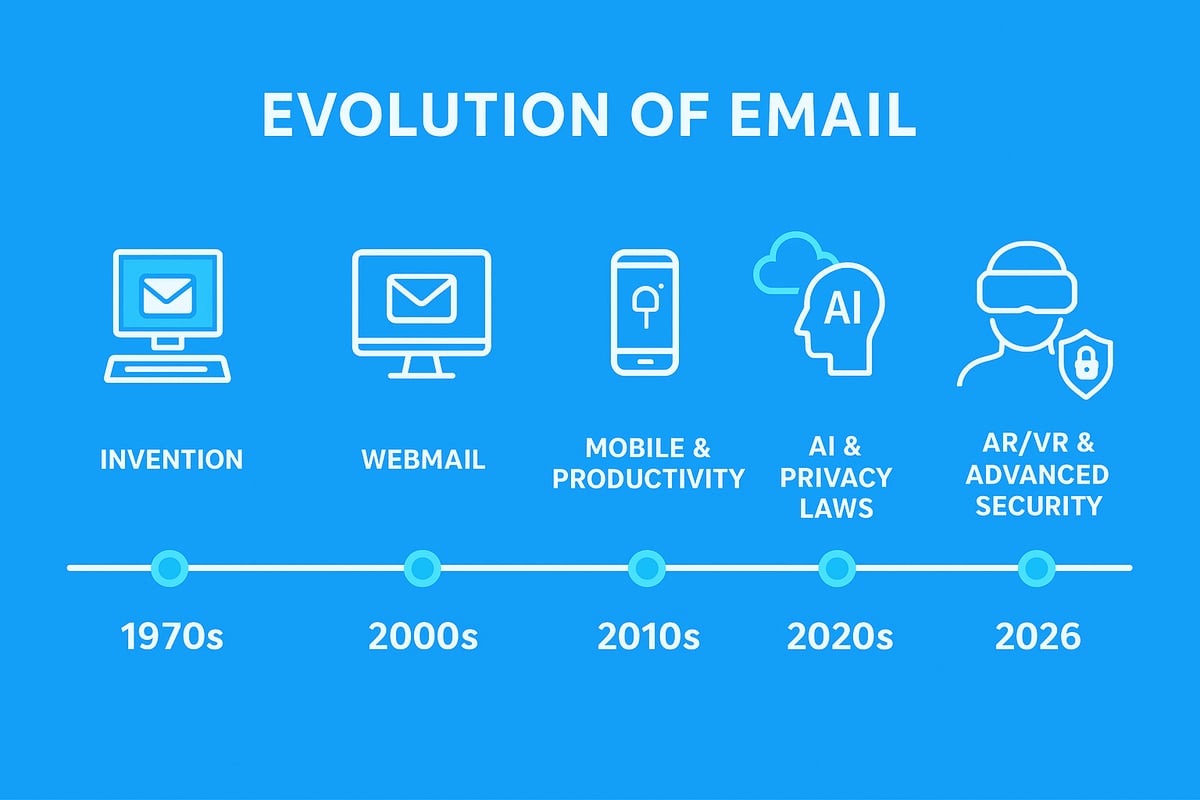
Imagine communication before instant messages and smart devices. The story of email simple begins decades ago, evolving from a technical experiment to a universal tool. Let’s explore how email transformed from the 1990s to 2026, shaping the way we connect, work, and stay secure.
The Early Days of Email
The journey of email simple started in the early 1970s, when Ray Tomlinson sent the very first message between two computers. At first, email was limited to basic text, used mainly by researchers and academics.
By the 1990s, email adoption spread rapidly as businesses and individuals saw its potential. Key milestones included the introduction of user-friendly interfaces and the ability to send messages worldwide. The shift from plain text to HTML emails made communication more dynamic and visually appealing.
Email simple was now accessible, reliable, and ready for the mainstream.
Major Advancements in the 2000s
The 2000s marked a turning point for email simple with the arrival of webmail services like Hotmail, Yahoo!, and Gmail. These platforms made it easy to access your inbox from any device with an internet connection, eliminating the need for desktop-only clients.
Mobile email access gained popularity as smartphones became widespread, allowing users to check messages on the move. However, this era also saw a surge in spam, creating a demand for effective spam filters and junk mail controls.
Here’s a summary of notable developments:
| Year | Milestone |
|---|---|
| 1996 | Hotmail launches |
| 1997 | Yahoo! Mail goes public |
| 2004 | Gmail introduces webmail |
| 2005+ | Spam filters become standard |
These changes set the stage for email simple to become a central part of daily life.
Email in the 2010s: Integration & Mobility
In the 2010s, email simple evolved further by integrating with productivity tools like calendars and cloud storage. This integration meant users could schedule meetings and share documents directly from their inbox, boosting efficiency.
The rise of smartphones and tablets led to the development of dedicated email apps, making it easier to stay connected anywhere. In 2013, Gmail launched its tabbed inbox, which automatically sorted emails into categories such as Primary, Social, and Promotions.
This era made email simple not just about sending messages but about managing tasks and information seamlessly.
The 2020s: AI, Automation, and Privacy
The 2020s brought a wave of innovation to email simple. Artificial intelligence (AI) became a game changer, powering features like smart sorting, predictive replies, and automated scheduling. These tools reduced the time spent on repetitive tasks and improved user experience.
Privacy took centre stage with the introduction of regulations such as GDPR and CCPA, compelling providers to enhance security and transparency. End-to-end encryption became more widespread, protecting sensitive information from cyber threats.
AI and automation made email simple smarter, while privacy laws ensured users' data stayed safe.
What’s New for 2026?
Looking ahead, email simple in 2026 is defined by hands-free management using voice commands and virtual assistants. Security is stronger with advanced anti-phishing measures and biometric logins. Email now integrates with AR and VR, creating immersive communication experiences.
A remarkable 82% of professionals use AI features daily, reflecting the mainstream adoption of smart tools. According to Email usage statistics 2025, the global user base continues to rise, highlighting email’s ongoing relevance.
With these advancements, email simple remains the backbone of modern communication, adapting to the needs of the future.
Setting Up Email in 2026: Step-by-Step
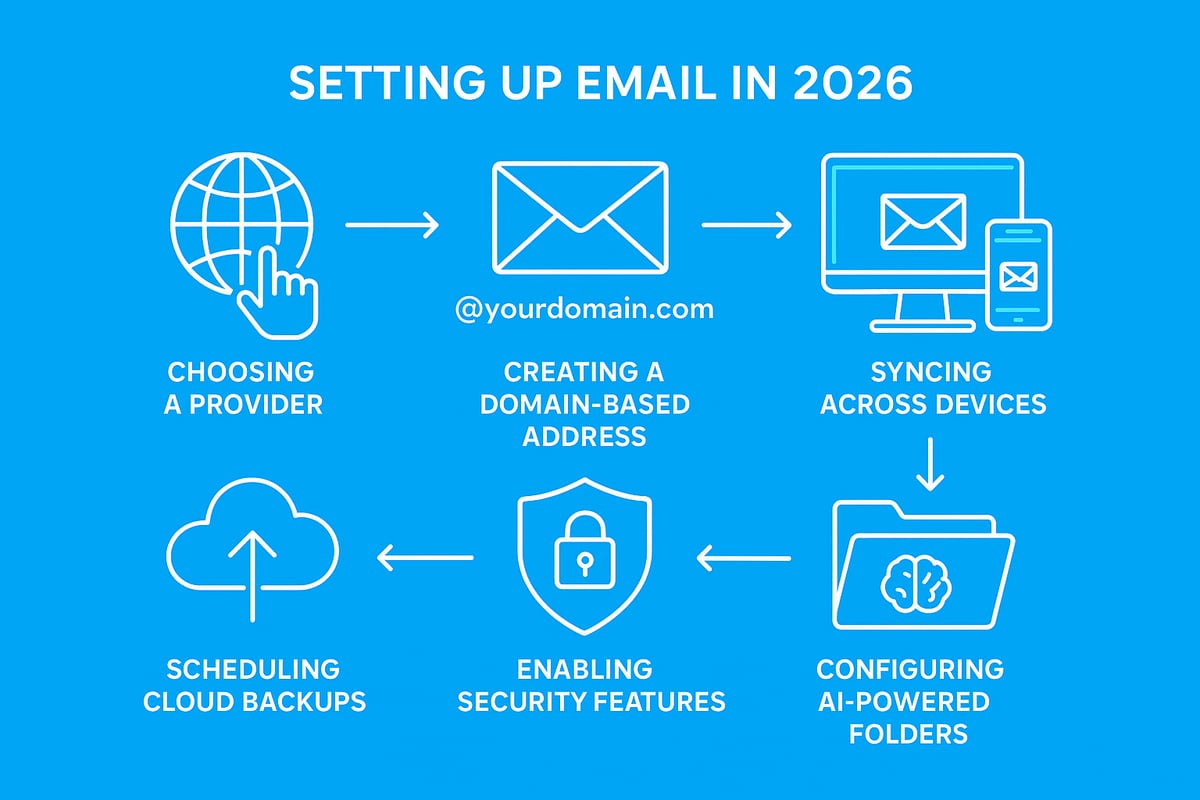
Setting up your email simple and efficient in 2026 is easier than ever. With new tools and smarter systems, you can get started quickly, stay organised, and keep your messages secure. Let us walk through each step to ensure your email simple experience is seamless from the start.
Choosing the Right Email Provider
Choosing the right provider is the foundation of an email simple setup. In 2026, top choices include Gmail, Outlook, ProtonMail, Zoho, and new market entrants. Consider security, storage, integration, and cost before you decide.
Here’s a quick comparison:
| Provider | Security | Storage | Integration | Cost |
|---|---|---|---|---|
| Gmail | Advanced AI | 15–100 GB | Excellent | Free/Paid |
| Outlook | High | 15–50 GB | Strong | Free/Paid |
| ProtonMail | Zero-access | 5–20 GB | Moderate | Free/Paid |
| Zoho | Customisable | 5–100 GB | Business-focused | Free/Paid |
ProtonMail’s zero-access encryption is ideal for privacy. For a free and easy start, this How to get a free email account guide will help you pick the best option for your needs, making your email simple from day one.
Creating a Professional Email Address
Your choice of address says a lot about you. For businesses, a domain-based address boosts credibility. Start your email simple journey by registering a domain, then connect it to your chosen provider.
Follow these steps:
- Register a domain name that matches your brand or name.
- Use your provider’s setup wizard to link your domain.
- Set up your new address in the provider’s dashboard.
Stick to clear naming conventions, such as [email protected], for a professional touch. This keeps your email simple, recognisable, and trusted.
Configuring Email on All Devices
Synchronising messages across smartphones, tablets, wearables, and desktops is now standard. With email simple tools, setup is a breeze.
IMAP remains the preferred protocol in 2026 because it keeps messages consistent everywhere. POP3 is rarely used unless you want local storage only. Microsoft 365 and similar services offer universal device sync, so your inbox is always up to date.
To ensure your email simple workflow, use your provider’s app or add your account in device settings. Enable notifications as needed, and confirm sync settings for each device.
Setting Up Essential Folders and Filters
Organisation is at the heart of an email simple system. Create custom folders for projects, clients, and personal categories. AI-powered filters and rules automate sorting, so you spend less time managing messages.
Here’s how to get started:
- Create folders for key topics or contacts.
- Set up rules to move emails into folders automatically.
- Use built-in AI suggestions for smarter automation.
According to Forrester (2025), 67 percent of users report improved productivity with automated sorting. This makes your email simple and your inbox more manageable.
Enabling Security Features
Security is crucial for any email simple setup. Activate two-factor authentication (2FA) and, where available, biometric logins for extra protection.
Essential features to enable:
- 2FA using your phone or authentication app.
- Biometric logins with fingerprint or facial recognition.
- AI-driven anti-phishing and malware protection.
Google’s AI-driven phishing detection is a leading example. These measures ensure your email simple experience is as safe as possible.
Backing Up and Recovering Your Emails
Never risk losing important messages. In 2026, email simple backup options include both cloud and local archives.
Steps for reliable backups:
- Schedule automatic cloud backups in your provider’s settings.
- Periodically download local copies for critical data.
- Know how to restore emails after accidental deletion or device loss.
Cloud backups are convenient and secure, while local archives offer extra peace of mind. This ensures your email simple journey remains uninterrupted, whatever happens.
Mastering Email Productivity: Tips, Tools, and Strategies
Maximising productivity in 2026 means making your email simple, efficient, and stress-free. With the right mix of techniques and tools, you can transform your inbox into a powerful productivity hub. Let’s explore proven strategies to help you master your daily communication and stay ahead.
Inbox Zero and Email Management Techniques
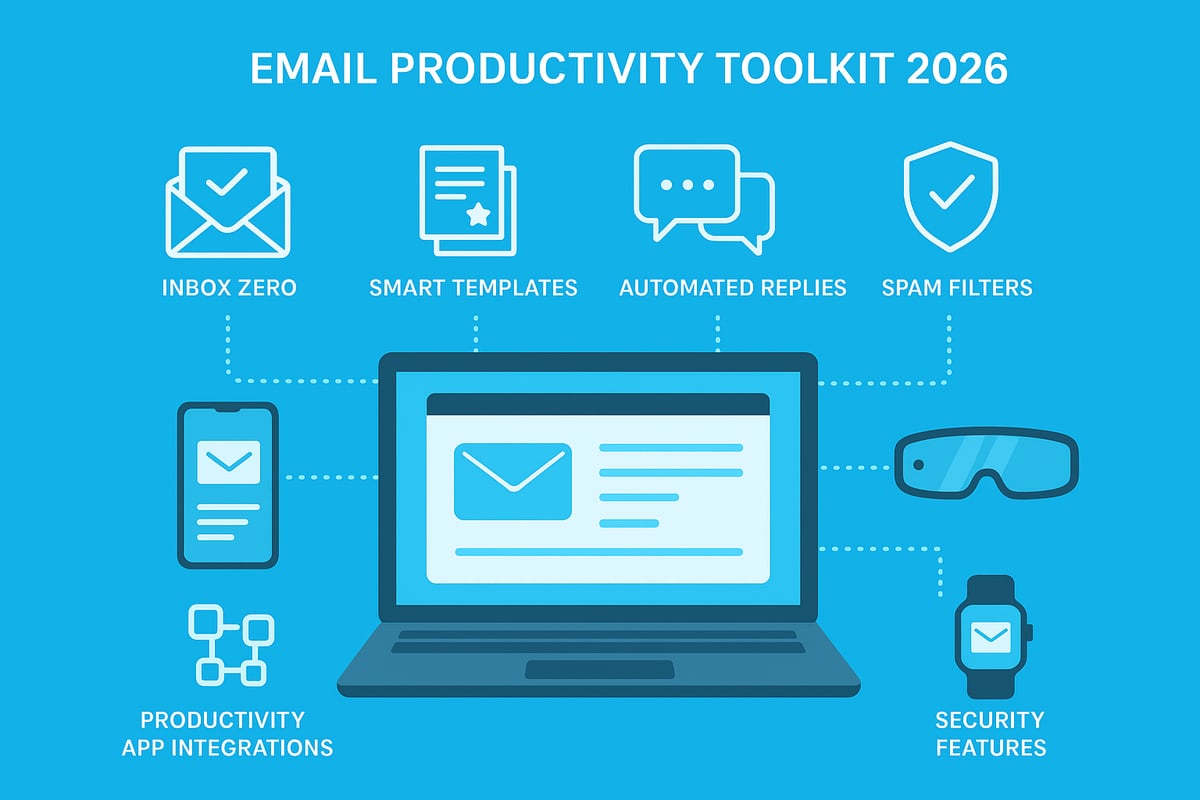
Inbox Zero is the gold standard for keeping your email simple and under control. The idea is to regularly clear your inbox, so you only see what's important. Start by setting aside dedicated time each day to process messages.
Use techniques like batching emails and applying the Pomodoro method, where you focus on email for short, timed sessions. Archive or delete messages you no longer need. Mark actionable emails and set reminders for follow-up. With consistent routines, you’ll find that your email simple workflow reduces stress and boosts productivity.
Time-Saving Email Tools for 2026
Modern email platforms offer a suite of tools designed to make your email simple and efficient. AI-powered scheduling assistants can automatically arrange meetings based on your availability. Smart templates and canned responses allow you to reply to common queries in seconds.
Automated replies are now more advanced and can handle routine tasks, saving an average of 2.5 hours per week according to Gartner, 2025. By embracing these time-saving features, you ensure your email simple approach is both modern and effective.
Integrating Email with Other Productivity Apps
In 2026, making your email simple is all about seamless integration. Connect your email to calendars, task managers, and cloud storage for a unified workflow. This means tasks from your inbox can automatically appear in your to-do list, and event invites sync directly with your calendar.
Popular integrations include Slack and Microsoft Teams, letting you manage conversations across platforms. When your tools work together, your email simple routine becomes a central part of your productivity system, not a separate chore.
Advanced Search and Organisation
Searching for old emails is no longer a challenge when you keep your email simple with advanced features. AI-powered search tools can instantly locate messages, even if you only remember a detail or keyword.
Enhance organisation by tagging, labelling, and archiving emails. Create custom folders for projects or clients. Use the table below to compare popular organisation features:
| Feature | Benefit |
|---|---|
| AI Search | Finds emails instantly |
| Labels/Tags | Categorises messages easily |
| Auto-Archive | Keeps inbox tidy |
These options help maintain an email simple structure that saves you time daily.
Email Etiquette for Modern Professionals
Professionalism in email simple communication is crucial. Always use a clear subject line and a polite greeting. Keep your tone direct yet courteous, and avoid jargon or ambiguous phrases.
Double-check recipients before hitting send to prevent reply-all mishaps or accidental CC/BCC. Proofread for clarity and brevity. Effective email etiquette not only improves understanding, but also reflects positively on your reputation in the digital workplace. Make email simple by mastering these basics.
Reducing Email Overload
Email overload can undermine your productivity, but a few simple steps can help. Regularly unsubscribe from unwanted newsletters. Set boundaries by turning off non-essential notifications and defining work hours for email checks.
According to Harvard Business Review, 59 percent of workers feel less stressed after decluttering their inbox. For more guidance on managing unwanted emails and keeping your email simple, see Email sign ups and spam prevention. Streamlining your inbox makes it easier to focus on what matters.
Email Security and Privacy Essentials
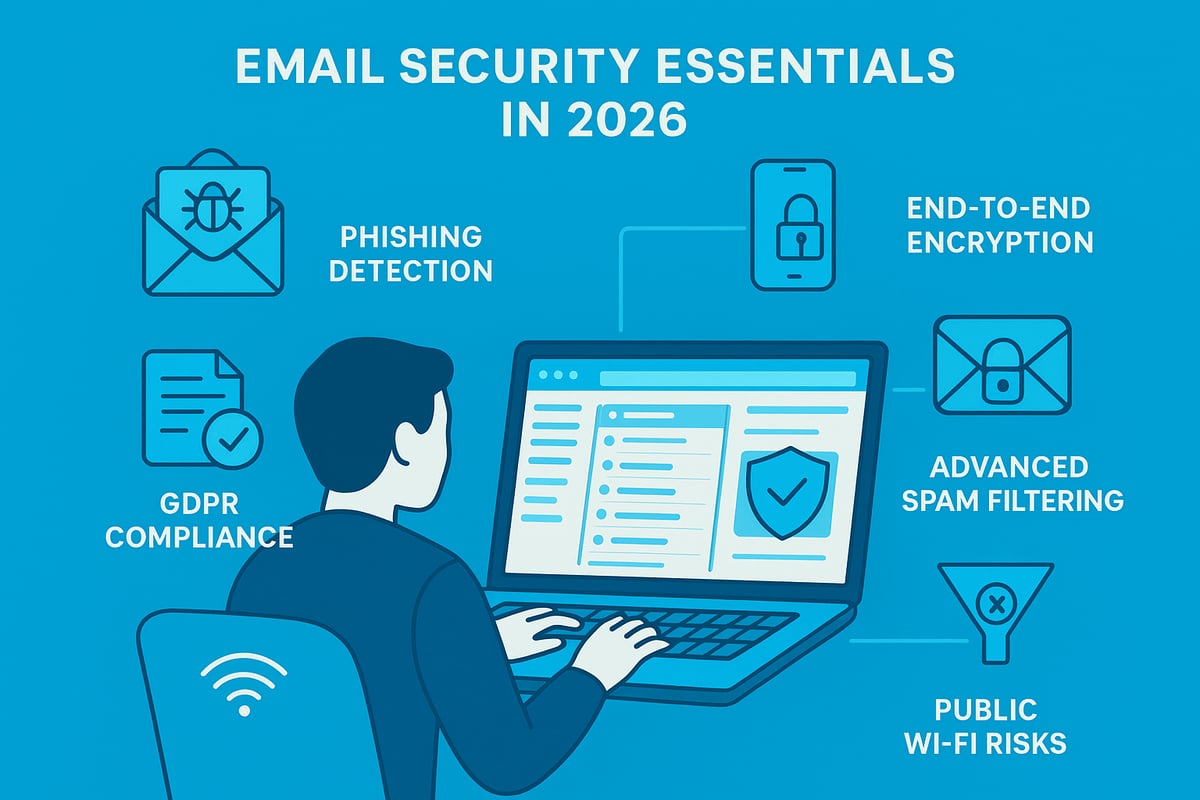
Staying safe online is more important than ever, and mastering email simple security is a must in 2026. With new threats and advanced tools, understanding the essentials will help protect your information, privacy, and peace of mind. Let us explore the most important steps you should take to keep your email simple, secure, and private.
Recognising and Avoiding Email Threats
Phishing, spear phishing, and ransomware are the most common dangers in the world of email simple communication. Attackers often try to trick users into clicking malicious links or sharing sensitive details.
To stay safe, always check the sender’s address and look for suspicious attachments. Be wary of urgent requests for personal or financial information. Real-world scams often mimic trusted brands, so double-check URLs and never rush decisions.
Key steps to avoid threats:
- Hover over links to preview before clicking.
- Use preview panes to check attachments safely.
- Report suspicious messages to your IT team or provider.
By making these checks part of your email simple routine, you greatly reduce the risk of falling victim to scams.
Essential Security Settings for 2026
Modern email simple platforms offer robust security settings to protect your data. Enable encryption for all messages and turn on two-factor authentication (2FA) or even biometric access if available.
Regularly update your passwords, and monitor recent login activity for any unusual access. Many services now alert you if they detect suspicious behaviour. For a deeper dive into the latest protections, such as Zero Trust frameworks and DMARC enforcement, see Email security trends 2026.
Security checklist for 2026:
- Activate 2FA or biometrics.
- Enable end-to-end encryption.
- Set strong, unique passwords.
- Check login history regularly.
Taking these measures makes your email simple account much harder for attackers to compromise.
Protecting Sensitive Information
When using email simple tools to share confidential data, always consider the risks. Avoid sending sensitive details in plain text, and use encrypted attachments whenever possible.
If you need to share passwords or financial information, opt for secure links that expire after use. Many providers now allow you to set permissions or expiry dates on shared files.
Best practices:
- Use password-protected files or encrypted PDFs.
- Never share sensitive data in the email body.
- Double-check recipient addresses before sending.
By following these habits, your email simple workflow stays both flexible and secure.
Staying Compliant with Privacy Laws
Email simple users in 2026 must navigate privacy laws like GDPR, CCPA, and new regulations that protect personal data. Compliance is not just for businesses; individuals must also handle data responsibly.
To stay compliant:
- Get consent before adding people to mailing lists.
- Store only necessary information and delete old data.
- Respond promptly to data deletion or access requests.
Familiarise yourself with the latest updates, as rules continue to evolve. Keeping your email simple practices compliant safeguards you and your contacts.
Safe Use of Public and Shared Devices
Accessing email simple accounts on public Wi-Fi or shared computers introduces risks. Attackers can intercept information or steal passwords if you are not careful.
Protect yourself by:
- Always logging out after each session.
- Using a VPN on public networks.
- Never saving passwords on shared devices.
These habits keep your email simple sessions private, even when you are on the go.
Managing Spam and Junk Mail
Spam filters in 2026 are highly sophisticated, blocking 99.2% of unwanted emails (Cisco, 2025). However, some messages still slip through, so it is important to know how to manage them.
Tips for managing spam:
- Mark unwanted emails as spam to improve filtering.
- Block persistent offenders.
- Review your spam folder periodically to catch false positives.
By keeping your inbox clean, you make the most of your email simple experience and reduce the risk of missing important messages.
The Future of Email: Trends and Predictions for 2026
The future of email simple communication is unfolding rapidly, with cutting-edge innovations set to redefine how we connect and collaborate. As we approach 2026, both individuals and businesses can expect email simple solutions to become smarter, more secure, and deeply integrated into daily workflows. Let’s explore the most significant trends and predictions shaping the next era of email simple technology.
AI and Smart Automation in Email
By 2026, AI-driven features will be central to email simple workflows. Predictive typing, automated categorisation, and smart scheduling are now standard, streamlining communication and saving countless hours.
For example, users can outline bullet points and let AI draft entire messages, ensuring consistency and professionalism. AI is also improving deliverability by analysing user behaviour and engagement patterns, as seen in the latest email deliverability best practices 2026. These enhancements make email simple for everyone, regardless of technical expertise.
Voice and Gesture-Based Email Management
Voice assistants are revolutionising email simple tasks, allowing users to manage messages hands-free. With Alexa, Siri, or Google Assistant, you can compose, send, or sort emails using only your voice.
Gesture controls, particularly on AR and VR devices, add another layer of convenience. Imagine swiping through your inbox in a virtual workspace or dictating quick replies while multitasking. These innovations make email simple management accessible to users with varying needs and preferences.
Enhanced Collaboration Features
Collaboration is at the heart of email simple platforms in 2026. Real-time editing, inline commenting, and seamless integration with project management tools enable teams to work together without switching apps.
Email threads now support live document editing and instant feedback, reducing delays and boosting productivity. Whether you are coordinating projects or sharing updates, these features turn email simple into a central hub for teamwork.
Email and the Internet of Things (IoT)
The integration of email simple notifications with IoT devices is transforming how people stay informed. Smartwatches, AR glasses, and even home assistants can now display urgent messages instantly.
For instance, professionals receive critical email simple alerts on their wearable devices, allowing for immediate action without reaching for a phone or computer. This always-connected approach ensures that important information is never missed, no matter where you are.
Privacy-First Email Platforms
Privacy is a top priority for email simple users in 2026. Decentralised and blockchain-based platforms are gaining popularity, offering user-controlled data and greater transparency.
These privacy-first solutions empower individuals and businesses to safeguard sensitive information, providing robust encryption and eliminating third-party access. As a result, email simple services are becoming the gold standard for secure and confidential communication.
Predictions: What’s Next for Email?
Looking ahead, will email simple continue to dominate or be replaced by new technologies? Experts forecast steady growth, with 4.7 billion global users projected by 2026, according to Gmail user statistics 2025.
While emerging platforms and instant messaging apps challenge the status quo, the flexibility and reliability of email simple ensure its ongoing relevance. Expect continued advancements in AI, privacy, and cross-platform integration as email simple evolves to meet the demands of a connected world.
Troubleshooting Common Email Problems in 2026
Even with advanced platforms, users still encounter common issues. This "email simple" guide ensures you can quickly resolve problems and keep your communication seamless.
Dealing with Delivery Failures and Bounces
Nothing is more frustrating than a bounced message. Common causes include full inboxes, mistyped addresses, or aggressive spam filters. Start by double-checking the recipient’s address and ensuring attachments meet size limits. Clean up your sent folder and try resending.
If problems persist, consult your provider’s bounce-back message for clues. For a deeper dive into solutions, see this comprehensive guide on troubleshooting email delivery issues. Following these steps will keep your email simple and effective.
Fixing Sync Issues Across Devices
Sync issues can disrupt workflow, especially when your inbox appears differently on each device. First, ensure all devices are connected to the internet and using updated apps. Check your account settings for IMAP, which is the standard for seamless multi-device access in 2026.
If emails are missing or delayed, try refreshing your inbox or logging out and back in. Sometimes, a quick restart resolves lingering sync problems. Keeping your email simple means maintaining smooth access everywhere, every time.
Resolving Attachment and File Sending Errors
Attachment errors often happen due to file size limits or incompatible formats. Most providers now support larger files via cloud links, but double-check your provider’s limits. If a file won’t send, try compressing it or using a supported format such as PDF or DOCX.
For very large files, upload them to your cloud storage and share a secure link instead. This approach keeps your email simple and ensures recipients can always access what they need.
Handling Account Lockouts and Password Resets
Account lockouts can occur after multiple failed logins or suspicious activity. To recover access, use your provider’s password reset tools. You may be asked to verify your identity using backup email, SMS, or biometric authentication.
Store backup codes in a secure place to avoid future lockouts. Regularly updating your recovery information is part of keeping your email simple and secure, so you’re never left stranded.
Managing Storage Limits and Archiving
Running out of space can halt communication. Regularly delete unnecessary emails and empty your spam and trash folders. Many providers offer archiving for older messages, letting you keep important information without clogging your inbox.
Review your storage quota in account settings and consider upgrading if needed. Balancing storage and archiving makes managing your email simple and efficient.
Restoring Accidentally Deleted Emails
Mistakenly deleted emails are not always lost. Most services have a recovery window, typically 30 days, where deleted items can be restored from the trash or recycling bin. Locate the email, select restore, and it will return to your inbox.
For older deletions, check your cloud backup or archived folders. Establishing regular backups keeps your email simple and protects against permanent loss.
Getting Help: When to Contact Support
Some issues go beyond self-service. If you face persistent delivery failures, security breaches, or technical errors, it’s time to contact support. Use your provider’s help centre, live chat, or designated email address for assistance.
When reaching out, provide clear details: error messages, affected devices, and steps already taken. This proactive approach ensures your provider can resolve your email simple problems quickly and efficiently.