Email Sending: Best Practices for Small Business Success
April 4, 2026
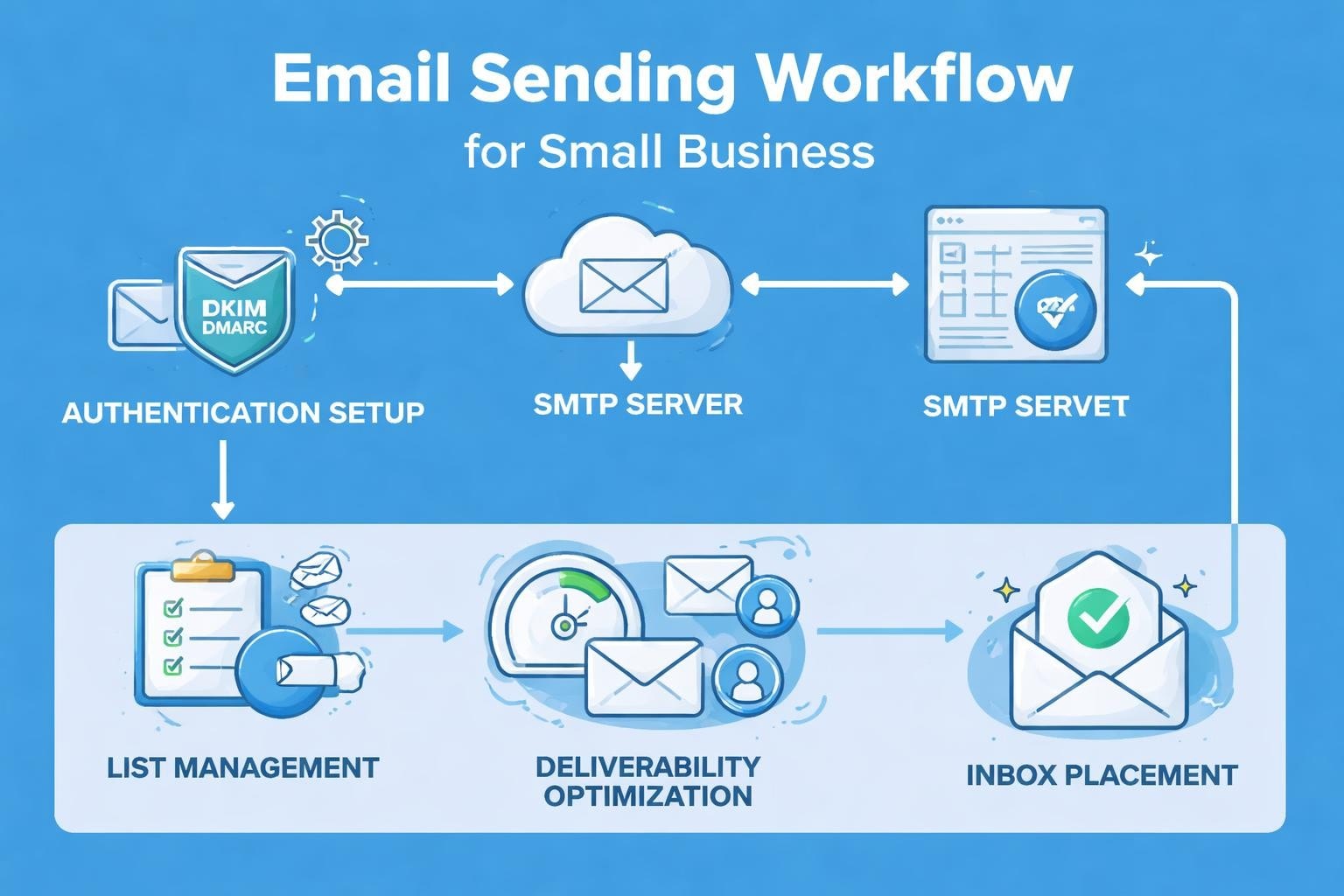
Email sending remains one of the most powerful communication tools for small businesses in 2026. Whether you're nurturing customer relationships, promoting products, or sharing valuable content, the way you approach email sending directly impacts your business growth. Understanding the technical requirements, best practices, and strategic considerations ensures your messages reach the right people at the right time, building trust and driving measurable results.
Understanding Email Sending Infrastructure
The foundation of successful email sending starts with proper infrastructure. Small businesses often underestimate the technical elements that determine whether their emails land in inboxes or spam folders.
Authentication Protocols
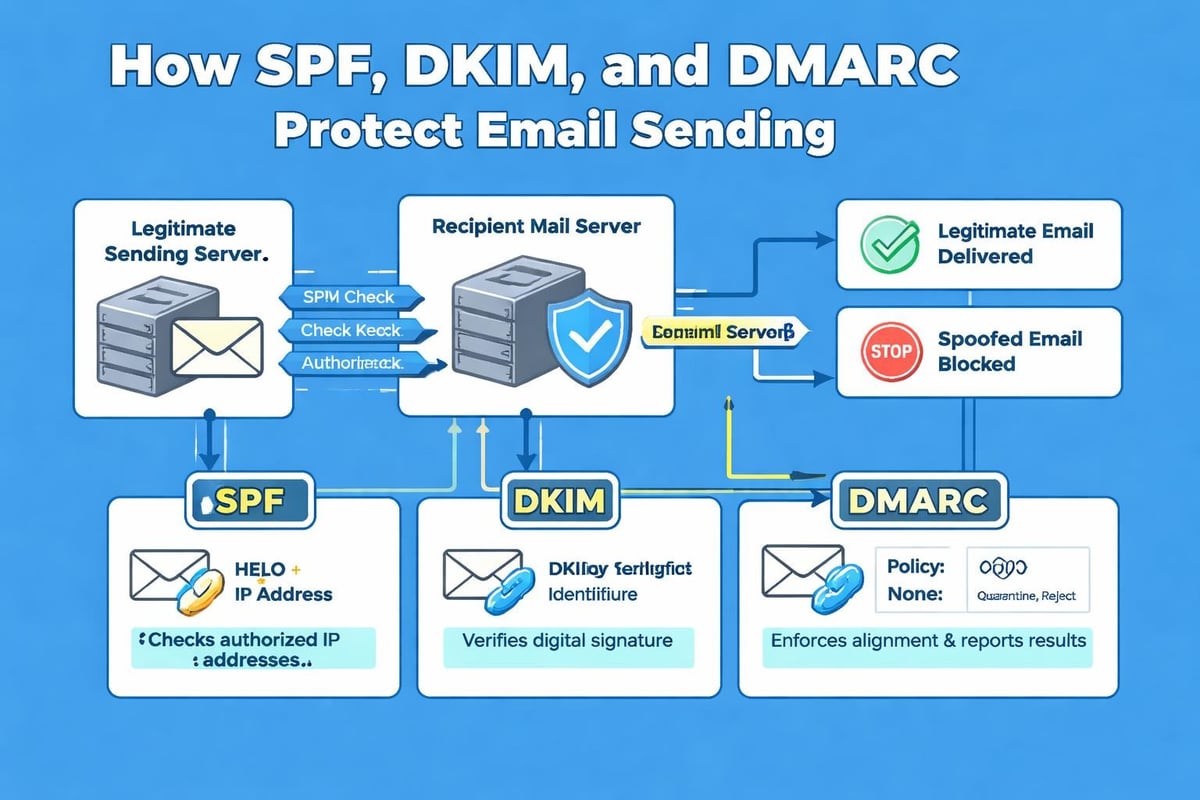
Email authentication acts as your digital passport, proving to receiving servers that you're a legitimate sender. Three primary protocols work together to establish your credibility:
- SPF (Sender Policy Framework) validates which servers can send emails from your domain
- DKIM (DomainKeys Identified Mail) adds a digital signature to verify message integrity
- DMARC (Domain-based Message Authentication) provides instructions for handling authentication failures
Setting up these protocols correctly is essential for maintaining email deliverability and protecting your sender reputation. Most email sending platforms configure these automatically, but verifying proper implementation prevents common delivery issues.
Choosing the Right Sending Infrastructure
Your email sending infrastructure directly affects performance and scalability. Small businesses typically choose between three options:
| Infrastructure Type | Best For | Key Advantages | Considerations |
|---|---|---|---|
| Email Service Provider (ESP) | Marketing campaigns | User-friendly, templates included | Monthly costs, feature limitations |
| Transactional Email API | Automated notifications | High deliverability, scalability | Technical setup required |
| Dedicated IP Address | High-volume senders | Full control, reputation isolation | Requires volume consistency |
For most small businesses, a reliable email marketing platform like Astonish Email provides the perfect balance between functionality and ease of use. These platforms handle technical complexities whilst allowing you to focus on crafting compelling messages.
Building and Maintaining Quality Lists
The quality of your email list fundamentally determines email sending success. A smaller, engaged list consistently outperforms a larger, uninterested audience.
Ethical List Building Strategies
Growing your subscriber base requires patience and respect for user preferences. Avoid purchasing email lists, which damages your sender reputation and violates regulations.
Instead, implement these proven strategies:
- Create valuable lead magnets that solve specific problems for your target audience
- Use clear opt-in forms with transparent information about email frequency and content
- Implement double opt-in to confirm subscriber intent and improve list quality
- Promote subscriptions across multiple touchpoints including your website, social media, and in-store
- Offer preference centres allowing subscribers to customise their email experience
When you're creating a professional email address for your business, ensure it's connected to a domain that reflects your brand identity. This builds immediate trust with new subscribers.
List Hygiene and Maintenance
Regular list maintenance keeps your email sending performance optimal. Inactive subscribers and invalid addresses harm deliverability rates and waste resources.
Implement these maintenance practices quarterly:
- Remove hard bounces immediately after they occur
- Identify and re-engage inactive subscribers with targeted campaigns
- Suppress unsubscribes promptly and honour preferences
- Validate email addresses using real-time verification tools
- Segment lists based on engagement levels and behaviour
According to best practices for email deliverability, maintaining list hygiene can improve inbox placement rates by 15-25%. This translates directly to better campaign performance and return on investment.
Crafting Effective Email Content
Content quality determines whether recipients engage with your emails or mark them as spam. Every element from subject lines to calls-to-action requires strategic consideration.
Subject Line Optimisation
Your subject line is the gatekeeper to email engagement. With recipients scanning dozens of emails daily, you have seconds to capture attention.
Effective subject lines share common characteristics:
- Length between 40-50 characters for optimal mobile display
- Clear value proposition stating what's inside
- Personalisation using recipient names or preferences
- Urgency or curiosity without being manipulative
- Avoiding spam trigger words like "free," "guarantee," or excessive punctuation
Testing different approaches reveals what resonates with your specific audience. A/B testing subject lines can increase open rates by 20-30% when you consistently apply learnings.
Body Content Best Practices
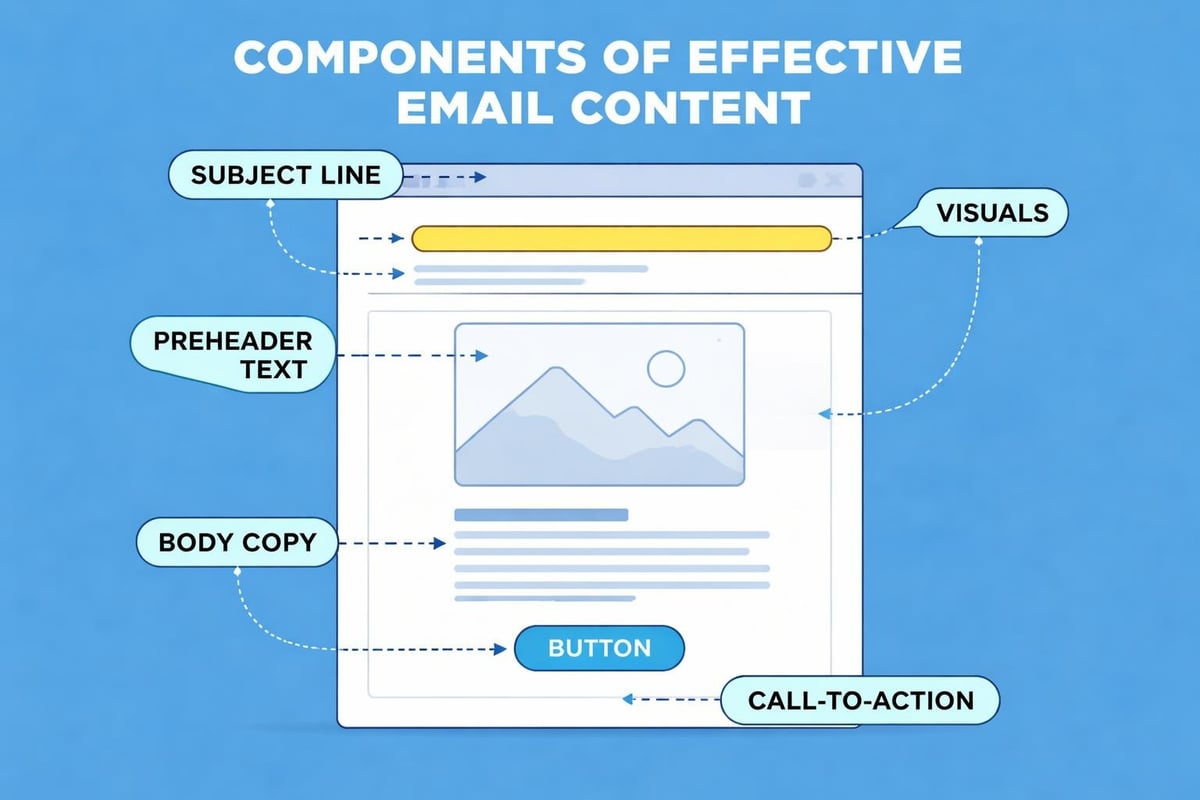
The email body must deliver on your subject line's promise whilst guiding readers toward desired actions. Structure your content for scannability and clarity.
Follow this proven framework:
- Opening hook that immediately addresses reader needs or interests
- Value delivery through helpful information, exclusive offers, or entertaining content
- Visual hierarchy using headers, bullet points, and white space
- Single clear call-to-action that stands out and explains the next step
- Mobile optimisation ensuring readability across all devices
Remember that email sending best practices emphasise responsible content that respects recipient time and attention. Provide genuine value in every message you send.
Optimising Send Times and Frequency
When you send emails matters as much as what you send. Timing and frequency directly impact engagement rates and subscriber satisfaction.
Determining Optimal Send Times
Email sending timing varies significantly based on your audience demographics, industry, and content type. Generic advice suggests Tuesday through Thursday mornings perform best, but your audience may differ.
Consider these factors when scheduling:
- Industry norms and when your audience checks email
- Time zones of your subscriber base
- Email type whether promotional, educational, or transactional
- Historical performance data from previous campaigns
- Testing results from controlled timing experiments
For email marketing for small businesses, analysing your own data provides more valuable insights than industry averages. Track open and click rates across different days and times to identify patterns.
Finding the Right Frequency
Email frequency balances staying top-of-mind with avoiding subscriber fatigue. Too few emails and you're forgotten; too many and you're annoying.
| Sending Frequency | Advantages | Potential Issues | Best For |
|---|---|---|---|
| Daily | Maximum visibility | High unsubscribe risk | News, deals sites |
| 2-3 times weekly | Strong engagement | Requires consistent content | E-commerce, blogs |
| Weekly | Manageable expectations | Less frequent touchpoints | Newsletters, updates |
| Monthly | Low unsubscribe rates | Weak relationship building | Minimal updates only |
Start conservatively and increase frequency based on engagement metrics. Monitor unsubscribe rates and engagement trends to find your sweet spot. Most small businesses achieve optimal results with weekly or bi-weekly email sending schedules.
Monitoring Deliverability and Performance
Successful email sending requires continuous monitoring and optimisation. Key metrics reveal how well your emails perform and where improvements are needed.
Critical Metrics to Track
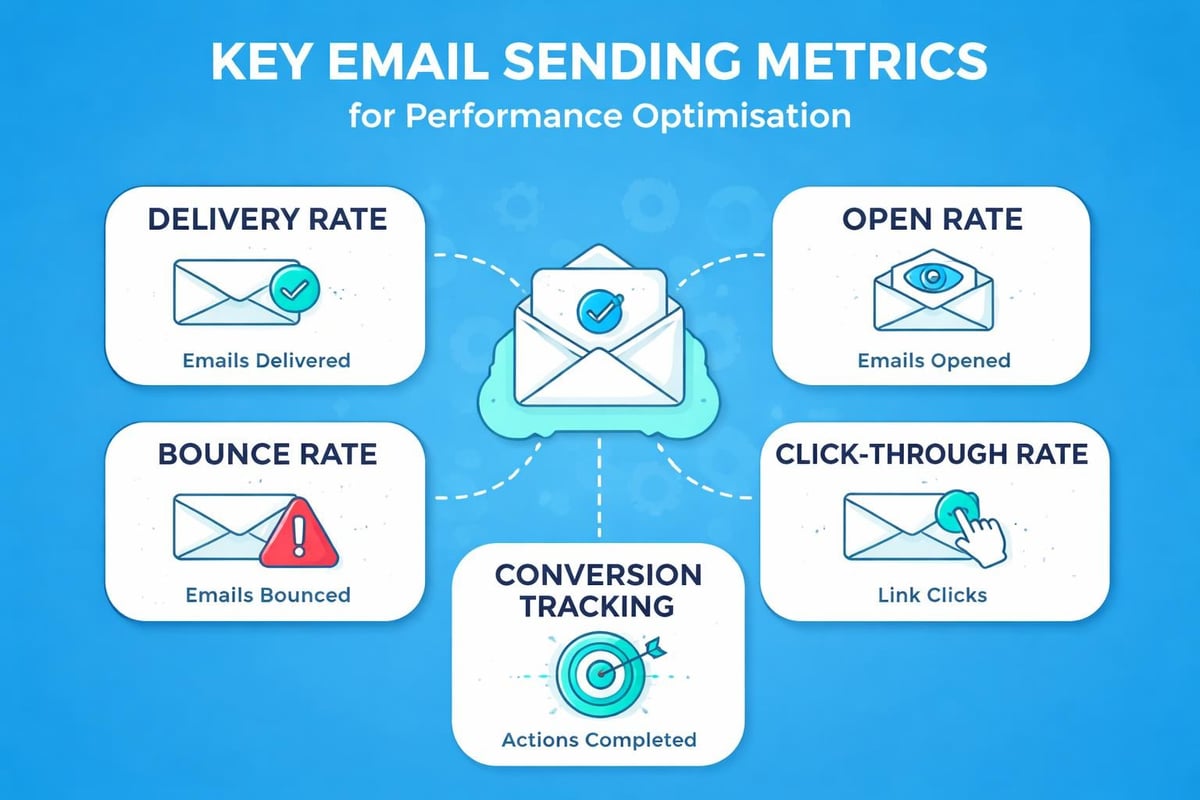
Understanding your email sending performance starts with tracking the right metrics. These key performance indicators tell different parts of your email story:
- Delivery rate shows the percentage of emails accepted by receiving servers
- Open rate indicates how many recipients viewed your message
- Click-through rate measures engagement with your content and calls-to-action
- Conversion rate tracks how many recipients completed desired actions
- Bounce rate reveals list quality issues requiring attention
- Unsubscribe rate signals content relevance and frequency problems
According to Amazon SES best practices, maintaining a bounce rate below 5% and complaint rate below 0.1% is essential for sender reputation. Regular monitoring helps you catch and address issues before they impact deliverability.
Sender Reputation Management
Your sender reputation functions like a credit score for email sending. Internet service providers use this reputation to decide whether your emails reach inboxes or spam folders.
Protect and improve your sender reputation by:
- Warming up new IP addresses gradually increasing sending volume over 4-6 weeks
- Maintaining consistent sending patterns avoiding sudden volume spikes
- Responding to feedback loops when recipients mark emails as spam
- Monitoring blacklists and addressing listings immediately
- Keeping engagement rates high through relevant, valuable content
Working with established platforms that understand email deliverability helps protect your reputation from common pitfalls. These services provide tools and guidance for maintaining healthy sender scores.
Compliance and Legal Considerations
Email sending in 2026 requires strict adherence to privacy regulations and anti-spam laws. Non-compliance risks substantial fines and permanent damage to your brand reputation.
Understanding GDPR and Privacy Laws
The General Data Protection Regulation affects any business sending emails to European Union residents, regardless of where your business is located. Key requirements include:
Consent and transparency:
- Obtaining explicit, informed consent before adding subscribers
- Clearly explaining how you'll use email addresses
- Providing easy access to privacy policies
- Documenting consent for regulatory compliance
Subscriber rights:
- Honouring data access requests within 30 days
- Allowing subscribers to update their information
- Deleting data upon request (right to be forgotten)
- Enabling data portability when requested
Beyond GDPR, familiarise yourself with the UK PECR, CAN-SPAM Act, and CASL depending on where your subscribers reside. Your antispam policy should clearly outline your commitment to responsible email sending practices.
Essential Compliance Elements
Every marketing email you send must include specific elements to remain compliant with anti-spam regulations:
- Accurate sender information with your real business name and address
- Clear email identification showing it's a marketing message
- Functional unsubscribe mechanism in every email
- Physical mailing address of your business location
- Prompt unsubscribe processing within 10 business days maximum
These requirements aren't just legal necessities but they also build trust with subscribers. Transparent, ethical email sending practices create long-term relationships that drive sustainable business growth.
Segmentation and Personalisation Strategies
Generic, one-size-fits-all email sending yields poor results in 2026. Subscribers expect relevant content tailored to their interests and behaviours.
Effective Segmentation Approaches
Dividing your email list into targeted segments allows you to send more relevant messages to each group. Start with basic segmentation and refine as you gather more data:
- Demographic segmentation based on location, age, gender, or job title
- Behavioural segmentation according to purchase history, email engagement, or website activity
- Lifecycle stage differentiating new subscribers, active customers, and lapsed users
- Preference-based using interests and content preferences subscribers have indicated
- Engagement level separating highly engaged subscribers from inactive ones
For insights on professional email marketing approaches, consider how segmentation transforms generic broadcasts into personalised conversations. Small businesses using segmentation report 14-18% higher conversion rates compared to unsegmented campaigns.
Personalisation Beyond First Names
True personalisation extends far beyond inserting a recipient's name in the subject line. Advanced personalisation uses data to create genuinely relevant experiences.
Implement these personalisation tactics:
- Product recommendations based on browsing or purchase history
- Dynamic content blocks that change based on segment characteristics
- Triggered emails responding to specific behaviours or milestones
- Location-specific information including events, weather, or local offers
- Past interaction references showing you remember previous conversations
When you send out emails with thoughtful personalisation, recipients feel valued rather than marketed to. This emotional connection drives higher engagement and customer lifetime value.
Testing and Continuous Improvement
Email sending excellence requires ongoing testing and refinement. Markets change, subscriber preferences evolve, and new best practices emerge constantly.
A/B Testing Fundamentals
A/B testing removes guesswork from email optimisation, replacing assumptions with data-driven decisions. Test one variable at a time for clear, actionable results.
Priority elements to test:
- Subject lines with different lengths, tones, or value propositions
- Send times comparing days of week and times of day
- Call-to-action buttons testing copy, colour, and placement
- Email length evaluating detailed versus concise approaches
- Personalisation tactics measuring impact on engagement
Ensure your test groups are large enough for statistical significance, typically at least 1,000 subscribers per variant. Run tests long enough to account for timing variations, usually at least 24-48 hours.
Learning from Analytics
Raw data becomes valuable when you extract meaningful insights and apply them to future campaigns. Develop a systematic approach to analysing email sending performance.
Create a monthly review process examining:
- Trend identification spotting patterns in engagement over time
- Segment comparison understanding which audiences respond best
- Content performance evaluating which topics and formats succeed
- Technical issues catching deliverability problems early
- Competitive benchmarking comparing your results to industry standards
According to effective email outreach strategies, businesses that regularly analyse and optimise their email sending achieve 40% better results than those using static approaches. Continuous improvement compounds over time, creating substantial competitive advantages.
Mobile Optimisation Essentials
With over 60% of emails opened on mobile devices in 2026, mobile optimisation is no longer optional for successful email sending. Poor mobile experiences lead to immediate deletions and unsubscribes.
Design Considerations for Mobile
Mobile-friendly email design requires specific attention to layout, formatting, and user interaction. Adapt your emails for smaller screens and touch-based navigation.
Critical mobile design elements:
- Single-column layouts that scale naturally to various screen sizes
- Minimum 14-point font size for body text readability
- Large, finger-friendly buttons at least 44x44 pixels
- Compressed images that load quickly on cellular connections
- Concise copy that delivers value without excessive scrolling
Consider how accessibility requirements influence mobile email design. Accessible emails benefit all users whilst ensuring compliance with evolving regulations.
Testing Across Devices
Email rendering varies significantly across email clients and devices. What looks perfect in one environment may break completely in another.
Implement thorough testing protocols:
- Preview in major email clients including Gmail, Outlook, and Apple Mail
- Test on actual devices using both iOS and Android phones and tablets
- Check dark mode rendering as more users adopt this preference
- Verify interactive elements ensuring all links and buttons function correctly
- Measure load times optimising images and code for fast delivery
Many email clients handle HTML and CSS differently. Testing ensures your carefully crafted emails display as intended regardless of where subscribers read them.
Mastering email sending transforms it from a simple communication tool into a powerful engine for small business growth. By implementing proper authentication, maintaining list quality, crafting compelling content, and continuously optimising based on performance data, you'll build meaningful customer relationships that drive sustainable results. Astonish Email provides the tools and support small businesses need to execute professional email marketing campaigns without the complexity or cost of enterprise solutions. Start optimising your email sending strategy today and watch your engagement and conversions grow.