Email Send Test Guide: How to Ensure Reliable Delivery 2026
December 20, 2025
Struggling with emails that never reach your customers’ inboxes? In 2026, this challenge poses serious business risks, from lost sales to damaged brand reputation. The landscape is shifting as spam filters become more advanced and recipient expectations continue to rise.
Reliable email delivery is now essential for maximising marketing ROI, building strong customer relationships, and maintaining trust. Without it, even the best campaigns can fail.
This guide aims to give you a clear, practical approach to mastering the email send test. You will learn how to check, troubleshoot, and optimise your email delivery—step by step. We’ll cover the essentials of deliverability, leading testing methods, a proven testing workflow, advanced troubleshooting, and future-proofing strategies to keep your messages landing where they belong.
Understanding Email Deliverability in 2026
Email deliverability is at the heart of every successful email send test. In 2026, reaching the inbox is no longer a given. The landscape is more complex, with evolving technology and rising user expectations.
The Modern Email Landscape
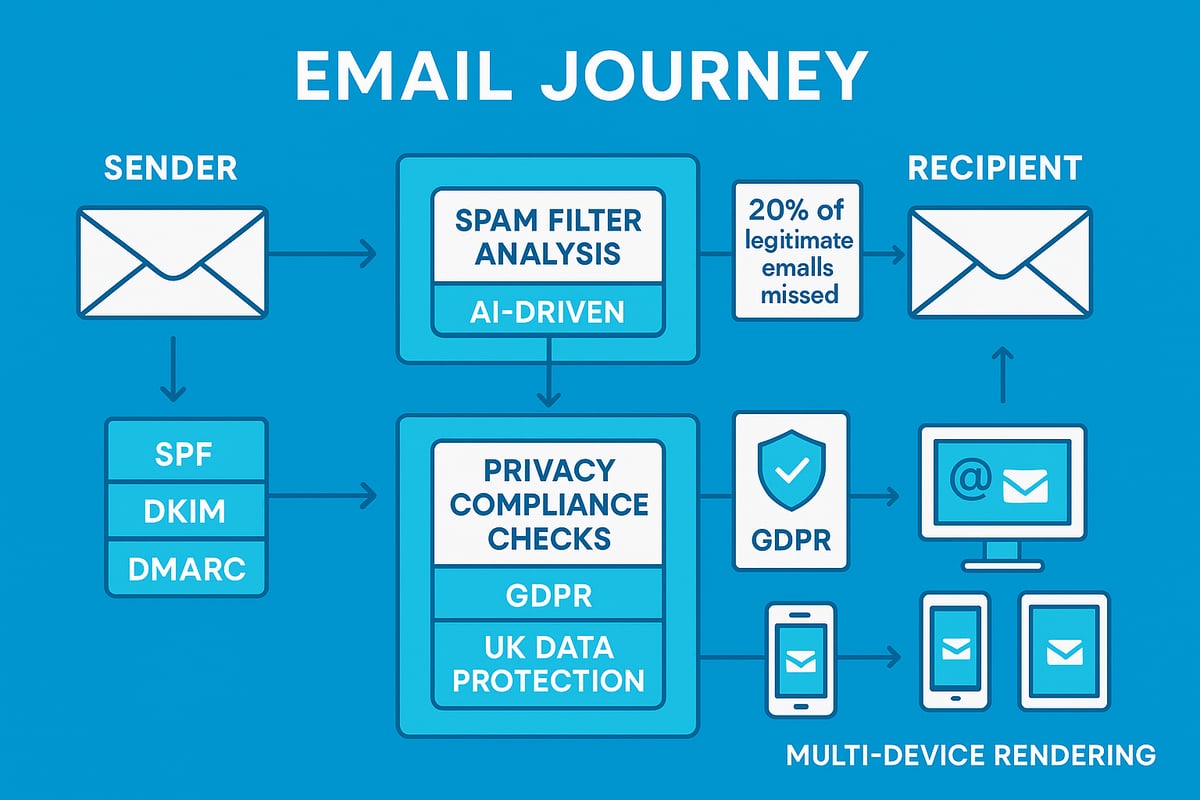
The world of email in 2026 is defined by rapid change. Marketers face new challenges as inboxes are managed by increasingly intelligent spam filters. Artificial intelligence now evaluates not just content, but sender behaviour, historical engagement, and even device usage patterns.
Privacy regulations like GDPR and the UK Data Protection Act have tightened standards. These rules demand explicit consent and robust data handling. They directly influence the outcomes of any email send test, as non-compliance can trigger automatic filtering or blocking.
Recipients now check email across multiple devices and clients, from smartphones to smartwatches. This multi-device access increases the complexity of ensuring consistent delivery and rendering. According to Global Email Deliverability Rates 2025, over 20% of legitimate emails still never reach the inbox, highlighting the ongoing challenge for marketers.
To adapt, brands must embrace regular email send test routines. Testing helps identify not only technical issues but also evolving recipient preferences and inbox behaviours.
What Impacts Reliable Email Delivery?
Several factors determine whether your message lands in the inbox or gets lost. Sender reputation is a primary concern. Internet Service Providers (ISPs) and mailbox providers assess your trustworthiness based on past activity, complaint rates, and engagement levels.
Authentication protocols are now non-negotiable. SPF, DKIM, and DMARC verify that your emails are genuine. Without them, even a well-designed campaign can fail an email send test and end up in spam.
Content quality matters more than ever. Spam triggers include misleading subject lines, poor formatting, or suspicious links. Automated tools can identify these issues during an email send test, allowing marketers to fix problems before launch.
List hygiene underpins deliverability. Maintaining a clean, engaged subscriber list reduces bounces and complaints. Infrastructure decisions, such as using dedicated or shared IPs, also influence results. Reliable technical setup ensures consistent performance across all campaigns.
The Cost of Poor Deliverability
Failing to reach the inbox is costly. Lost revenue is the most immediate impact, as undelivered emails mean missed sales and wasted marketing spend. The effectiveness of every email send test is judged by its ability to prevent these losses.
Brand reputation is also at stake. Repeated delivery failures damage sender score, making future campaigns even harder to deliver. Real-world examples show businesses suffering campaign setbacks and declining engagement due to persistent deliverability issues.
Open rates are a key performance metric. Studies reveal that even a small drop in deliverability can significantly lower these rates, affecting both short-term and long-term marketing ROI. Prioritising regular email send test routines is essential for any organisation that relies on email as a core channel.
Types of Email Send Tests and Their Importance
Modern email marketing success depends on rigorous testing before every campaign. The right email send test ensures your message lands in the inbox, not the spam folder. Each type of test plays a key role in boosting deliverability, engagement, and your brand’s reputation. For a deeper dive into how these tests fuel marketing ROI, see Email deliverability best practices.

Inbox Rendering Tests
Inbox rendering tests check how your emails display across major providers and devices. This type of email send test reveals if your content looks right on Gmail, Outlook, Apple Mail, and both mobile and desktop screens.
With over 55% of emails opened on mobile, rendering issues can dramatically cut engagement. Using tools like Litmus or Email on Acid, you can preview your design in dozens of environments.
- Identify formatting glitches
- Catch font inconsistencies
- Ensure images and buttons display correctly
A single email send test can highlight display problems that hurt campaign results. Make rendering tests a core part of your workflow.
Spam Filter Tests
Spam filter tests simulate how your message is treated by common spam filters in both B2B and B2C settings. This email send test uncovers technical and content issues that could send your message straight to junk.
You receive a spam score and filter-specific feedback, helping you:
- Spot risky phrases or formatting
- Check sender authentication status
- Resolve reputation warnings
Even minor tweaks, like fixing authentication or rewording a subject line, can improve your spam score. Run a spam filter email send test before every major send to protect your sender reputation.
Link Validation Tests
Link validation tests are essential for any email send test process. Broken or suspicious links not only frustrate recipients but can also trigger spam filters and damage trust.
These tests check:
- Redirects and link chains
- URL reputation and metadata
- Functionality across all devices
Link validation is often integrated with rendering platforms, making it easy to spot issues early. Common problems include expired URLs or incorrect tracking codes. Always run a link-focused email send test as part of your pre-send checks.
A/B Testing and Personalisation Checks
A/B testing and personalisation checks confirm that variable content delivers consistently. This email send test ensures that dynamic fields, such as subject lines or personalised greetings, render correctly for every recipient.
By using sample data, you can:
- Test multiple versions of your email
- Identify template or merge tag errors
- Optimise for higher engagement
Running an A/B email send test helps you spot inconsistencies before they reach your audience, protecting both deliverability and user experience.
When and How Often to Run Send Tests
The timing and frequency of an email send test are crucial. Always test before launching a campaign, after any template changes, and as part of regular monitoring.
For high-volume senders, weekly or campaign-specific tests are best. Smaller senders may run tests monthly or before major sends.
- Pre-campaign: Ensure everything is perfect
- After updates: Catch new issues
- Ongoing: Monitor shifting deliverability trends
Consistent use of email send test procedures keeps your campaigns performing and your brand trusted.
Step-by-Step Guide: How to Conduct Effective Email Send Tests
Ensuring your emails reach the inbox is a non-negotiable for any digital marketer in 2026. A systematic approach to the email send test process will help you spot issues before they impact your campaigns. This guide walks you through each step, from preparation to common pitfalls, so you can trust your messages are landing where they should.
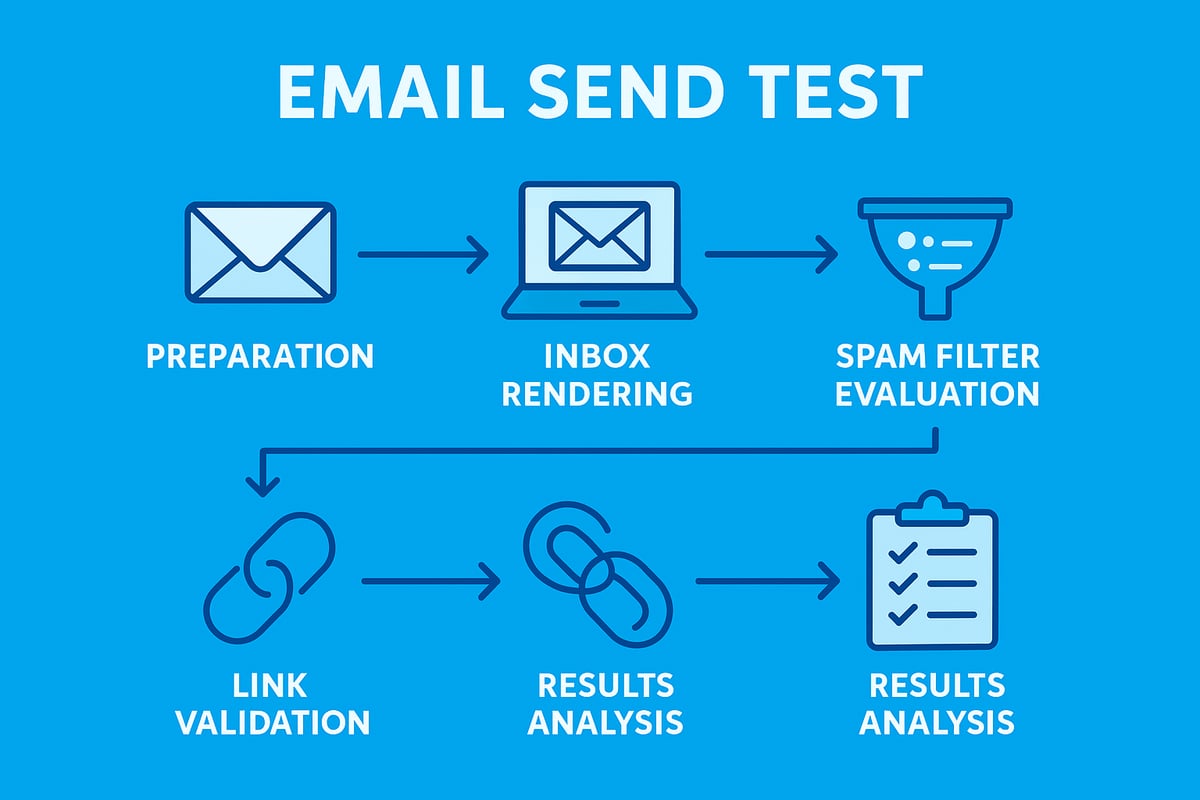
Preparing for Your Send Test
Every successful email send test starts with clear objectives. Are you checking rendering, spam likelihood, link validity, or all three? Knowing your goals ensures you focus on the right aspects of your campaign.
First, select the tools or platforms that best match your needs. Popular options include SendGrid and Mailtrap, which offer robust testing environments. Next, set up sender authentication, including SPF, DKIM, and DMARC records. These increase your sender reputation and reduce the risk of your emails being flagged as spam.
Before running your email send test, confirm that your subject line and sender details are final. Any late changes can affect both deliverability and recipient trust.
- Define the purpose of your test
- Choose a testing platform with necessary features
- Implement authentication protocols
- Finalise sender and subject details
Taking the time to prepare properly helps prevent issues later in the process.
Running an Inbox Rendering Test
A core part of the email send test is ensuring your email displays correctly across all major inboxes and devices. Begin by accessing your email editor or dedicated testing platform.
Select the inbox providers and devices you want to preview, such as Gmail, Outlook, iOS, and Android. Run the test and review each version carefully. Pay attention to formatting, images, buttons, and text alignment.
- Use preview modes for desktop and mobile
- Compare results for different email clients
- Look for inconsistencies in layout or branding
For example, a call-to-action button might appear perfectly on Gmail but misaligned in Outlook. Document any issues you find, as these visual inconsistencies can reduce engagement and harm your brand image. Comprehensive inbox rendering is vital to your overall email send test strategy.
Performing a Spam Filter Test
Spam filters in 2026 are more advanced than ever, making this step essential in the email send test process. Activate spam testing within your chosen platform to simulate how your message will be evaluated by common filters.
Review the spam score breakdowns and filter-specific feedback. Watch for content flagged as suspicious, missing authentication, or technical errors. Address each flagged issue, making content tweaks or fixing authentication gaps as needed.
- Check for common spam triggers in your content
- Verify proper SPF, DKIM, and DMARC setup
- Adjust and retest after every change
For instance, a missing DKIM signature might cause your email to go straight to spam. After making corrections, rerun the spam filter test to confirm improvements. Consistent monitoring and adjustment are crucial for maintaining a healthy sender reputation and passing every email send test.
Conducting Link Validation
Broken or suspicious links are a common reason for email send test failures. Automated link validation tools help identify issues before your campaign is sent.
Start by running an automated link check, available in most rendering test platforms. Review the flagged results, which may include broken links, redirects, or reputation warnings. Update or replace problematic URLs to ensure all links are functional and trustworthy.
- Run automated link validation as part of your workflow
- Address any redirects or insecure links
- Retest to confirm all issues are resolved
Integrating link validation with rendering tests streamlines your process and reduces the risk of deliverability failures. Reliable links are a cornerstone of a successful email send test.
Analysing and Interpreting Test Results
After completing each email send test, review your results methodically. Prioritise critical issues that directly affect deliverability, such as spam triggers or broken links. Collaborate with your design and development teams to address problems quickly.
Document your findings and any fixes applied. This creates a knowledge base for future campaigns and helps your team learn from each test. For deeper troubleshooting, refer to resources like Email bounce causes and fixes to understand why emails might still fail and how to resolve persistent problems.
- Prioritise and resolve urgent issues first
- Involve relevant team members for rapid improvements
- Keep a log of fixes and outcomes for future reference
A thorough analysis ensures you get the maximum value from each email send test and improves your overall email programme.
Common Pitfalls to Avoid
Even experienced marketers can make mistakes during the email send test process. Avoid skipping tests on mobile devices, as over half of emails are opened on phones. Do not ignore minor spam warnings, which can quickly escalate into bigger problems.
Always validate links in transactional emails, not just marketing campaigns. Relying solely on internal test sends, rather than professional testing suites, can leave you blind to real-world issues.
- Test on all major devices and clients
- Treat all spam warnings seriously
- Validate every link, every time
- Use dedicated testing platforms for accuracy
By steering clear of these pitfalls, you ensure your email send test process remains robust and reliable.
Advanced Troubleshooting and Optimisation Strategies
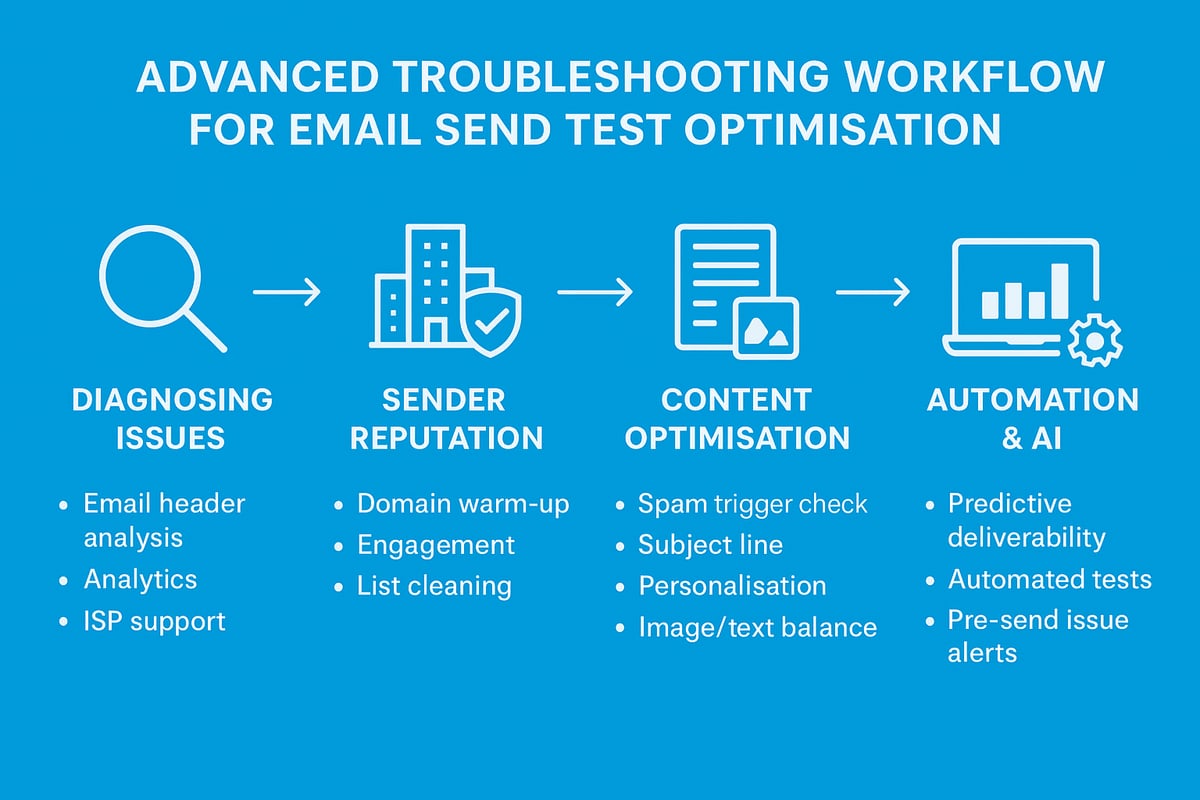
Ensuring your email send test delivers consistently strong results requires a structured approach to troubleshooting and optimisation. As inbox placement standards evolve, so must your strategies. The following advanced techniques will help you identify and resolve persistent deliverability issues, strengthen your sender reputation, optimise content, and leverage the latest automation tools.
Diagnosing Persistent Deliverability Issues
When an email send test reveals ongoing problems, a deep dive into technical diagnostics is essential. Start by examining email headers and raw message source to uncover authentication errors, missing records, or misconfigured domains. Analysing headers can reveal if SPF, DKIM, or DMARC are failing, which often leads to spam folder placement.
Next, utilise analytics and reporting tools provided by your email platform. Review bounce logs, spam complaints, and engagement statistics. These insights help pinpoint whether the issue is with content, infrastructure, or recipient behaviour.
If problems persist, collaborate directly with ISPs or mailbox providers. Many offer postmaster services or deliverability support channels. Prepare detailed logs from your email send test to assist their investigation. This multi-layered approach helps ensure you do not overlook subtle yet critical factors affecting inbox placement.
Improving Sender Reputation Over Time
Your sender reputation is fundamental to successful email deliverability. Consistently positive results in your email send test depend on building and maintaining trust with ISPs.
Begin by warming up new sending domains or IP addresses gradually. Start with small batches, increasing volume as engagement grows. This signals to providers that you are a reputable sender.
Maintaining high engagement rates is also crucial. Regularly clean your mailing list to remove inactive or invalid addresses. Monitor complaint rates and take swift action if they exceed industry norms. By focusing on these areas, you can steadily improve your performance in every email send test.
Content Optimisation for Deliverability
Content remains a major influence on the outcome of any email send test. Avoiding common spam triggers in both subject lines and body copy is vital. Use personalisation judiciously, and always test dynamic fields for errors.
Balancing images and text improves rendering across different clients. Too many images can trigger spam filters, while too much text may reduce visual appeal. For actionable guidance, refer to Email subject line optimization tips, which offers best practices for creating compelling, deliverable subject lines.
Regularly review your templates and test for broken links or formatting issues. These small details often make the difference between inbox and spam.
Leveraging Automation and AI Tools
Advanced automation and AI-driven platforms can transform the way you approach the email send test. Many modern tools offer predictive deliverability scoring, helping you identify risks before you press send.
Automate routine tests to ensure ongoing quality assurance. Some platforms provide real-time alerts for authentication failures, spam triggers, or broken links. This proactive monitoring reduces manual workload and minimises errors.
For a broader perspective on industry trends and evolving deliverability standards, review the Email Deliverability Benchmark Report 2025. Staying informed allows you to adapt your strategy and keep your email send test process ahead of the curve.
Future-Proofing Your Email Delivery Strategy for 2026 and Beyond
The landscape of email delivery is evolving quickly. As we look to 2026, ensuring your campaigns consistently reach the inbox requires more than just a basic email send test. You must adapt to changing standards, cultivate a culture of ongoing testing, and invest in the right tools. By future-proofing your approach, you can maintain strong deliverability and maximise your marketing ROI.
Adapting to Changing Email Standards
Email standards are in constant flux. Over the next few years, expect updates in authentication protocols, such as stricter DMARC policies and advanced security requirements. Privacy regulations will continue to evolve, impacting how you collect and process recipient data for every email send test.
Spam filter algorithms are becoming smarter, with AI-driven engines assessing sender behaviour and content relevance. Reviewing industry reports like the B2B Email Deliverability Report 2025 can help you anticipate these changes and adjust your strategy accordingly.
To stay compliant and effective:
- Regularly audit your authentication setup (SPF, DKIM, DMARC).
- Monitor regulatory updates in your target markets.
- Continuously refine content to align with best practices.
Building a Culture of Continuous Testing
Embedding email send test routines into your workflow is essential. Rather than treating testing as a one-off task, make it a standard part of campaign preparation and review. Train your team on deliverability best practices and empower them to use test data effectively.
Use historical test results to spot trends and improve future campaigns. By fostering a culture where every team member values testing, you will catch issues before they impact results.
Practical steps include:
- Scheduling regular training sessions on new deliverability tactics.
- Maintaining detailed documentation of test outcomes.
- Encouraging collaboration between marketers, designers, and developers.
Monitoring and Measuring Long-Term Success
Setting clear KPIs is crucial for tracking your deliverability over time. Metrics such as open rate, click rate, and bounce rate should be monitored after every email send test. Analytics platforms can help you visualise trends and identify areas for improvement.
For deeper insight, reference resources like the Email Deliverability Statistics Q1 2025, which provide industry benchmarks and highlight shifts in engagement rates.
Consider tracking these KPIs:
| Metric | Why It Matters | How to Use It |
|---|---|---|
| Open Rate | Inbox placement, appeal | Adjust subject lines, timing |
| Click Rate | Engagement quality | Refine calls to action |
| Bounce Rate | List hygiene, reputation | Clean list, improve targeting |
Investing in the Right Tools and Partnerships
Your choice of platforms and partners can make or break your deliverability. Look for solutions that support advanced authentication, provide robust email send test capabilities, and offer responsive support.
A good platform should:
- Integrate easily with your existing stack.
- Offer detailed reporting and analytics.
- Provide UK-based support if you operate locally.
Before committing, use a checklist to evaluate compatibility, user experience, and future-readiness. Partnering with vendors who prioritise innovation will keep your strategy resilient as technology evolves.
Staying Ahead of the Curve
Continuous learning is key for long-term success. Follow trusted industry blogs, participate in email marketing communities, and attend webinars to keep your knowledge current. Make it a habit to review deliverability reports and updates regularly.
By staying informed, you will spot emerging trends early and adjust your email send test practices before issues arise. This proactive approach will set you apart from competitors and ensure your messages keep reaching the right inboxes.