Email System for Small Business: Complete Guide 2026
May 21, 2026
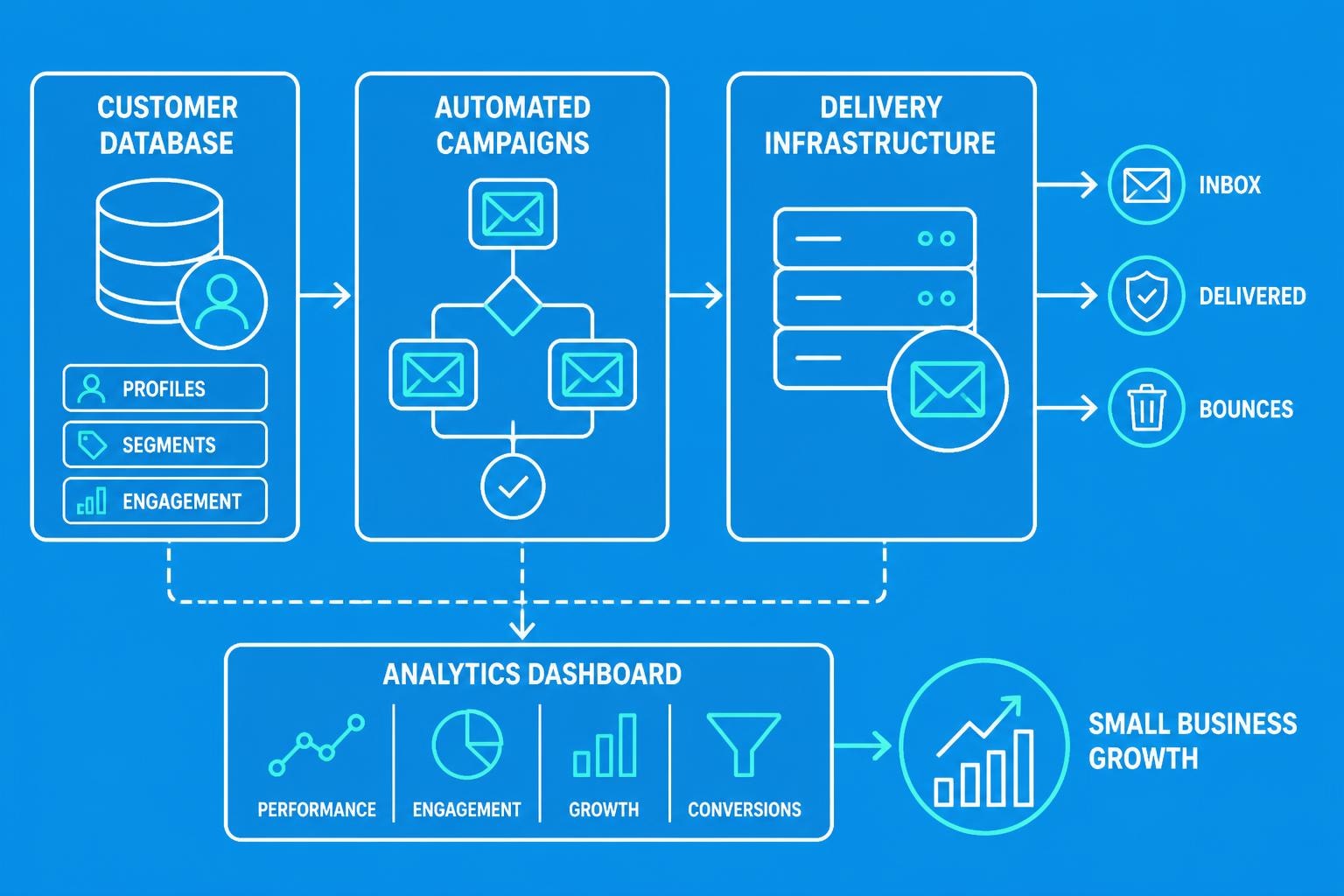
Selecting the right email system for small business operations has become a critical decision that influences customer relationships, operational efficiency, and revenue generation. In 2026, small businesses face unprecedented opportunities to leverage sophisticated email marketing platforms that were once accessible only to enterprises with substantial budgets. The proper email infrastructure serves as the backbone of customer communication, enabling businesses to nurture leads, retain customers, and drive sustainable growth through targeted, measurable campaigns.
Understanding Email System Requirements for Small Businesses
Small businesses require email systems that balance functionality with affordability whilst maintaining professional standards. The foundation of an effective email system extends beyond simple message delivery to encompass marketing automation, customer relationship management, and detailed analytics.
Core Features Every Small Business Needs
When evaluating an email system for small business applications, certain capabilities prove essential regardless of industry or company size. These features determine whether your investment delivers measurable returns or merely adds to operational costs.
Essential capabilities include:
- Contact management with segmentation options
- Template libraries and drag-and-drop editors
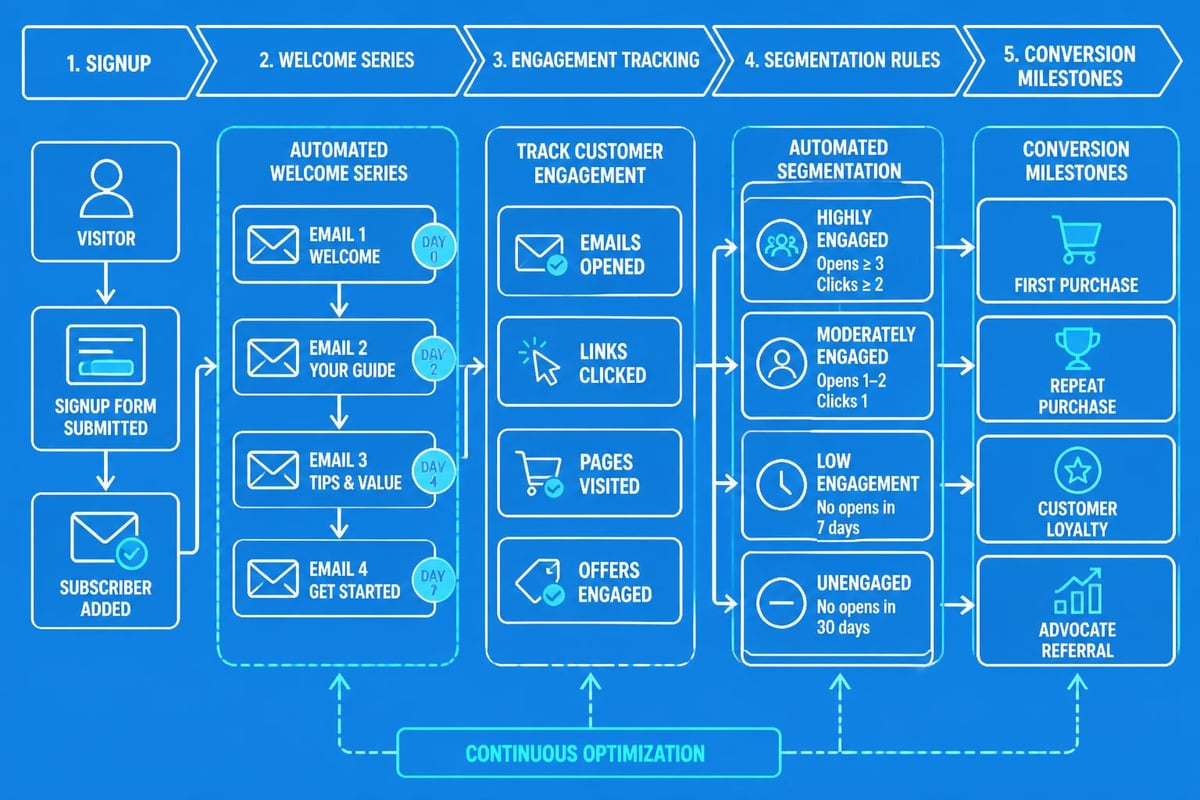
- Automation workflows for welcome sequences and follow-ups
- A/B testing functionality for optimising performance
- Mobile-responsive design tools
- Deliverability monitoring and reporting
- Integration capabilities with existing business tools
- GDPR and data protection compliance features
The distinction between basic email hosting and comprehensive email marketing platforms matters significantly. Basic hosting services allow you to send an email message from a professional domain, whilst marketing platforms provide the infrastructure for sophisticated campaigns that drive business outcomes.
Security Considerations in Modern Email Systems
Email security represents a critical concern for small businesses, particularly as cyber threats become increasingly sophisticated. Research into Business Email Compromise (BEC) detection systems demonstrates the evolving nature of email-based attacks targeting businesses of all sizes.
A robust email system for small business use must incorporate multiple security layers:
- Two-factor authentication for account access
- SPF, DKIM, and DMARC protocols for sender authentication
- Encryption for data in transit and at rest
- Spam and phishing filters with machine learning capabilities
- Regular security audits and compliance reporting
- Backup and recovery systems for data protection
Modern platforms increasingly integrate security features as standard offerings rather than premium additions. This democratisation of enterprise-grade security protects small businesses from threats that could otherwise prove devastating to operations and reputation.
Choosing Between Different Email System Types
Small businesses encounter various email system categories, each serving distinct purposes. Understanding these differences enables informed decisions aligned with specific business objectives and resource constraints.
Email Marketing Platforms vs Email Hosting Services
The confusion between email marketing platforms and email hosting services causes many small businesses to invest in unsuitable solutions. Email hosting provides the infrastructure for day-to-day business correspondence, whilst marketing platforms facilitate promotional campaigns and customer engagement strategies.
| Feature | Email Hosting | Email Marketing Platform |
|---|---|---|
| Primary purpose | Business correspondence | Marketing campaigns |
| Contact limits | Unlimited individual contacts | Subscriber list management |
| Automation | Basic filters and rules | Sophisticated workflows |
| Analytics | Limited delivery reports | Comprehensive engagement metrics |
| Cost structure | Per mailbox pricing | Per subscriber or email volume |
| Compliance tools | Basic security | GDPR tools, preference centres |
Many small businesses benefit from utilising both systems in tandem. Professional email hosting maintains business email UK addresses for operational communication, whilst dedicated marketing platforms manage promotional activities and customer nurturing sequences.
All-in-One Solutions vs Specialised Tools
The debate between comprehensive platforms and specialised tools reflects broader strategic considerations about business infrastructure. All-in-one solutions promise simplified management through unified interfaces, whilst specialised tools often deliver superior functionality within specific domains.
All-in-one platform advantages:
- Single login for multiple functions
- Streamlined billing and administration
- Consistent user interface across features
- Often more affordable for multiple capabilities
- Reduced integration complexity
Specialised tool benefits:
- Best-in-class functionality for specific tasks
- More granular control and customisation
- Often superior support for complex use cases
- Flexibility to swap individual components
- Advanced features for power users
For most small businesses, the optimal approach involves selecting a primary platform with strong integration capabilities. This strategy allows businesses to start with essential features whilst maintaining the flexibility to add specialised tools as requirements evolve.
Implementation Strategies for Maximum Impact
Successfully deploying an email system for small business use requires methodical planning and execution. The implementation phase determines whether your investment generates positive returns or becomes another underutilised technology expense.
Planning Your Email Marketing Infrastructure
Strategic planning begins with clearly defined objectives that align email capabilities with business goals. Vague aspirations like "improve customer communication" require translation into specific, measurable targets.
Critical planning steps include:
- Audit existing contact data and cleanse duplicates or invalid addresses
- Define audience segments based on customer behaviour and preferences
- Map customer journeys identifying touchpoints for email engagement
- Establish success metrics tied to revenue and retention
- Create content calendars balancing promotional and value-driven messages
- Design templates reflecting brand identity and responsive design principles
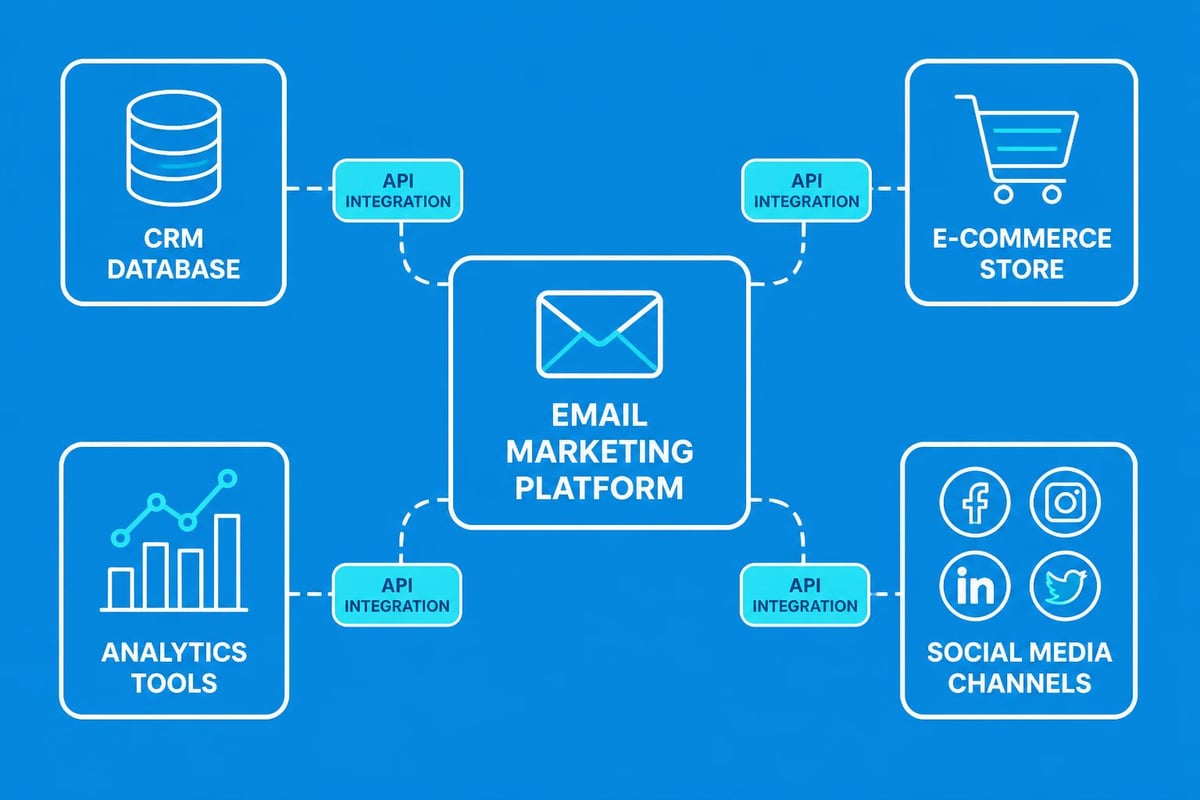
- Configure integration with CRM, e-commerce, and analytics platforms
The best email hosting providers offer comprehensive onboarding support that accelerates implementation whilst avoiding common pitfalls. This guidance proves particularly valuable for businesses transitioning from basic email to sophisticated marketing systems.
Migration Considerations and Data Management
Migrating from legacy systems or consolidating multiple platforms presents technical and strategic challenges. Proper execution preserves valuable customer data whilst minimising disruption to ongoing campaigns and customer relationships.
Migration best practices:
- Export complete contact histories including engagement data
- Verify email addresses before importing to new platforms
- Maintain compliance with consent requirements during transfer
- Test automation workflows thoroughly before activation
- Implement gradual rollout rather than complete cutover
- Monitor deliverability metrics closely during transition periods
- Retain access to legacy systems temporarily for reference
Understanding how email sending infrastructure operates helps businesses troubleshoot issues that inevitably arise during migration. Technical knowledge about SMTP servers, IP warming, and domain reputation proves invaluable for maintaining consistent delivery rates.
Optimising Email System Performance
Deploying an email system for small business represents only the beginning of the journey. Continuous optimisation based on performance data separates successful email marketing from ineffective broadcasting.
Key Performance Indicators and Analytics
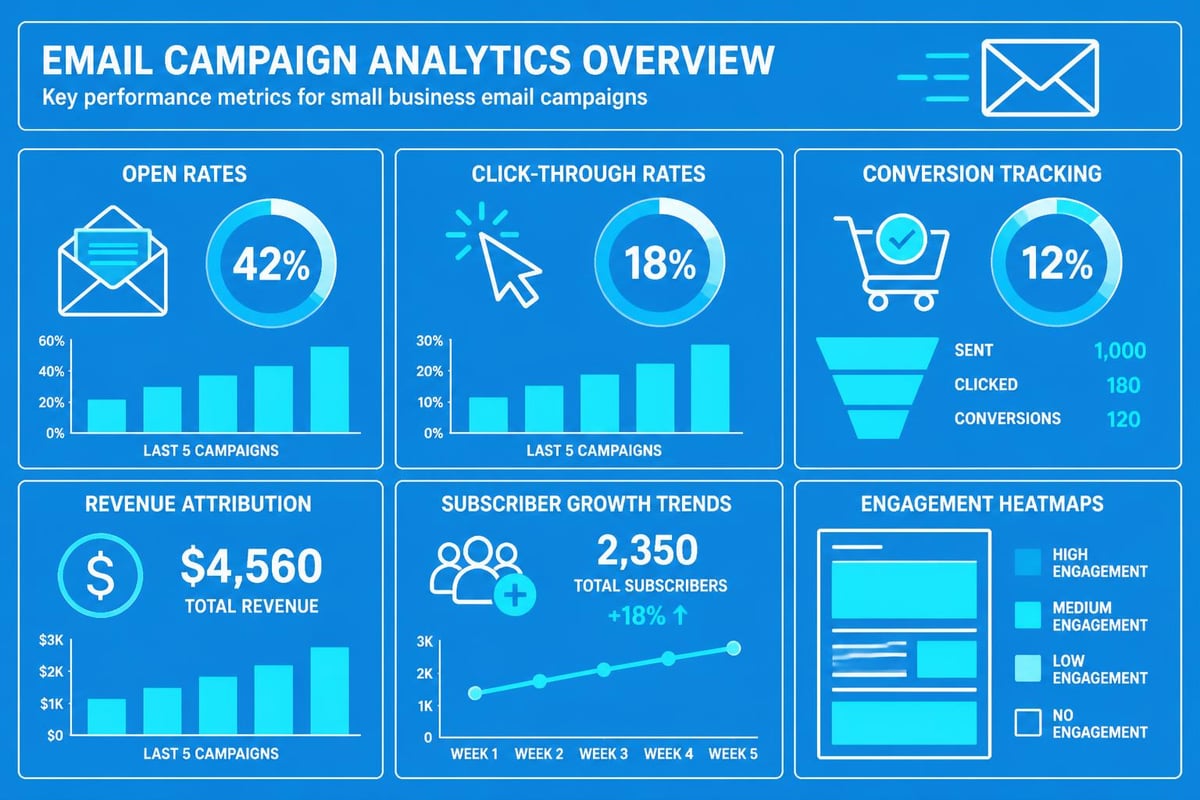
Modern email platforms generate extensive data about campaign performance, subscriber behaviour, and revenue attribution. However, data without analysis provides little value. Small businesses must identify metrics that directly correlate with business objectives.
| Metric | Definition | Target Range | Business Impact |
|---|---|---|---|
| Open rate | Percentage opening emails | 15-25% | Subject line and sender reputation |
| Click-through rate | Percentage clicking links | 2-5% | Content relevance and call-to-action effectiveness |
| Conversion rate | Percentage completing desired actions | 1-3% | Direct revenue generation |
| Unsubscribe rate | Percentage opting out | <0.5% | List health and content quality |
| Bounce rate | Percentage failing delivery | <2% | List hygiene and deliverability |
| Revenue per email | Average revenue generated | Varies by industry | ROI and campaign profitability |
Platforms like MailerLite provide intuitive dashboards that surface actionable insights without requiring advanced analytics expertise. This accessibility enables small business owners to make data-driven decisions without dedicated marketing teams.
Testing and Iteration Methodologies
Systematic testing transforms email marketing from guesswork into a scientific process. A/B testing, also known as split testing, allows businesses to compare different approaches and identify winning strategies based on actual performance rather than assumptions.
Elements worth testing systematically:
- Subject lines and preview text variations
- Send times and day-of-week patterns
- Content length and format preferences
- Image usage and placement
- Call-to-action button design and copy
- Personalisation approaches and depth
- Frequency and cadence of communications
Establishing testing protocols early creates organisational discipline around continuous improvement. Even businesses with modest email volumes can conduct meaningful tests by focusing on high-impact variables and maintaining consistent methodologies.
Advanced Features for Scaling Small Businesses
As small businesses grow, their email system requirements become more sophisticated. Platforms that accommodate this evolution prevent disruptive migrations whilst supporting expanding capabilities.
Automation and Workflow Capabilities
Email automation represents perhaps the most powerful feature for resource-constrained small businesses. Properly configured workflows deliver personalised, timely messages at scale without ongoing manual intervention.
High-impact automation workflows:
- Welcome sequences introducing new subscribers to brand values and offerings
- Abandoned cart recovery capturing revenue from incomplete purchases
- Re-engagement campaigns reviving inactive subscribers
- Birthday and anniversary messages strengthening customer relationships
- Post-purchase follow-ups encouraging reviews and repeat purchases
- Educational drip campaigns nurturing leads toward conversion
- VIP customer recognition rewarding loyalty and advocacy
Research into web services-based email systems highlights architectural approaches that enhance reliability and functionality for business users. These technical foundations enable the sophisticated automation features that small businesses increasingly require.
Integration with Business Systems
An email system for small business operations must function as part of a broader technology ecosystem rather than an isolated tool. Integration capabilities determine whether email data informs business decisions or remains siloed and underutilised.
Modern platforms offer pre-built integrations with popular business tools through API connections. Brevo's comprehensive approach to multi-channel marketing demonstrates how email systems increasingly serve as central hubs within marketing technology stacks.
Critical integration points include:
- Customer relationship management (CRM) platforms for unified customer profiles
- E-commerce systems for transactional messaging and revenue attribution
- Social media platforms for cross-channel campaign coordination
- Analytics tools for comprehensive performance tracking
- Help desk software for customer support coordination
- Accounting systems for financial tracking and reporting
Studies examining open-source CRM systems in SMEs reveal significant benefits from integrated business systems, including improved competitive capabilities and operational efficiency. These advantages apply equally to email marketing platforms that serve as customer data repositories.
Budget Considerations and Pricing Models
Financial constraints influence every small business decision, making cost-effectiveness a primary consideration when selecting an email system for small business applications. Understanding pricing models and total cost of ownership enables accurate budget planning and ROI calculation.
Understanding Different Pricing Structures
Email marketing platforms employ various pricing models, each with distinct advantages and potential pitfalls. Selecting the appropriate structure depends on business size, growth trajectory, and usage patterns.
Common pricing models:
- Subscriber-based pricing: Charges based on contact list size regardless of email volume
- Email volume pricing: Costs determined by number of emails sent per month
- Feature-tier pricing: Capabilities increase with subscription level
- Hybrid models: Combining subscriber counts with send limits
- Usage-based pricing: Pay only for actual consumption
- Flat-rate unlimited: Single price for unrestricted access
Businesses should review pricing plans carefully to identify hidden costs such as overage charges, mandatory professional services, or feature lock-ins that appear only in premium tiers. Transparent pricing structures facilitate accurate forecasting and prevent budget surprises.
Calculating Return on Investment
Justifying investment in an email system for small business requires demonstrating measurable returns that exceed costs. Fortunately, email marketing consistently delivers among the highest ROI of any digital marketing channel when executed properly.
ROI calculation components:
- Direct revenue from email-driven purchases
- Customer lifetime value increase from retention
- Cost savings from automated workflows replacing manual processes
- Time savings enabling focus on strategic activities
- Reduced customer acquisition costs through referrals and retention
Professional platforms provide revenue attribution reporting that connects email campaigns directly to sales transactions. This visibility transforms email from a cost centre into a demonstrable profit driver worthy of continued investment.
Compliance and Regulatory Requirements
Email system for small business operations must navigate complex regulatory landscapes that vary by jurisdiction and industry. Non-compliance exposes businesses to significant financial penalties and reputational damage.
GDPR and Data Protection Standards
The General Data Protection Regulation (GDPR) fundamentally changed how businesses collect, store, and utilise customer data. Small businesses operating in or serving customers within the European Union must ensure their email systems support compliance requirements.
GDPR-compliant email practices:
- Obtaining explicit consent before adding contacts to lists
- Providing clear opt-out mechanisms in every message
- Honouring data subject requests for access and deletion
- Maintaining records of consent and preferences
- Implementing appropriate security measures for personal data
- Limiting data collection to legitimate business purposes
- Establishing data processing agreements with platform providers
Understanding concepts like non-attributable email helps businesses appreciate the technical complexities underlying secure communication systems. Whilst most small businesses needn't implement such advanced security measures, awareness of evolving standards informs better decision-making.
Industry-Specific Regulations
Certain industries face additional regulatory requirements beyond general data protection laws. Healthcare, financial services, and education sectors must ensure their email systems support sector-specific compliance obligations.
Small businesses in regulated industries should verify that potential platforms offer:
- Data encryption meeting industry standards
- Audit trails for compliance reporting
- Role-based access controls
- Data residency options for location requirements
- Regular security certifications and assessments
- Compliance documentation and support resources
Selecting platforms with built-in compliance features reduces the burden on small business owners who lack dedicated legal or compliance teams. This built-in protection represents genuine value beyond basic functionality.
Deliverability Best Practices
Even the most sophisticated email system for small business fails if messages never reach subscriber inboxes. Deliverability, the ability to bypass spam filters and land in primary inboxes, requires ongoing attention and adherence to industry best practices.
Technical Configuration for Optimal Delivery
Email deliverability relies heavily on proper technical configuration that proves sender authenticity to receiving servers. Small businesses often overlook these foundational elements, resulting in poor inbox placement rates that undermine campaign effectiveness.
Essential technical requirements:
- SPF records authorising sending servers
- DKIM signatures cryptographically verifying message authenticity
- DMARC policies instructing receivers how to handle authentication failures
- Custom sending domains rather than shared platform domains
- Consistent sending volumes avoiding sudden spikes
- Clean IP reputation through gradual warming processes
- List hygiene removing invalid and bouncing addresses regularly
Businesses establishing a professional email address must configure these elements properly from the outset. Retrofitting proper authentication after experiencing deliverability problems proves more difficult than implementing correctly initially.
Content and Engagement Strategies
Technical configuration alone cannot guarantee deliverability. Modern spam filters employ sophisticated algorithms that evaluate content quality, sender reputation, and engagement patterns when determining inbox placement.
Deliverability-focused content practices:
- Avoiding spam trigger words and excessive punctuation
- Maintaining balanced text-to-image ratios
- Including plain text versions alongside HTML designs
- Personalising content based on subscriber preferences
- Sending relevant content to engaged segments
- Removing consistently inactive subscribers
- Encouraging subscribers to whitelist sender addresses
- Monitoring engagement metrics for early warning signs
The relationship between email benefits and subscriber engagement creates a virtuous cycle. Valuable content generates engagement, which signals positive sender reputation, which improves deliverability, which increases the audience receiving valuable content.
Selecting the Right Platform for Your Business
The abundance of email marketing platforms creates both opportunity and confusion for small businesses. Methodical evaluation processes help identify solutions that align with specific requirements rather than simply choosing popular or inexpensive options.
Evaluation Criteria and Selection Framework
Systematic platform evaluation begins with clearly defined requirements based on business objectives, technical capabilities, and resource constraints. Creating a weighted scoring system enables objective comparison across multiple candidates.
| Evaluation Criterion | Weight | Platform A | Platform B | Platform C |
|---|---|---|---|---|
| Ease of use | 20% | 8/10 | 9/10 | 6/10 |
| Feature completeness | 25% | 7/10 | 8/10 | 9/10 |
| Pricing value | 15% | 9/10 | 7/10 | 8/10 |
| Integration options | 15% | 6/10 | 8/10 | 9/10 |
| Support quality | 10% | 7/10 | 9/10 | 7/10 |
| Deliverability reputation | 15% | 8/10 | 8/10 | 7/10 |
This structured approach prevents decisions based solely on surface-level factors like interface aesthetics or aggressive sales tactics. Businesses should trial multiple platforms using free tiers or trial periods before committing to annual contracts.
Migration Planning and Vendor Lock-in Considerations
Understanding exit strategies before selecting an email system for small business might seem pessimistic, but practical foresight prevents future complications. Vendor lock-in occurs when switching costs become prohibitively expensive due to proprietary formats, limited export capabilities, or embedded processes.
Questions to ask potential vendors:
- What data export formats are supported?
- Can automation workflows be exported or only recreated manually?
- Are there contract termination fees or notice periods?
- How long is historical data accessible after cancellation?
- What happens to branded assets like templates and images?
- Can domain authentication records easily transfer to new providers?
Businesses should prioritise platforms with standard data formats, comprehensive export capabilities, and flexible contract terms. These features maintain strategic flexibility as business needs evolve and technology landscapes shift.
Implementing an effective email system for small business empowers organisations to build lasting customer relationships whilst driving measurable revenue growth through sophisticated yet accessible marketing capabilities. The strategic selection of platforms, methodical implementation, and continuous optimisation based on performance data transform email from simple communication into a central pillar of business development. Whether you're just beginning your email marketing journey or looking to enhance existing capabilities, Astonish Email provides the tools and support small businesses need to succeed in today's competitive landscape.