Business Email Sign Up: Best Practices & Strategies
February 16, 2026
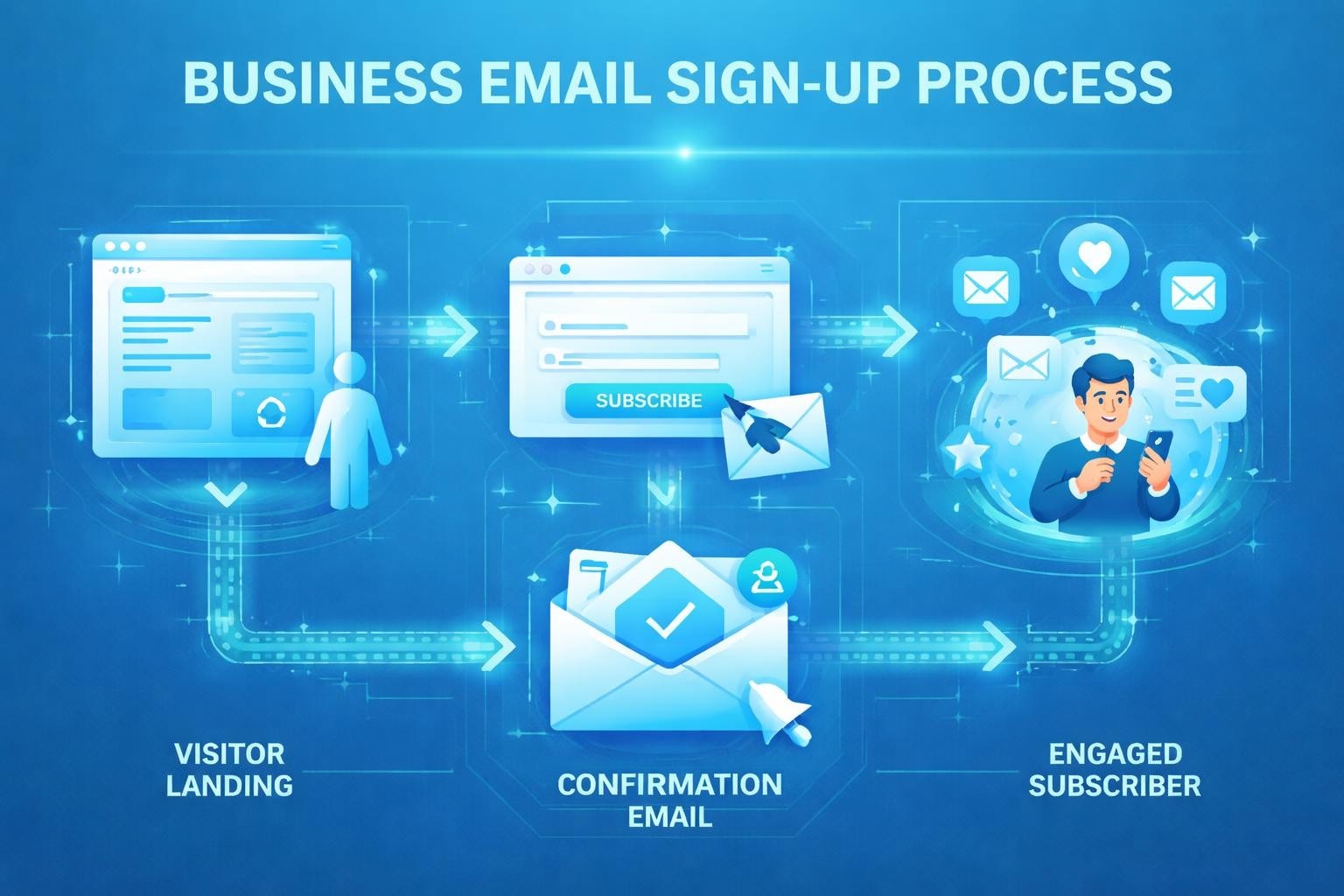
Building a quality email list through effective business email sign up processes is foundational to successful email marketing campaigns. Small businesses need strategic approaches that balance list growth with compliance, user experience, and long-term engagement. The business email sign up journey extends far beyond simply placing a form on your website-it encompasses legal requirements, technical implementation, value communication, and relationship building with prospective subscribers who could become your most valuable customers.
Understanding Business Email Sign Up Fundamentals
A business email sign up represents the critical moment when a website visitor decides to share their contact information with your company. This decision carries weight for both parties: visitors trust you with personal data, while your business gains permission to enter their inbox.
The foundation of any successful sign-up process starts with clear value communication. Potential subscribers need compelling reasons to provide their email addresses. Whether you offer exclusive discounts, industry insights, educational content, or early access to products, your value proposition must be immediately evident.
Legal Compliance Requirements
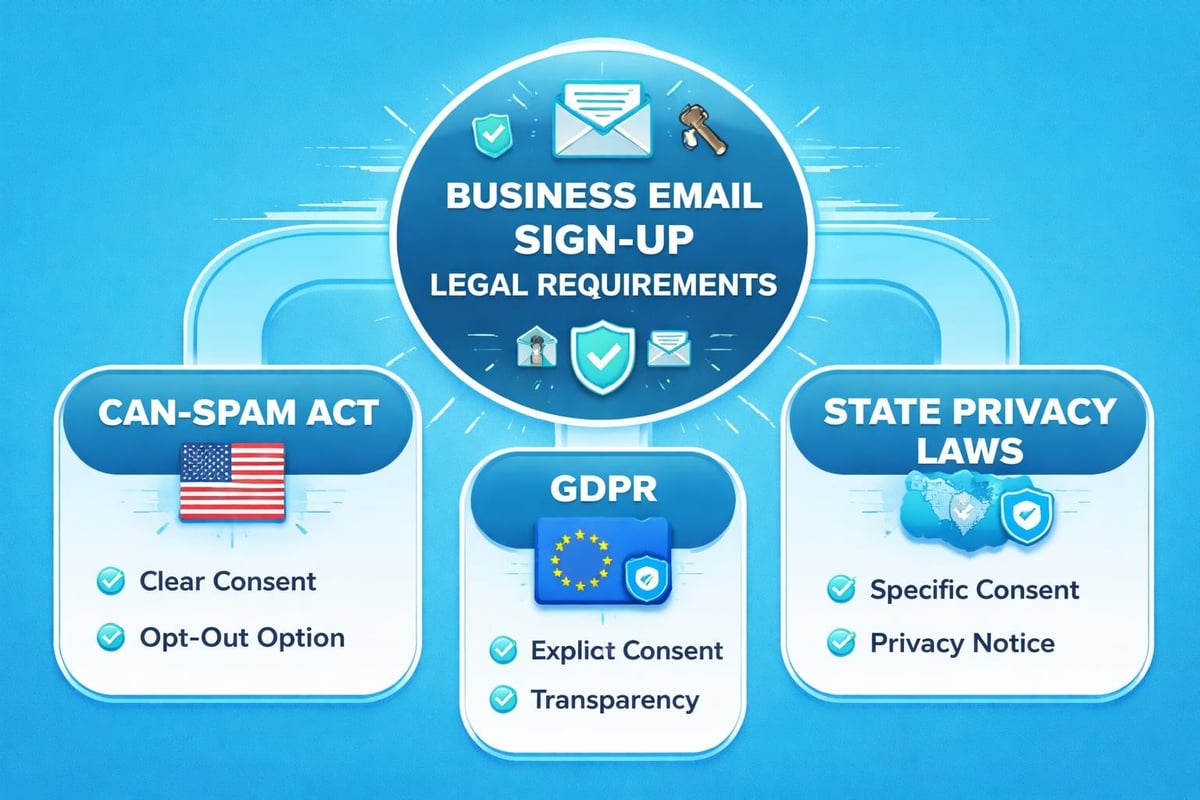
Operating a compliant business email sign up system requires understanding and implementing multiple regulatory frameworks. The CAN-SPAM Act establishes baseline requirements for commercial emails in the United States, mandating accurate header information, clear identification of messages as advertisements, and functional unsubscribe mechanisms.
Key compliance elements include:
- Accurate sender information reflecting your actual business identity
- Clear disclosure of commercial intent when applicable
- Physical postal address in every email
- Immediate processing of opt-out requests (within 10 business days)
- Prohibition against selling or transferring email addresses of people who opt out
Beyond federal law, state regulations and international frameworks like GDPR impose additional requirements. California's privacy laws, for instance, grant residents specific rights regarding their personal information. For businesses operating internationally or serving global audiences, understanding these varied requirements becomes essential.
Designing High-Converting Sign Up Forms
Form design dramatically impacts conversion rates. The most effective business email sign up forms balance simplicity with necessary information collection, creating minimal friction while gathering sufficient data for personalization.
| Form Element | Best Practice | Conversion Impact |
|---|---|---|
| Fields | 1-3 maximum initially | High friction with 4+ fields |
| Button Text | Action-oriented ("Get Weekly Tips") | 20-30% better than "Submit" |
| Placement | Above fold, header, exit intent | Multiple touchpoints increase signups |
| Mobile Design | Large buttons, easy typing | 50%+ traffic is mobile |
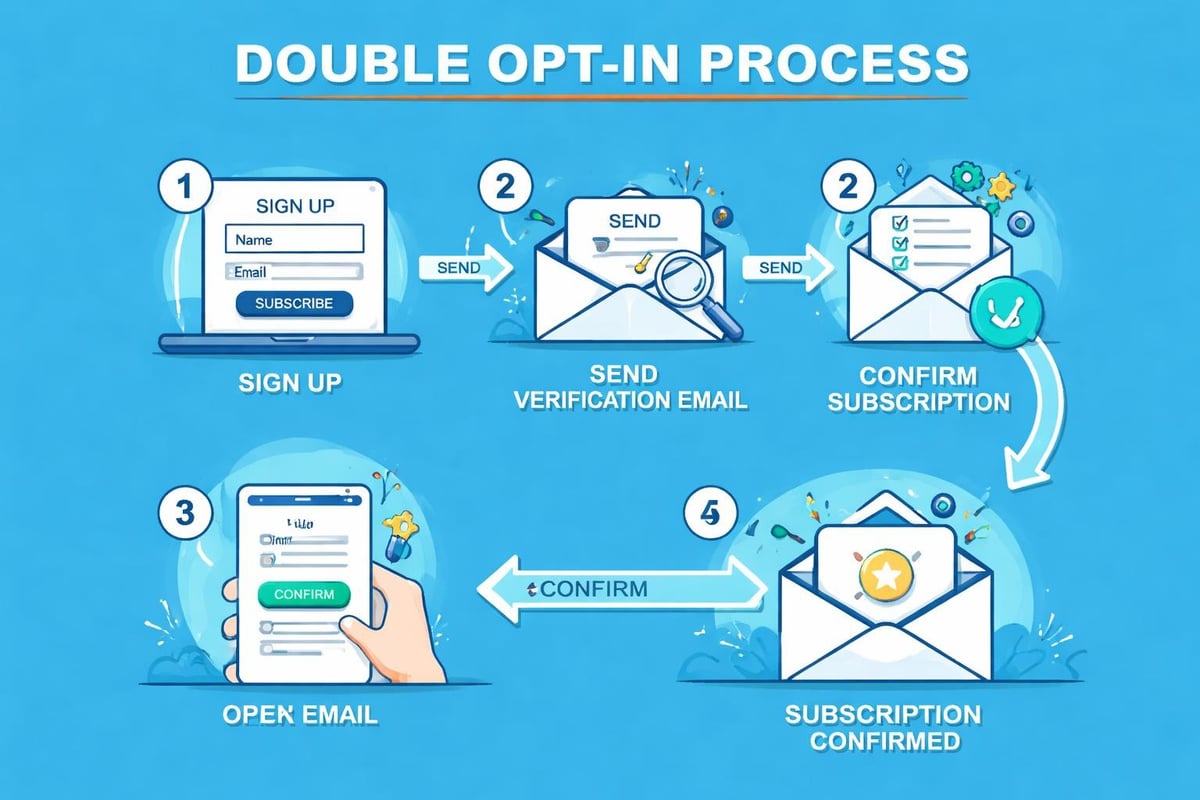
Single opt-in processes add subscribers immediately after form submission, maximizing list growth speed. However, double opt-in methods enhance list quality by requiring subscribers to confirm their email address through a verification link. This extra step filters out typos, fake addresses, and disinterested parties.
Strategic Form Placement
Where you position your business email sign up opportunities significantly influences performance. High-traffic pages deserve prominent placement, while contextual positioning matches offers to visitor intent.
Effective placement strategies include:
- Homepage header or hero section for maximum visibility
- Blog post endings when readers demonstrate engagement
- Exit-intent popups capturing abandoning visitors
- Footer persistent access across all pages
- Resource gating for premium content downloads
Consider visitor journey stages when determining placement. First-time visitors may need more convincing than returning customers who already understand your value. Creating email opt-ins with clear value propositions helps overcome initial hesitation.
Creating Compelling Incentives
The business email sign up decision hinges on perceived value exchange. Your incentive must resonate with your target audience's needs, challenges, and aspirations. Generic "newsletter" subscriptions rarely inspire action in 2026-specificity wins.
Successful incentive categories include educational resources like ebooks, whitepapers, or comprehensive guides that solve specific problems. Exclusive access to sales, early product launches, or member-only content creates FOMO (fear of missing out). Tools, templates, or calculators provide immediate utility. Ongoing value through curated industry insights or weekly tips maintains long-term appeal.
Audience Segmentation at Sign Up
Progressive profiling during business email sign up enables sophisticated segmentation without overwhelming new subscribers. Initial forms collect minimal information (usually just email address and name), while subsequent interactions gather additional data points.
This approach respects user experience while building detailed subscriber profiles over time. A professional email marketing platform can automate this progressive data collection through behavioral tracking and preference centers.
Ask strategic questions that enable valuable personalization:
- Industry or business type for B2B audiences
- Interests or content preferences for varied offerings
- Company size for appropriately scaled advice
- Role or job function for targeted messaging
Technical Implementation Best Practices
Behind every smooth business email sign up experience exists robust technical infrastructure. Your implementation must handle form submissions reliably, integrate with your email platform, and protect subscriber data.
Email Verification Systems
Email verification prevents invalid addresses from cluttering your list. Real-time verification checks email syntax, domain validity, and mailbox existence during form submission. This front-end validation catches typos before they create delivery problems.
Backend verification through double opt-in adds another quality layer. The confirmation email serves dual purposes: verifying address accuracy and confirming subscriber intent. While this reduces immediate list growth, it dramatically improves engagement metrics and sender reputation.
| Verification Method | List Quality | Growth Speed | Deliverability |
|---|---|---|---|
| Single Opt-In | Medium | Fast | Good |
| Double Opt-In | High | Moderate | Excellent |
| No Verification | Low | Very Fast | Poor |
Maintaining compliance with your antispam policy requires implementing these verification systems thoughtfully, ensuring every subscriber genuinely wants to receive your communications.
Optimizing Confirmation Emails
The confirmation email following business email sign up deserves careful attention. This message sets the tone for your relationship, reinforces value, and may require action (in double opt-in scenarios).
Effective confirmation emails arrive immediately, maintaining momentum from the sign-up decision. Subject lines should clearly identify the message as a response to the subscriber's action. Body content confirms the subscription, reiterates benefits, and provides next steps.
Essential confirmation email elements:
- Warm welcome message acknowledging their decision
- Clear confirmation of what they'll receive and when
- Immediate value delivery (welcome discount, first resource)
- Easy access to preference management
- Brand introduction for new relationships
Consider delivering your first promised value immediately rather than waiting for the next scheduled send. If subscribers signed up for weekly tips, include one valuable tip in the confirmation email. This immediate gratification reinforces their decision and demonstrates your commitment.
Managing Subscriber Preferences
Modern business email sign up systems extend beyond binary subscribed/unsubscribed states. Preference centers empower subscribers to customize their experience, choosing content types, frequency, and topics that interest them most.
Granular control reduces unsubscribe rates by offering alternatives to complete list removal. A subscriber overwhelmed by daily emails might prefer weekly digests. Someone interested in specific product categories can opt out of irrelevant promotions while maintaining engagement with relevant content.
Building Trust Through Transparency
Transparency during the business email sign up process builds foundational trust. Clearly communicate what subscribers will receive, how often you'll contact them, and how you'll use their information. Your data retention policy should be accessible and understandable.
Privacy policies often languish as overlooked legal requirements. Transform them into trust-building tools by highlighting key subscriber protections in plain language. Emphasize that you won't sell email addresses, you implement security measures, and subscribers control their data.
Avoiding Common Mistakes
Even experienced marketers stumble with business email sign up execution. Common email marketing mistakes often originate at the subscription stage, creating problems that compound over time.
Purchasing email lists represents the cardinal sin of email marketing. These contacts never consented to your communications, creating spam complaints, poor engagement, and potential legal liability. Building your list organically through legitimate business email sign up processes may take longer but delivers sustainable results.
Hiding or complicating the unsubscribe process damages sender reputation and subscriber trust. Every email must include a clear, functional unsubscribe mechanism that processes requests promptly. Subscribers who want to leave will find a way-make it easy and preserve their goodwill.
Additional pitfalls to avoid:
- Requesting excessive information upfront
- Unclear value propositions that fail to motivate sign ups
- Technical errors causing form failures or lost submissions
- Neglecting mobile optimization when majority traffic is mobile
- Failing to send timely confirmation or welcome emails
Measuring Sign Up Performance
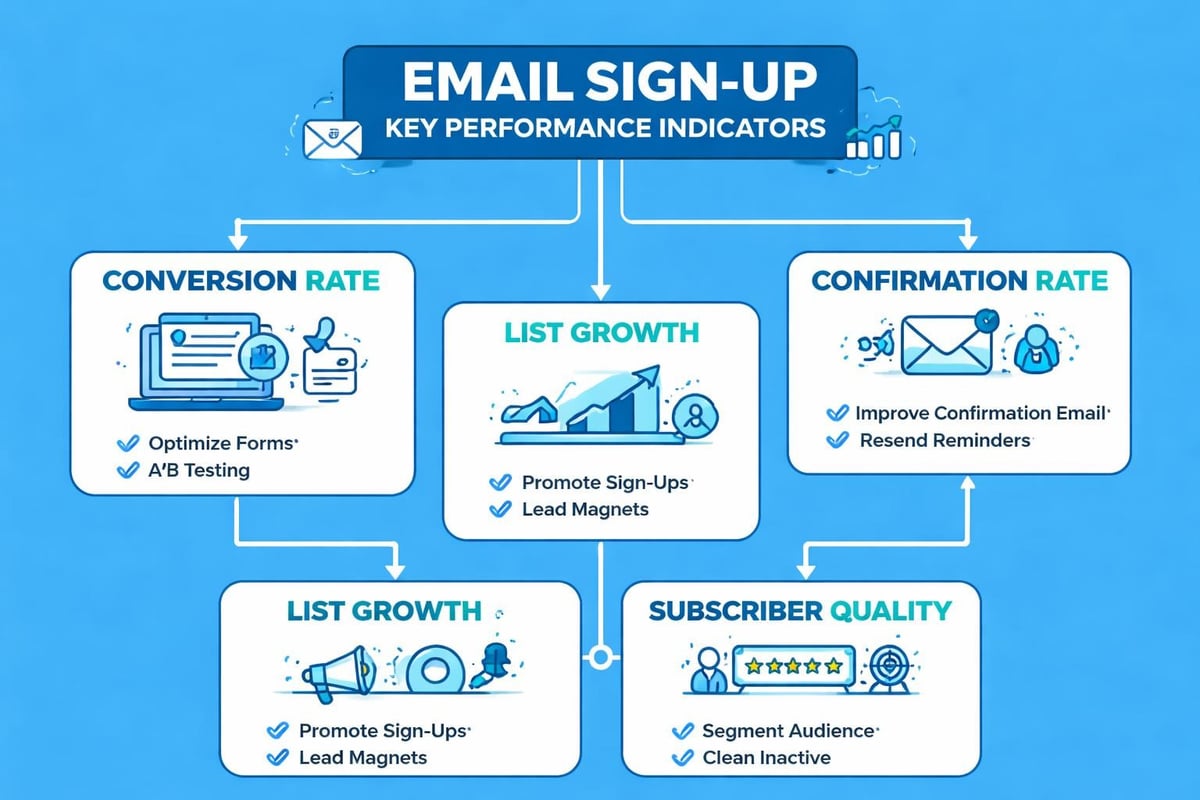
Effective business email sign up optimization requires rigorous measurement. Track conversion rates across different forms, pages, and incentives to identify what resonates with your audience. A/B testing reveals incremental improvements that compound into significant gains.
Key Metrics to Monitor
Conversion rate measures the percentage of form views resulting in successful sign ups. Industry benchmarks vary widely, but tracking your own performance over time reveals trends and opportunities. Break down conversion rates by traffic source, device type, and page location for actionable insights.
Confirmation rate (for double opt-in) indicates how many initial sign ups complete verification. Low confirmation rates might signal verification email deliverability issues, unclear instructions, or weak initial value proposition.
List growth rate balances new subscriptions against unsubscribes and inactive address removal. Healthy email programs maintain steady growth while actively pruning disengaged subscribers to preserve deliverability.
| Metric | Calculation | Healthy Benchmark |
|---|---|---|
| Form Conversion Rate | (Sign Ups / Form Views) × 100 | 2-5% average |
| Confirmation Rate | (Confirmations / Sign Ups) × 100 | 60-80% |
| Monthly Growth Rate | [(New Subs - Unsubs) / Total List] × 100 | 2-5% monthly |
Understanding these metrics guides optimization efforts, helping you focus improvements where they'll deliver maximum impact. Small businesses using platforms like Astonish Email can access built-in analytics that track these performance indicators automatically.
Implementing Welcome Series
The business email sign up represents just the beginning of subscriber relationships. Welcome email series nurture new subscribers, transforming casual interest into engaged advocacy. These automated sequences introduce your brand, deliver promised value, and guide subscribers toward deeper engagement.
A strategic welcome series typically includes three to five emails sent over the first week or two after sign up. The first email arrives immediately, confirming subscription and delivering initial value. Subsequent messages introduce your story, highlight popular content or products, and establish expectations for ongoing communication.
Nurturing New Relationships
New subscribers demonstrate peak engagement immediately after signing up. Capitalize on this enthusiasm with relevant, valuable content that reinforces their decision. Share your best resources, most popular articles, or signature frameworks that showcase your expertise.
Progressive disclosure builds relationships gradually. Don't overwhelm new subscribers with sales pitches or excessive information. Instead, focus each welcome email on a single theme or call to action. This measured approach respects attention while demonstrating consistent value.
Consider segmenting welcome series based on sign-up source or stated preferences. Subscribers who downloaded a specific resource might appreciate related content, while those interested in particular product categories benefit from targeted recommendations.
Mobile Optimization Imperatives
Mobile devices account for the majority of email opens and website traffic in 2026, making mobile-optimized business email sign up experiences non-negotiable. Forms must be easily accessible, simple to complete, and functional across all device types.
Mobile optimization priorities include:
- Large, touch-friendly form fields and buttons (minimum 44×44 pixels)
- Minimal typing requirements reducing friction on small keyboards
- Auto-complete support for common fields like email and name
- Responsive design adapting to various screen sizes
- Fast loading times on mobile networks
Test your business email sign up forms on actual devices, not just desktop browser simulators. Real-world testing reveals usability issues that impact conversion rates. Pay special attention to form validation, error messages, and success confirmations on mobile screens.
Integrating Social Proof
Social proof elements increase business email sign up conversion by reducing perceived risk and demonstrating value. Subscriber counts, testimonials, and trust indicators reassure hesitant visitors that joining your list represents a smart decision.
Display current subscriber numbers if your list size impresses. "Join 50,000+ small business owners" carries more weight than generic "Subscribe to our newsletter." For smaller lists, emphasize quality over quantity: "Join our curated community of growth-focused entrepreneurs."
Testimonials from satisfied subscribers validate your value proposition. Short quotes highlighting specific benefits create emotional connection and credibility. Position these testimonials near sign-up forms to influence decision-making at the critical moment.
Maintaining List Hygiene
Quality matters more than quantity for email marketing success. A business email sign up strategy focused solely on growth without attention to list health creates deliverability problems and skewed metrics. Regular list maintenance preserves sender reputation and engagement rates.
Implement re-engagement campaigns to identify and remove chronically inactive subscribers. These sequences offer one last compelling reason to engage before removing unresponsive addresses. While counterintuitive, pruning disengaged subscribers improves overall list performance.
Monitor bounce rates carefully, immediately removing hard bounces (permanent delivery failures) and tracking soft bounces (temporary issues). Maintaining clean lists protects your sender reputation with email service providers, ensuring messages reach engaged subscribers' inboxes.
Understanding email marketing best practices helps small businesses maintain compliant, effective programs that respect subscriber relationships while achieving business objectives. Your approach to business email sign up sets the foundation for everything that follows.
Building a robust business email sign up system requires attention to legal compliance, user experience, technical implementation, and ongoing optimization. These elements work together to create sustainable list growth with engaged subscribers who value your communications. Astonish Email provides small businesses with the tools and features needed to implement these best practices effectively, from compliant sign-up forms to automated welcome series and detailed analytics. Start building your quality email list today with a platform designed specifically for small business success.