Branding Email Guide: Strategies for Success in 2026
December 19, 2025
In 2026, inboxes are more crowded than ever, making it a real challenge for any business to capture attention. With consumers receiving hundreds of messages daily, standing out demands more than just creative visuals. A strong branding email strategy is now essential to ensure your message gets noticed.
This guide delivers practical branding email tactics to help your business rise above the noise, earn trust, and achieve measurable results in today’s fast-changing digital landscape. You will discover key fundamentals, step-by-step strategies, vital design elements, advanced personalisation, and future trends, all supported by real-world insights.
Ready to increase engagement, boost ROI, and secure your place in the inbox? Follow this expert roadmap and unlock the full potential of branding email for your business success.
The Fundamentals of Branding Email in 2026
In the rapidly evolving digital world, branding email has become an essential pillar for businesses determined to rise above inbox clutter. As inboxes grow more crowded, a well-crafted branding email strategy can be the difference between being remembered and being ignored.
Understanding Branding Email: Definition and Scope
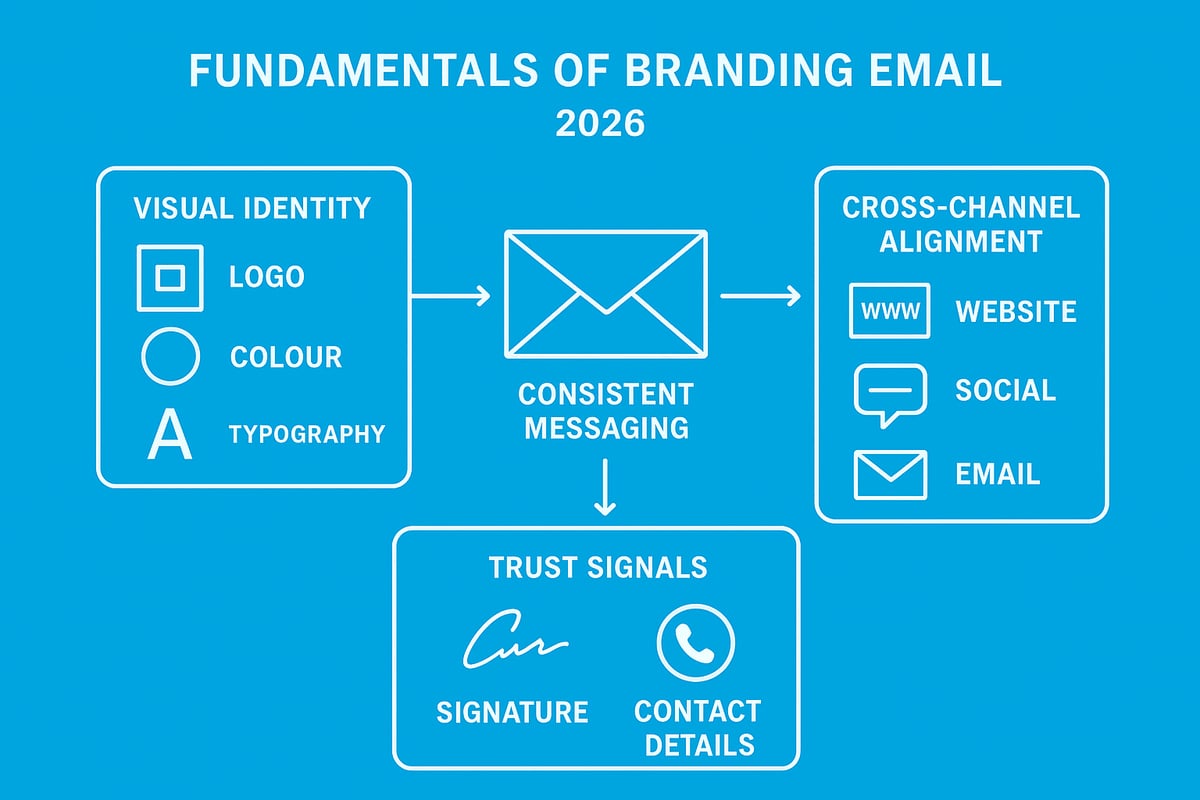
A branding email is much more than a visually appealing message. It is a comprehensive approach that weaves your brand’s visual identity, voice, values, and customer experience into every email you send. Unlike traditional email marketing, which often focuses on immediate sales or promotions, branding email seeks to build long-term recognition and trust.
What sets branding email apart? It extends beyond colours and logos. Consistency in tone, messaging, and design creates a seamless experience for subscribers, whether they interact with your business via email, website, or social media. Multi-platform alignment is crucial, as 67% of marketers report branded email signatures increase lead generation (Statista).
Consider Absolut Vodka’s approach: their emails mirror the look and feel of their website, reinforcing their brand at every touchpoint. This harmonised presence boosts credibility and helps subscribers instantly recognise the sender. To achieve this level of consistency, following email design best practices is essential for every organisation aiming to stand out.
Here’s a quick comparison:
| Feature | Branding Email | Traditional Email Marketing |
|---|---|---|
| Focus | Recognition, trust, loyalty | Immediate sales, promotions |
| Design | Consistent, on-brand templates | Variable, campaign-specific |
| Voice & Tone | Aligned with brand personality | Often generic or transactional |
| Cross-channel alignment | Essential | Seldom prioritised |
A strategic branding email approach ensures your business is instantly recognisable and memorable, even as consumer attention becomes harder to capture.
The Business Impact of Strong Email Branding
Investing in a robust branding email strategy delivers measurable business benefits. First, brand recognition is accelerated. When subscribers see a familiar logo, colour palette, and tone, they immediately associate the message with your business, reducing hesitation and boosting engagement.
Trust and authenticity follow naturally. Consistent branding email signals professionalism and legitimacy. According to Statista, professional email signatures rank among the top three trust factors for consumers, highlighting the importance of every branded detail.
A well-executed branding email also enhances user experience. Visually harmonious emails are easier to read and interact with, encouraging subscribers to engage. This consistency has a direct impact on revenue: a Marq survey found that brand consistency can drive revenue growth of over 20 percent.
Deliverability matters, too. Consistent branding email practices improve sender reputation, helping your emails land in the inbox instead of the spam folder. Branded emails, with clear signatures and contact details, reassure subscribers and reduce unsubscribe rates.
In summary, branding email is a cost-effective strategy for increasing conversions and building customer loyalty. It transforms every message into an opportunity to reinforce your brand’s identity and values.
Key Elements of Effective Email Branding
A powerful branding email does more than just deliver a message, it builds recognition and trust with every send. To stand out in 2026’s crowded inboxes, you need to master several key elements. Each part, from visuals to calls to action, should reinforce your brand identity and make your communications instantly recognisable.
Visual Identity: Logos, Colours, and Typography
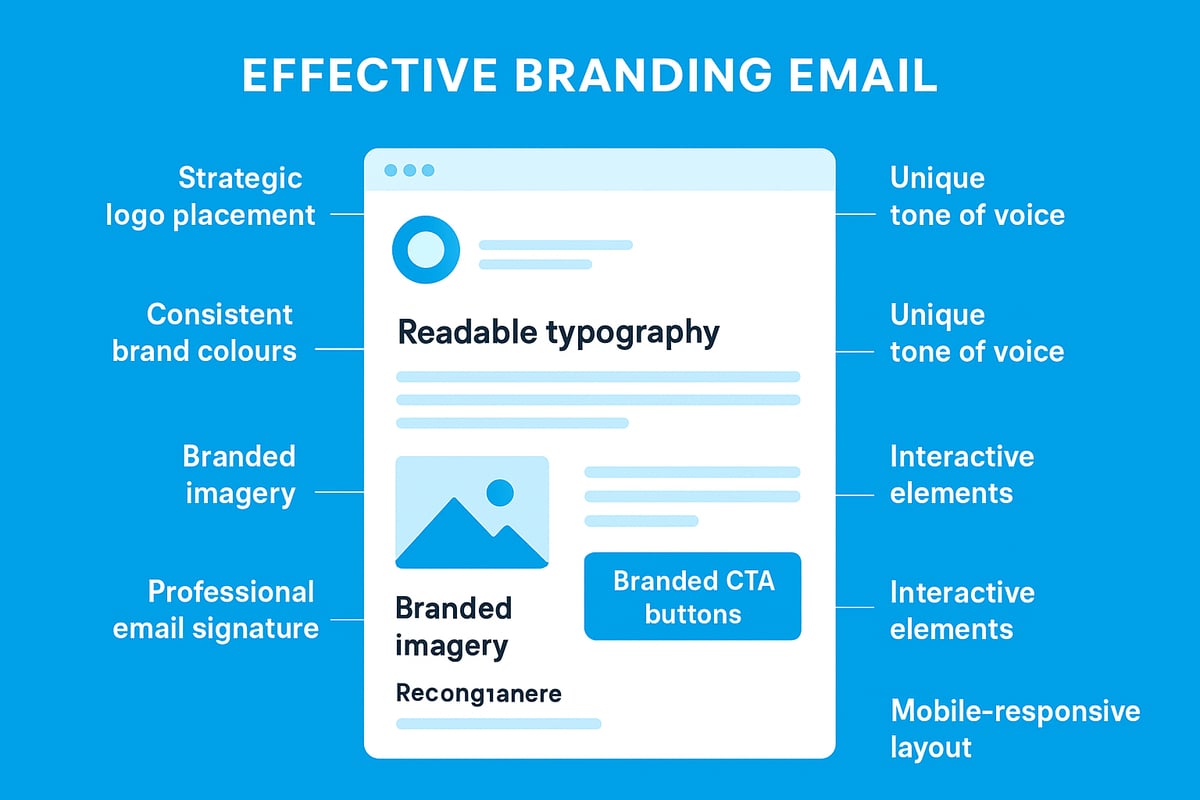
Visual identity is the cornerstone of a strong branding email. Your logo should be placed prominently, ideally at the top of your email, so recipients instantly recognise your business. Consistent use of your brand colours not only drives recognition, but also ensures accessibility for all users.
Typography matters just as much. Choose fonts that match your brand’s personality and are easy to read on every device. Apple, for instance, ensures its emails are instantly identifiable through contrasting logo placement and clean, readable fonts.
Data shows that consistency in visual elements increases engagement rates significantly. To see how top brands apply these principles, explore these examples of marketing emails and analyse their visual strategies.
Messaging and Tone of Voice
The voice you use in a branding email should be unmistakably your own. Whether your tone is playful, formal, or somewhere in between, it must remain consistent across every campaign. This reliability helps subscribers feel a sense of familiarity each time they open your emails.
Adapting your tone to different audience segments is important, but never at the expense of your core brand persona. For example, a financial services brand might use a reassuring, professional voice, while a fashion retailer could opt for witty and upbeat messaging.
Predictable tone in branding email builds trust and encourages ongoing engagement. Subscribers should know what to expect from your communications, reinforcing loyalty over time.
Layout, Imagery, and Design Templates
A repeatable, well-structured layout is vital for branding email consistency. Using standardised templates ensures every email looks and feels like your brand, whether it’s a campaign or an automated message.
Mobile-responsive and accessible design is now essential. It guarantees your branding email displays perfectly across all devices and meets the needs of every subscriber. Branded imagery and graphics, from product photos to custom icons, add personality and reinforce your brand story.
Data reveals that using consistent templates boosts recognition and lowers unsubscribe rates. Consider incorporating a table of brand-approved imagery and template guidelines to streamline your process.
| Element | Best Practice | Impact |
|---|---|---|
| Template | Modular, repeatable | Consistency |
| Imagery | Branded, high-quality | Recognition |
| Responsiveness | Mobile and accessible | Engagement |
Sender Name, Signature, and Contact Details
The sender name is one of the first things recipients see. A recognisable sender boosts open rates and signals authenticity. Always use a sender name that matches your brand, not a generic address.
A branded email signature is a subtle but powerful trust signal in every branding email. Including direct contact details, such as a support email or phone number, adds transparency and reassures subscribers of your legitimacy.
Statista reports that lack of a branded signature is a top reason for consumer disengagement. Make sure your signature stands out and aligns visually with your overall brand identity.
Call-to-Action and Interactive Elements
Your call-to-action (CTA) is where branding email drives results. Design CTA buttons and links to reflect your brand’s style, from colour to language. A branded CTA is more than a prompt, it is an extension of your brand voice and visual identity.
Interactive elements, such as clickable buttons, surveys, or product carousels, keep subscribers engaged and reinforce your brand experience. For instance, well-designed CTA buttons in ecommerce branding email campaigns can significantly increase click-through and conversion rates.
Remember, every interaction is a chance to build your brand’s reputation and encourage the next step in your customer’s journey.
Step-by-Step Strategies for Branding Email Success in 2026
Standing out with a powerful branding email strategy in 2026 requires a disciplined, systematic approach. By breaking down your process into actionable steps, you can ensure your brand’s emails are not only seen but remembered. The following framework outlines how to build, implement, and refine your branding email efforts for maximum impact.
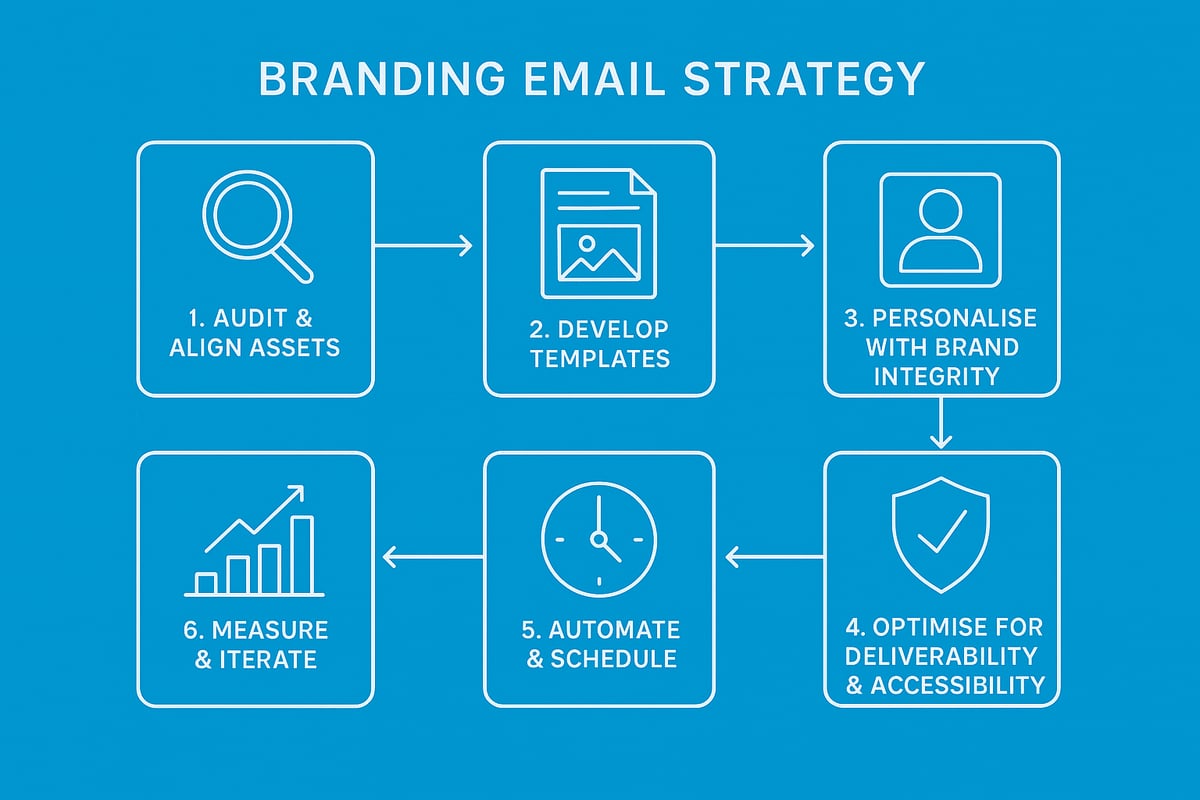
Step 1: Audit and Align Brand Assets
Begin your branding email journey with a thorough audit. Review all brand guidelines, logos, colour palettes, and digital assets. Check your current email templates and content for consistency with your brand’s voice and visual identity.
Identify any gaps between your emails and other brand touchpoints, such as your website and social channels. Involve stakeholders from marketing, design, and leadership to guarantee alignment. Document findings and set clear objectives for improvements.
A careful audit ensures every branding email reflects your brand’s values, visuals, and personality. This foundation is essential for recognition and trust in a crowded inbox.
Step 2: Develop Consistent Email Templates
Consistency is key for branding email success. Create modular templates that are reusable for campaigns, automations, and transactional messages. Prioritise mobile-first design, testing your templates across devices to ensure a seamless experience.
Establish design elements such as logos, brand colours, and fonts within each template. For inspiration and ready-to-use resources that reinforce brand consistency, consider using an email newsletter template free to streamline your process.
Well-crafted templates save time, reduce errors, and maintain a professional image. They also make it easy to update content without sacrificing brand integrity.
Step 3: Personalise While Preserving Brand Integrity
Personalisation powers engagement, but it must never come at the cost of brand consistency. Use segmentation to tailor content for different audience groups, such as by location, behaviour, or preferences.
In every branding email, maintain core brand elements: logo, colour scheme, and tone of voice. Leverage dynamic content blocks to deliver relevant messages while keeping your overall look and feel intact.
Balance personal touches with unwavering commitment to your brand identity. This approach increases open and click rates while fostering loyalty and trust.
Step 4: Optimise for Deliverability and Accessibility
Deliverability and accessibility are critical for branding email effectiveness. Authenticate your sender domain with protocols like SPF, DKIM, and DMARC to protect your reputation and improve inbox placement.
Design emails for accessibility by using high-contrast colours, readable fonts, and descriptive alt text for images. Test how your emails render on different devices and email clients, ensuring everyone can view and interact with your content.
A focus on deliverability and accessibility not only broadens your reach but also demonstrates your brand’s commitment to inclusion and professionalism.
Step 5: Automate and Schedule for Consistency
Automation tools help maintain regular, on-brand communication without manual intervention. Set up workflows for key touchpoints, such as welcome emails, re-engagement campaigns, and milestone messages.
Schedule your branding email campaigns around important brand events, product launches, or customer journeys. Use automation to ensure messages are sent at optimal times, increasing relevance and engagement.
By automating routine communications, you free up resources while keeping your brand front of mind for subscribers.
Step 6: Measure, Analyse, and Iterate
Continuous improvement is at the heart of branding email success. Track metrics like open rates, click-throughs, conversions, and unsubscribe rates to evaluate performance.
Use A/B testing to refine subject lines, visuals, and content. Collect feedback from subscribers to gauge brand perception and satisfaction. Analyse results in real time to identify trends and opportunities for optimisation.
Regular measurement ensures your branding email strategy evolves with your audience’s preferences and the ever-changing digital landscape.
Advanced Personalisation and Segmentation Tactics
Personalisation and segmentation are now core to effective branding email strategies. With inboxes more crowded than ever, delivering the right message to the right person is essential for standing out and driving engagement.
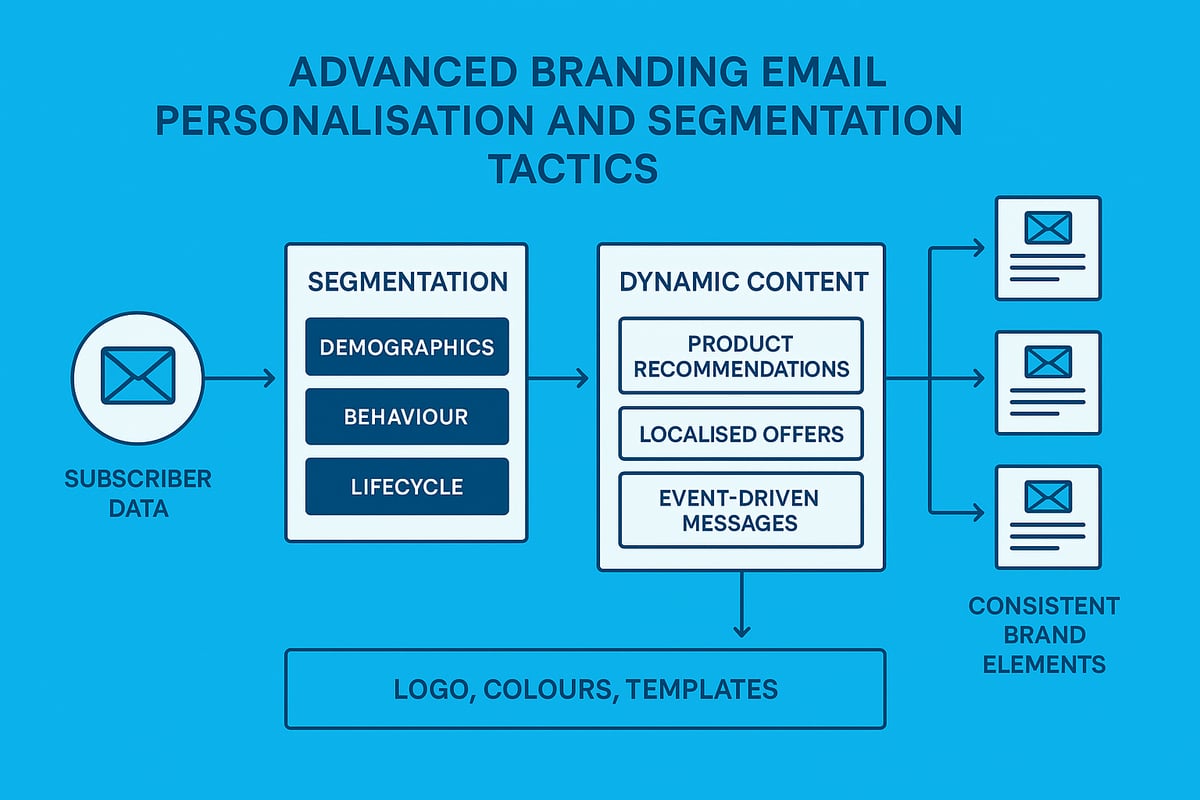
Dynamic Content and Personalised Journeys
Modern branding email campaigns rely on dynamic content to create personalised journeys for every subscriber. Instead of sending identical emails to your entire list, you can use dynamic blocks to tailor content based on subscriber data.
For example, product recommendations can be generated from purchase history, while localised offers target customers by their location. Event-driven triggers, such as birthdays or recent website visits, make each message timely and relevant.
Personalisation now extends far beyond simply using a recipient's first name. By leveraging behavioural signals and preferences, you can ensure that each branding email feels crafted for the individual, increasing engagement and loyalty.
Advanced Segmentation Strategies
Segmentation is the backbone of branding email personalisation. Start by dividing your audience by demographics, such as age, gender, or region. Behavioural segmentation looks at past purchases, website activity, and engagement levels.
Lifecycle segmentation allows you to target new subscribers, loyal customers, or those at risk of churning with tailored messaging. AI-driven insights are increasingly used to predict future behaviour, enabling even more precise targeting.
For small business owners, email marketing for small business offers actionable techniques to implement these segmentation strategies efficiently, ensuring branding email campaigns reach the right audience and deliver measurable results.
Maintaining Brand Consistency Across Segments
With so many personalisation options, it is critical to maintain brand consistency across every segment. No matter how tailored your content, all versions of your branding email must use the same logo, colour palette, and signature style.
This consistency reinforces trust and recognition. Even when adapting content for different audience groups, ensure that headers, footers, and key visual elements remain uniform.
Balance personalisation with core brand identity. For example, while offers or messaging can vary, the overall look and feel of your branding email must always be unmistakably your own.
Automation for Personalised Branding
Automation tools have revolutionised branding email by making personalisation scalable. Set up automated workflows for welcome sequences, reactivation campaigns, or birthday greetings, each using branded templates.
Triggers based on user actions, such as abandoned baskets or recent purchases, ensure that communications are timely and relevant. Automation guarantees that every branding email remains on-brand, regardless of the message or recipient.
By leveraging automation, even small teams can deliver consistent, personalised experiences that reflect their brand values and drive engagement.
Measuring Personalisation Success
To ensure your branding email strategy delivers results, monitor key engagement metrics for each segment and campaign type. Track open rates, click-throughs, conversions, and unsubscribe rates to gauge effectiveness.
A/B testing is essential to refine your personalisation tactics. Test subject lines, content blocks, and send times to identify what resonates with each segment. According to recent Email Marketing Statistics 2025, personalised, on-brand emails consistently outperform generic campaigns in both engagement and ROI.
Collect feedback directly from subscribers to understand their perception of your branding email. Use these insights to iterate and continuously improve your approach.
Future-Proofing Your Branding Email Strategy
As digital communication evolves, future-proofing your branding email approach is essential for long-term success. Businesses must anticipate changes in technology, regulation, and consumer behaviour to ensure their emails remain effective, engaging, and compliant. The following strategies will help your brand stay ahead in a rapidly shifting landscape.
Emerging Trends in Branding Email (2026 and Beyond)
The next wave of branding email innovation is driven by AI-powered personalisation, interactive elements, and cross-channel integration. Brands are leveraging dynamic content and real-time updates to create more relevant experiences. Interactive emails, such as AMP-powered forms and gamified content, are redefining engagement. According to Email Marketing Best Practices for 2025, mobile-first design and interactivity will be industry standards. As omni-channel experiences expand, ensure your branding email strategy reflects your brand consistently across every customer touchpoint.
Adapting to Privacy and Compliance Changes
The regulatory environment is tightening, with data privacy laws such as GDPR and the European Accessibility Act reshaping how businesses manage branding email campaigns. Transparent consent management and accessible design are now critical. Inclusive practices, like using alt text and high-contrast visuals, not only meet legal requirements but also widen your audience. The European Accessibility Act and Email Design highlights the importance of accessible branding email communication for compliance and user trust. Review your processes regularly to ensure ongoing compliance.
Leveraging Analytics and AI for Brand Optimisation
Data-driven insights are transforming branding email strategies. Advanced analytics platforms now offer real-time feedback on engagement, allowing marketers to refine messaging and design for optimal performance. AI tools can predict subscriber preferences, recommend send times, and personalise content at scale. By integrating analytics into your branding email campaigns, you can identify high-performing elements and rapidly adjust your approach. This proactive optimisation supports greater ROI and sustained brand relevance.
Preparing for New Devices and User Behaviours
The proliferation of smart devices, from wearables to voice assistants and AR/VR platforms, is reshaping how recipients interact with branding email. Brands must design adaptable, responsive emails that maintain visual identity and functionality across all devices. Test your branding email templates on emerging platforms to ensure consistency and accessibility. Understanding how users engage with email on these devices allows you to tailor content and maintain a seamless brand experience, no matter the technology.
Building an Agile Branding Email Playbook
Documenting best practices, workflows, and lessons learned ensures your team can adapt to future changes. An agile branding email playbook should outline processes for template updates, compliance checks, and new technology adoption. Regular training and feedback loops enable your team to stay current. By fostering a culture of continuous improvement, your branding email strategy will remain resilient in the face of evolving industry demands.